Capturing Flavor: Restaurant Photography That Boosts Online Orders and Reservations
A great restaurant can lose potential customers before they ever walk through the door.
The food may be excellent, the space may be beautiful, and the staff may provide a memorable experience. But if your website, delivery profiles, reservation pages, and social media show dark, outdated, inconsistent, or generic images, customers may not see what makes your restaurant worth choosing or feel confident enough to order or book.
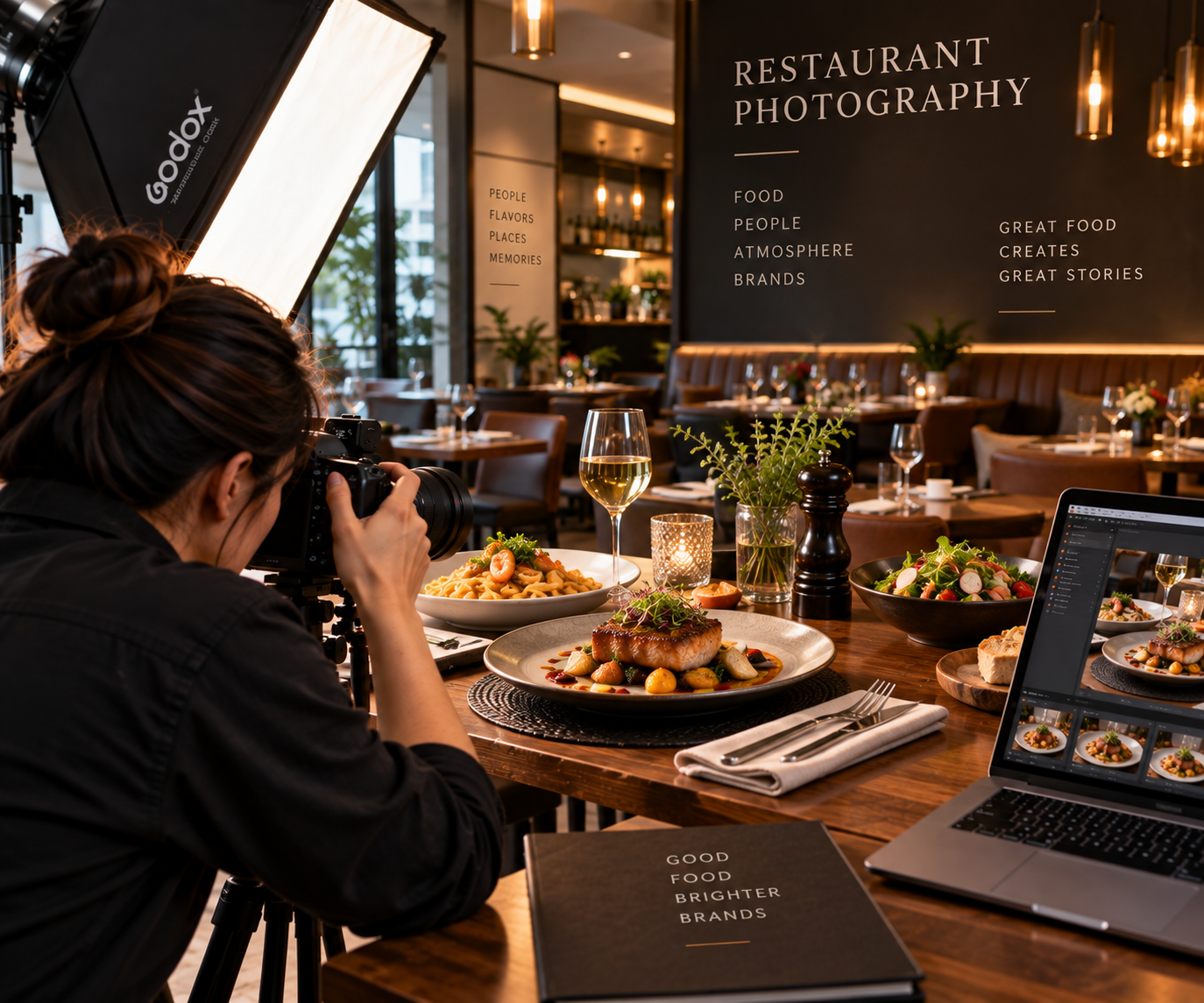
That is where a professional restaurant photographer can help. A restaurant photographer creates commercial images of your food, interior, exterior, chefs, staff, atmosphere, and guest experience so your marketing shows what your restaurant actually offers.
Restaurant photography should show more than individual dishes. It should communicate the food, atmosphere, people, space, and experience that customers can expect when they choose your restaurant, while keeping your brand presentation consistent across customer-facing channels.
Masterly Visuals provides commercial restaurant photography for restaurant owners, restaurant groups, chefs, hospitality marketers, and franchise teams that need a complete and consistent image library for websites, delivery and reservation apps, social media, and broader marketing. This page explains what restaurant photography needs to cover, why strong imagery affects discovery and conversion, and how to plan and hire the right photography project with Masterly Visuals.
Your Restaurant Is More Than Its Menu
Food is a major part of the restaurant experience, but it is not the entire experience.
Customers also notice the room, lighting, tables, design, staff, service, presentation, and overall atmosphere.
A restaurant's photography should help communicate these elements.
Professional restaurant photography can bring together food, interiors, people, and atmosphere so customers get a clearer picture of what your restaurant offers.
This can be especially valuable for restaurants that want to attract new customers, promote a new location, update their online presence, or prepare for a larger marketing campaign, helping bring in more customers and increase likes and shares on online platforms.
Restaurant Photography That Supports Online Orders
For many restaurants, customers make ordering decisions without ever visiting the location first.
They may browse your website, delivery app, social media profile, or online menu while deciding what to order.
The photographs need to make the food easy to understand and appealing without creating an unrealistic expectation.
Professional restaurant food photography can provide updated images for menu items, signature dishes, drink options, combinations, and other offerings.
These images can then be used across the digital platforms where customers interact with your restaurant, designed to capture attention.
A consistent image library also makes it easier for your team to maintain a professional appearance when menu items or promotions change.
Photography That Supports Reservations
A reservation is not only about the food.
Customers may be choosing a place for a date, business dinner, celebration, family gathering, or special occasion.
They want to know what the restaurant feels like.
This is where images of your dining room, tables, bar, exterior, lighting, architecture, and guest experience can become important, and interior shots are often captured first while the restaurant is clean and organized.
A professional restaurant photographer can create photographs that show the atmosphere and environment alongside the food.
This gives potential guests more information when deciding whether your restaurant is the right setting for their occasion.
Show the Atmosphere and Natural Light, Not Just the Food
A menu photograph can show what a customer will eat.
An atmosphere photograph can help show what a customer may experience.
Both can be valuable. A professional restaurant photographer needs to be comfortable shooting in challenging lighting conditions, from bright windows to dim interiors. Food is often photographed next to a window to use natural light, and a tripod may be used in low light to keep images sharp.
Restaurant hospitality photography can include dining rooms, private dining areas, outdoor seating, bars, kitchens, architectural details, and guest-focused scenes.
The goal is to show the restaurant as a complete environment.
For restaurants with a distinctive interior or strong design identity, this can be especially important. The space itself may be part of the reason customers choose the restaurant.
Restaurant Brand Photography Creates a Consistent Identity
Your restaurant may already have a recognizable name, logo, color palette, menu design, and online presence.
Your photography should support that identity.
Restaurant brand photography can help build a strong visual identity across your website, social media, menus, advertising, delivery platforms, and other customer-facing materials.
This does not mean every photograph needs to look exactly the same.
Instead, the collection should feel connected through lighting, composition, color, styling, and overall creative direction.
A consistent image library helps your brand stand out and leave a lasting impression wherever customers encounter it.
Photograph the People Behind the Restaurant
Restaurants are built around people.
Chefs, servers, bartenders, managers, owners, and other team members contribute to the guest experience.
Showing the people behind your restaurant can make your brand feel more personal and authentic.
Depending on your needs, a photography project can include chef portraits, staff images, behind-the-scenes moments, food preparation, service scenes, environmental portraits, or action-focused photos of a person at work to add a human element to the brand story.
These photographs can support websites, social media, press, recruiting, restaurant announcements, and brand campaigns.
For chefs and restaurant owners who are closely connected to the brand, professional portraits can also provide useful media and marketing assets.
Restaurant Photography for New Locations
Opening a new restaurant location creates a major visual need.
Your marketing team may need images for the website, social media, reservation platforms, delivery services, press releases, launch campaigns, and local advertising.
The restaurant may also need photographs of the new space, menu, team, and customer experience.
Planning a professional photography project around the opening should include a pre-production document for the shoot, with a shot list and clear deliverables agreed during consultation around style, mood, and final image needs, so your team gets a complete collection of images instead of relying on quick phone photographs after the launch.
The same approach can also work when an existing location has been renovated or rebranded.
Restaurant Groups Need Consistency Across Locations
Restaurant groups face a different challenge.
Each location may have its own menu, design, staff, and atmosphere while still belonging to the same larger brand.
Photography needs to show those differences without losing the connection between locations.
A coordinated photography approach can establish visual standards for multiple restaurants.
This can make websites, location pages, social media, advertising, and promotional materials feel more consistent.
Masterly Visuals can work with restaurant groups and marketing teams to plan photography around the number of locations, the range of image requirements across locations, schedules, and intended uses.
Restaurant Photography for Franchise Teams
Franchises often need photography that can work across different markets.
Brand standards may require consistent imagery while individual locations may have differences in layout, menu offerings, or local environment.
Professional restaurant photography can give franchise teams a reliable collection of approved images for marketing and communications.
Photography can include food, interiors, staff, exteriors, customer experiences, and other brand elements based on the franchise's needs.
The project can be planned around the organization's visual standards and the requirements of individual locations.
Menu and Restaurant Food Photography and Full Restaurant Coverage
Restaurant photography and food photography can overlap, but they serve different purposes, and menu-focused coverage often requires multiple angles on a dish.
Menu photography focuses on the dishes and products customers can order. The photographer may bring multiple lenses to capture different perspectives and photograph dishes overhead, straight on, and at a 3/4 angle.
Full restaurant coverage goes further by showing the environment, people, brand, and guest experience.
Masterly Visuals can coordinate both when a restaurant needs a complete visual library.
For dedicated food photography needs, link this page to the [Food Photographer] service page. That page should remain the primary destination for clients specifically searching for food-focused commercial photography.
This restaurant photography page should remain focused on the broader restaurant experience.
Images for Delivery Apps and Reservation Platforms
Customers may encounter your restaurant through third-party platforms before they visit your website.
Delivery apps, reservation platforms, local listings, and social media can all become important points of discovery.
Having current, professional images gives your restaurant more useful assets for these channels.
Your team may need food photographs for digital menus as well as wider photographs showing the dining environment.
A photography project can be planned around where the photos will appear and what usage rights or commercial licensing the restaurant needs for those platforms, with image licensing fees sometimes separate from the shoot fee.
Photography for Social Media and Restaurant Campaigns
Social media often requires a steady supply of visual content.
Restaurants may need images for new menu announcements, seasonal promotions, special events, chef features, holiday campaigns, location openings, and other communications.
Instead of relying on one or two photographs repeatedly, a professional photography session can create a larger collection.
The images can include food, people, spaces, details, and experiences, giving your marketing team more options for future campaigns.
This makes the photography useful beyond the day it is published.
Build a Reusable Restaurant Image Library
Your restaurant's photography should continue working after the initial project.
A reusable image library can support:
- Website updates
- Digital menus
- Printed menus
- Delivery platforms
- Reservation platforms
- Social posts and ongoing social media needs
- Email campaigns
- Paid advertising
- Press materials
- Chef profiles
- Restaurant launches
- Seasonal promotions
- Franchise marketing
- Recruiting materials
Planning around these uses for prep, shoot, and post use helps your team get more practical value from the photography project.
What to Look for in a Restaurant Photographer
When hiring a restaurant photographer, review the photographer’s portfolio and look for someone who understands that restaurant photography involves more than photographing food.
Review whether the photographer can capture interiors, atmosphere, people, food, details, and the overall guest experience.
It is also useful to discuss the intended uses before the project begins.
Tell the photographer whether your images will be used for delivery apps, reservation platforms, menus, social media, websites, press, advertising, or larger campaigns.
This helps the photography project stay focused on what your restaurant actually needs, and the discussion should also cover the creative idea plus any practical needs such as props or travel-related production requirements.
A Done-for-You Restaurant Photography Experience
Restaurant teams are busy.
Coordinating food preparation, staff schedules, service operations, locations, marketing deadlines, and photography can become complicated.
Masterly Visuals provides a professional photography service designed to make the process easier for your team.
The project begins by understanding your restaurant, locations, brand, menu, people, visual style, and intended image uses, with consultations defining deliverables, style, and workflow before the shoot.
From there, the photography can be planned around the needs of your business. Restaurant shoots are typically quoted as a project fee rather than an hourly rate, since estimates need to account for prep, shoot, and editing time before and after the session.
Depending on the project, coverage may include food, interiors, staff, chefs, atmosphere, architecture, details, and guest-focused scenes.
The final images can then provide your marketing team with a professional collection for websites, social media, menus, delivery platforms, reservation channels, press, and campaigns, with post-processing that includes color correction and retouching to meet quality standards.
Why Hire Masterly Visuals for Restaurant Photography?
Masterly Visuals provides commercial restaurant and hospitality photography for businesses in the food industry, where high-quality visual content is essential to stand out online.
The service is designed for restaurants, restaurant groups, chefs, hospitality marketers, and franchise teams that need professional photography to represent the full restaurant experience. High-quality food photos also increase likes and shares on platforms.
Whether you are opening a location, updating your brand, refreshing your menu, preparing a campaign, or building a larger image library, the photography can be planned around your target audience and your restaurant's commercial goals.
For broader commercial photography requirements, explore [Commercial Photography Services]. For food-focused projects, link to [Food Photography]. When you are ready to discuss your restaurant photography needs, use the [Masterly Visuals inquiry path].
Shoot Food That Fits the Restaurant Brand
When you shoot food, the goal is not simply to make every dish look attractive. Restaurant photography should capture the character of the menu while supporting the overall identity of the business. Masterly Visuals considers the presentation, setting, background, lighting, and surrounding details so food images feel consistent with the restaurant’s brand and work across websites, menus, social media, delivery platforms, and marketing campaigns.
Professional Planning Without the Guesswork
A strong restaurant photography project begins with clear planning. Mood boards can help align the visual direction before the session, giving the restaurant team and photographer a shared understanding of the desired look and feel. This planning creates an efficient production process while leaving room for creativity when the right moments, dishes, people, and details come together naturally during the shoot.
A Creative Approach to Restaurant Photography
Every restaurant has a different atmosphere, audience, and story. Our approach combines professional photography with creative direction to capture what makes your restaurant distinctive. We look for visual inspiration in the restaurant's design, signature dishes, staff, service, and customer experience rather than relying on a generic photography style.
Beyond Camera Settings
Professional restaurant photography involves much more than choosing the right camera settings. The final image depends on composition, lighting, styling, timing, perspective, and how each photograph supports the restaurant's marketing goals. Instead of treating the project like a photography course, Masterly Visuals handles the technical and creative decisions so your team can focus on running the restaurant.
Build a Complete Visual Library
A restaurant rarely needs just one great photograph. A well-planned shoot can create a collection of images for your website, social media, campaigns, menus, delivery platforms, reservation profiles, and future marketing needs. This gives your team a reliable library of professional content instead of having to create a new visual asset every time you publish your next post.
Frequently Asked Questions About Hiring a Restaurant Photographer
What does a restaurant photographer do?
A restaurant photographer creates professional images of a restaurant's food, interior, exterior, staff, chefs, atmosphere, and guest experience for commercial marketing, producing photos and pictures for menus, websites, social media, advertising, and other customer-facing uses rather than simple documentation.
Why should a restaurant hire a professional photographer?
Professional restaurant photography provides polished, consistent images for websites, menus, delivery apps, reservation platforms, social media, advertising, and other marketing channels, helping your business capture attention online and attract more customers.
What is restaurant photography?
Restaurant photography is commercial photography that represents the food, space, people, atmosphere, and brand of a restaurant.
What is restaurant brand photography?
Restaurant brand photography creates a consistent collection of images that visually represents the restaurant's identity across websites, social media, campaigns, menus, and other marketing materials.
Is restaurant photography only about food?
No. Restaurant photography can include food, interiors, staff, chefs, architecture, atmosphere, exterior spaces, and guest experiences. Strong food images can even suggest taste and bring the dining experience to life visually.
Can you photograph an entire restaurant?
Yes. A restaurant photography project can include food, dining areas, bar spaces, exterior views, staff, chefs, details, and other important parts of the restaurant. Full coverage also means planning the right equipment for interiors, close-up details, and different dish angles, including bringing multiple lenses to capture different perspectives of dishes.
Can restaurant photography support online orders?
Yes. Professional food and menu images can be used on websites, digital menus, delivery apps, and other online ordering channels, and they can absolutely improve how menu items perform there.
Can restaurant photography help with reservations?
Yes. Images of the dining space, atmosphere, food, and experience can support reservation websites and other customer-facing platforms.
Can you photograph restaurant staff and chefs?
Yes. Staff, chefs, owners, and other team members can be included when they are part of the restaurant's visual brand.
Can you photograph multiple restaurant locations?
Yes. Photography projects can be planned for restaurant groups and multiple locations with consistent visual direction.
Can restaurant photography support franchise marketing?
Yes. Photography can be planned around franchise brand standards and the needs of individual locations.
Can restaurant photography include menu photography?
Yes. Menu photography can be included as part of a broader restaurant photography project when the restaurant needs both food-focused and environment-focused images. It can also use specific food photography techniques to present dishes clearly and consistently.
Can the images be used for social media?
Yes. Photography can be planned around social media and other marketing applications so your team has useful images for ongoing content, and we can plan a gallery of images suited to social media content and ongoing campaigns.
How do I hire a restaurant photographer?
Contact Masterly Visuals with your restaurant details, locations, photography needs, intended uses, and timeline. The team can discuss the project and determine an appropriate photography scope. Quotes are based on project scope rather than hourly pricing, and clients pay for commercial photography services, with image licensing quoted separately where needed.
Plan a restaurant photography project.
Your restaurant has more to communicate than what is on the plate.
Professional restaurant photography can show customers the food, space, people, atmosphere, and experience behind your brand, help your restaurant stand out on digital platforms, create a stronger visual identity, and give your marketing team a reusable collection of commercial images.
If you are ready to hire a restaurant photographer for your restaurant, group, franchise, or hospitality brand, contact Masterly Visuals to discuss your project, starting with a focused consultation so the creative direction matches your audience and goals.
Masterly Visuals
Phone: (404) 726-7261
Website: https://www.masterlyvisuals.com/
Recent Posts