Commercial Property Video: Showing Space, Access, and Use in One Marketing Asset
A commercial property video is a marketing asset that uses moving visuals to show how an office, retail, industrial, hospitality, or multifamily asset works: its layout, how people and vehicles reach it, and what daily operations look like inside. For brokers, developers, property owners, and managers trying to promote properties across a wider audience, it is the single format that answers the three questions every prospect asks before scheduling a site visit.

Commercial property video: what it is and why it works right now
A commercial real estate video combines walkthrough shots, drone footage, and neighborhood context into one asset. Instead of flipping through static photos and floor plans, a prospect watches a 90-second piece that shows the property's interior, the surrounding area, and how the space functions during a business day. That single viewing often replaces three or four rounds of email questions.
The shift in decision-maker behavior explains why this matters now. 97% of buyers look at online listings before visiting properties. Most first impressions of commercial properties happen on a phone or laptop, not on-site. Video listings receive 403% more inquiries than static listings, and including video can increase conversion rates by up to 80%. Meanwhile, 73% of property owners prefer agents using video for marketing.
Despite these numbers, only a small minority of real estate agents and commercial brokers consistently produce listing videos. That gap creates a measurable competitive edge for those who adopt video now. This article is written from the perspective of Masterly Property Visuals, a studio that produces commercial property video for the commercial real estate industry, but the goal here is practical education, not a pitch.
How commercial property video fits into your leasing and sales strategy
Video supports every stage of the commercial real estate marketing funnel:
- Winning listings. A broker proposal that includes a video walkthrough, drone property video, and neighborhood vignette stands apart from proposals relying on standard photography alone. It signals professionalism and reach.
- Attracting tenants and buyers. Video marketing increases property views by 65% and broadens the pool of potential buyers and tenants by reaching out-of-market prospects who cannot visit in person. Video marketing also increases sales by 35%.
- Qualifying leads. When dock door counts, ceiling heights, parking ratios, and signage visibility are visible on screen, fewer basic discovery questions clog the sales process. Using video speeds up decision-making for potential tenants and buyers.
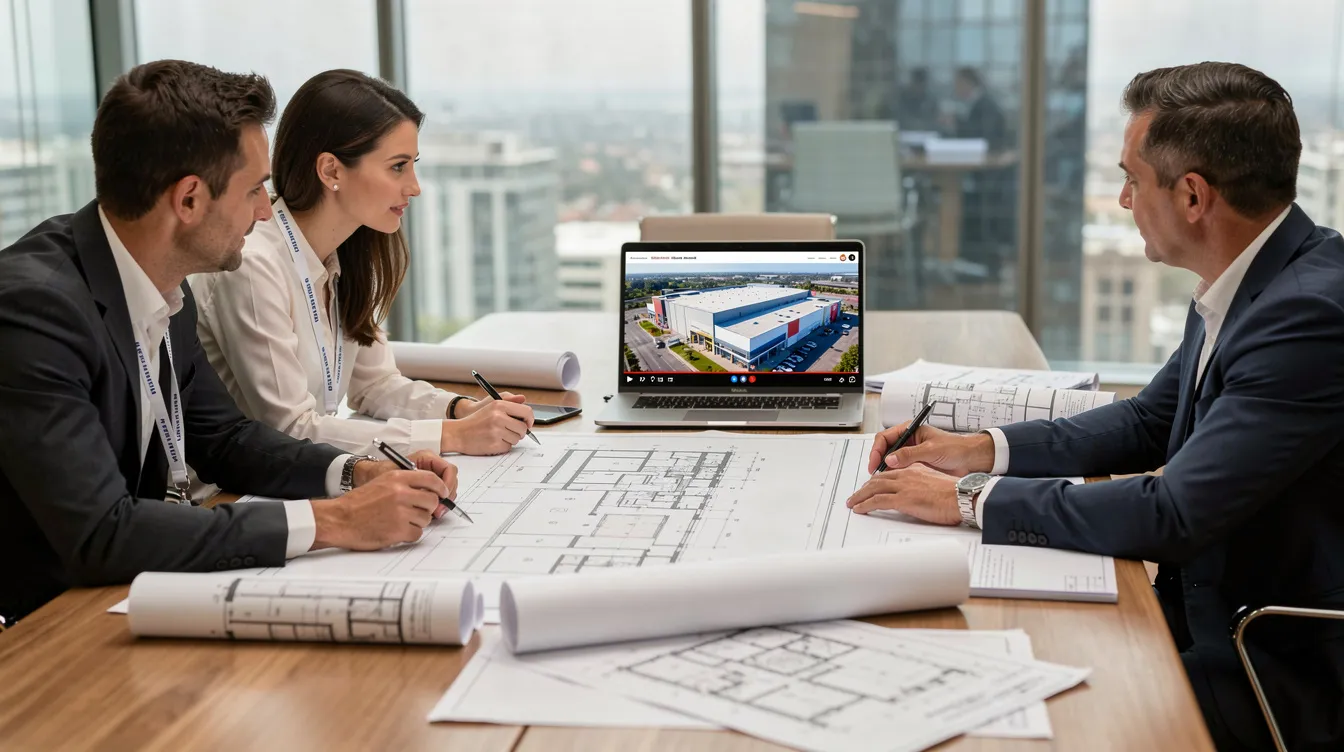
- Supporting negotiations. In investor pitches, confidential offering memoranda, and email campaigns, high-quality video builds trust and credibility with potential clients. Video marketing can increase sales prices by 9%.
Concrete examples of how teams use these assets: a 90-second lobby-to-rooftop tour for a downtown Class A office tower sent to tenant rep brokers via email blast; a 60-second highlight reel for a multi-tenant retail center posted on listing portals like LoopNet and Crexi; a 2-minute industrial park video focused on truck circulation and loading, embedded in an investment memorandum.
Video does not replace professional photography, floor plans, or brochures. It becomes the lead asset that everything else supports. The combination is what makes marketing properties effective at scale.
Core types of commercial property video to consider
Effective commercial property marketing is built from a small set of repeatable video formats, assembled differently for each asset.
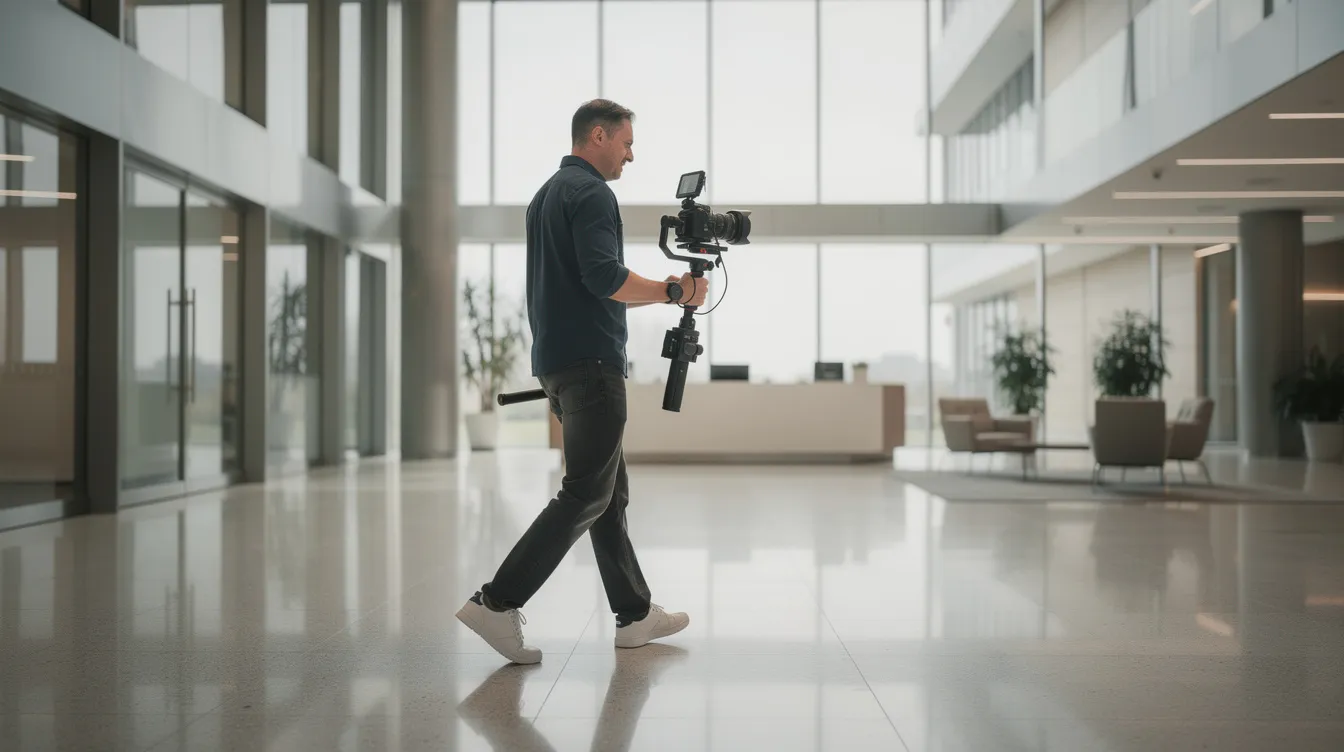
- Property walkthrough video. Covers lobby arrival, vertical circulation, typical floor plates, spec suites, restrooms, and amenity spaces at a comfortable, steady pace. Camera movement should feel like an in-person tour. Drones and walk-through videos capture the exact size, layout, and flow of commercial buildings, giving prospective buyers a clear read on the space before they visit.
- Drone property video. Aerial photography and drone footage show visibility from major roads, access points, loading areas, and surrounding amenities. Common altitudes range from 40 to 80 feet for close context to 150 to 300 feet for full-site coverage. Drone footage provides a comprehensive bird's-eye view of properties, including parking layouts and highway proximity.
- Cinematic property videos. A more produced format combining ground, aerial, time-lapse, and motion graphics, often with voiceover or on-screen text. Cinematic property videos enhance leasing and marketing efforts for institutional investors or corporate tenants who expect polished deliverables.
- Neighborhood and lifestyle vignettes. Short sequences showing transit stops, restaurants, parks, and nearby attractions. Lifestyle films represent the lifestyle a property can provide, reinforcing the property's location advantage and local amenities.
A smart real estate video production plan lets you capture all of these formats in one photo shoot day, then re-edit different shots for brokers, investors, and social media, keeping costs viable even for mid-sized assets.

What commercial property video must show: space, access, and use
A strong commercial property video answers three questions: how the space is laid out, how people and vehicles get in and out, and how the property actually works during a business day.
Space. Show floor plates, ceiling heights, column spacing, window lines, and divisible areas in office buildings. In industrial, show bay depths, clear heights, dock versus grade-level doors, and racking potential. In retail developments, capture storefront visibility, signage bands, and co-tenancy. Square footage labels and on-screen metrics help viewers retain specifics.
Access. Visualize ingress and egress, signalized intersections, parking counts, loading circulation, and proximity to transit or major highways. Aerial shots from drone technology paired with ground-level drive-up footage make access tangible. Commercial listings with drone footage sell 68% faster. Drone footage showcases location advantages and surrounding amenities, turning a property's location into a visible value proposition rather than a line item on a flyer.
Use. Capture implied or real activity: people collaborating in an office lounge, trucks queuing at docks, guests checking in at a hotel lobby. Aerial videos enhance visual appeal and attract more engagement because they show the property in motion, not frozen in a single frame. For commercial real estate, a "pretty" video is not enough. Every shot on screen should support leasing or sale decisions. Showing 53-foot trailer access matters more than hiding it behind an artistic angle.
Designing a commercial property video for different asset types
Video structure should change based on asset class and target viewer: investor, user-buyer, or tenant rep broker.
Office and flex. Cover lobby experience, elevator cabs, typical floor plates, spec suites, collaboration zones, conference rooms, roof decks, and wellness amenities. Showing hybrid-friendly work areas, such as bookable meeting rooms and phone booths, is relevant for office space marketing in 2025 and 2026. Natural light makes a measurable difference on camera; schedule interior shots to capture window lines at peak daylight.
Retail and mixed-use. Focus on traffic flows, signage visibility from key corridors, anchor tenants, cross-shopping paths, outdoor seating, and evening lighting. Show how the property stands during a busy weekday and again on a weekend. A compelling video of a 120,000-square-foot grocery-anchored center, for example, might open with an aerial reveal from the main intersection, drop to storefront level, and close on evening signage.
Industrial and logistics. Emphasize clear heights, number and type of dock doors, trailer staging areas, turning radii, security gates, cross-dock layouts, and proximity to interstates, ports, or rail. Stunning aerial footage of a 250,000 SF fulfillment center can show yard circulation patterns that static photos cannot convey. Listings with drone footage sell 68% faster.
Hospitality and multifamily. Show arrival, lobby, typical rooms or units, amenity decks, gyms, pools, co-working areas, and neighborhood attractions in one cohesive narrative. Virtual tours provide 24/7 access to potential renters, and 3D virtual tours increase sales calls by 95%. Properties with virtual tours sell 32% faster than those without.
Planning your commercial real estate video production
Strong commercial real estate video starts in pre-production. Clear objectives, a shot list, access logistics, and stakeholder alignment must be locked before anyone sets up a camera.
- Creative brief. Define target audience (national credit retail tenant, 3PL operator, institutional investor), the main message (price, flexibility, location, or repositioning), and where the video will be used: offering memoranda, listing portals, social channels, investor decks.
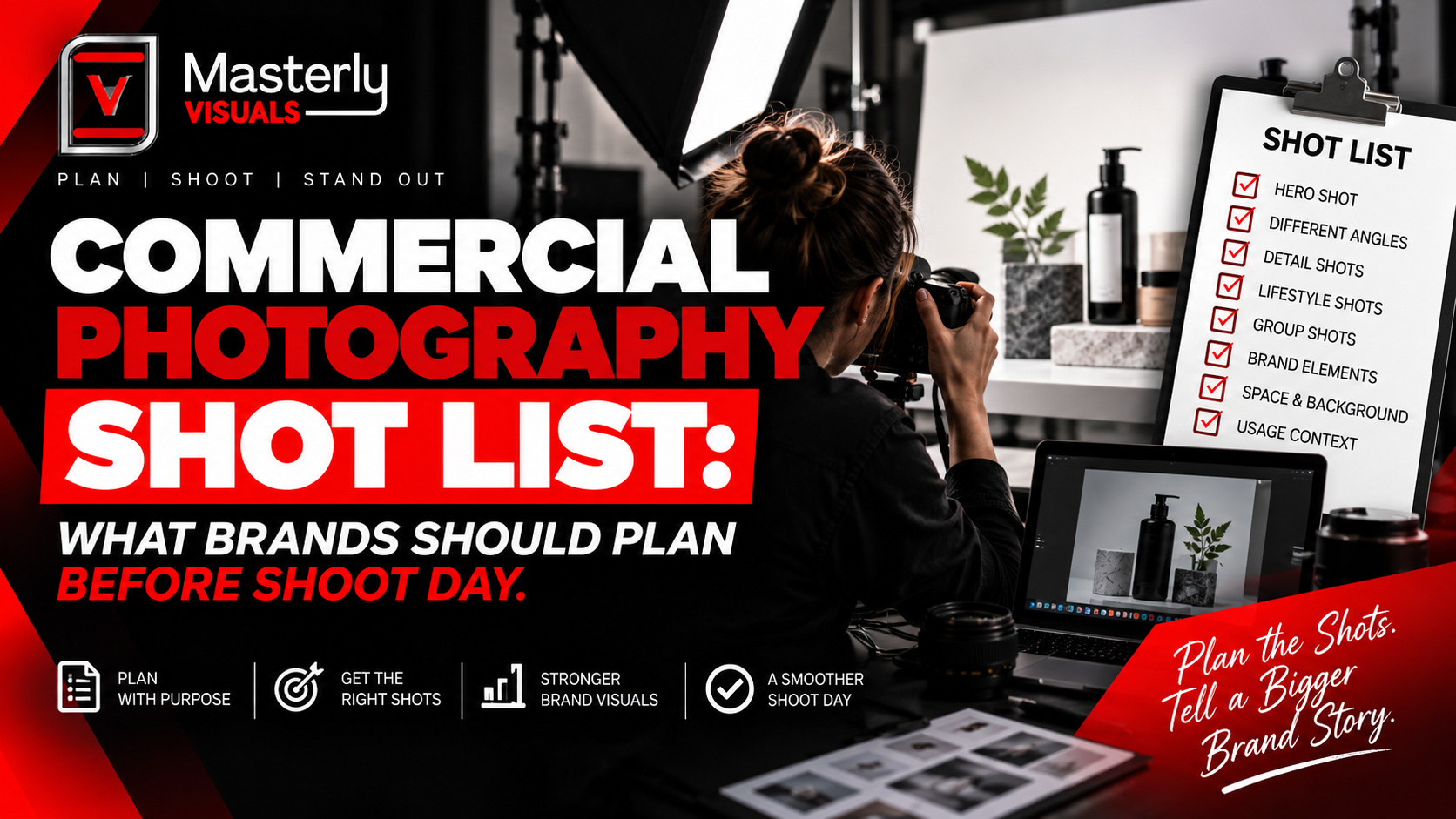
- Shot list and schedule. Map a simple path through the building and site, including exact drone shot concepts (orbits, reveals, fly-overs). Schedule each sequence by time of day. Early morning and late afternoon deliver the best outdoor conditions and softer natural light for exteriors and architectural features. High-quality photos can sell properties 32% faster, and listings with professional photos receive 61% more views, so plan to pull still exports from the same shoot.
- Property preparation. Declutter lobbies and suites, remove old signage, confirm all lights and HVAC are operating, and schedule access to tenant spaces, roofs, loading docks, and parking areas. 66% of buyers find property photos very important for selection, so preparation applies equally to video and stills.
- Permissions and safety. Obtain landlord approvals and COI requirements. For drone footage, use FAA Part 107-licensed pilots and secure any necessary airspace authorizations through LAANC or DroneZone.
Key production elements: cameras, drones, sound, and pacing
Clients do not need to be technical experts, but understanding a few basics helps them judge quality and brief their video team.
- Cameras and lenses. Full-frame or Super 35 sensor bodies (mirrorless or dslr cameras) mounted on gimbals produce stable, professional footage. Wide angle lenses in the 16 to 35 mm range show depth without distorting columns or walls, which matters when showing a property's interior accurately. Commercial real estate photographers often rely on special tools like motorized sliders for smooth reveals.
- Drone and aerial photography. Stabilized 4K drone cameras with smooth flight paths at safe altitudes produce cinematic drone videos, not raw hobbyist footage. Drone footage can help listings stand out and delivers crisper photos when stills are exported from high resolution video frames. High quality imagery from drones showcases the surrounding area and property boundaries.
- Lighting. Commercial interiors often need supplemental lighting or careful timing to manage harsh contrast from large window lines, especially in glass curtain-wall office space and showroom buildings. Natural light combined with fill lighting produces high quality images that look true to the space.
- Sound and music. Clean ambient sound or subtle background music works better than dense narration. On-screen text for key metrics (square footage, parking counts, clear height, year of renovation) keeps the pacing readable. Most effective videos are concise and maintain viewer attention for 2 to 5 minutes. Video content generates 1,200% more shares on social media than text and images combined.
- Pacing and duration. Aim for 60 to 120 seconds for the main commercial property video, with tighter 15- to 30-second cuts for social marketing channels. Shots should linger long enough for brokers to understand layout but move before attention drops.
Editing, motion graphics, and repurposing your video assets
Much of the value in commercial real estate video comes in post-production, where raw footage becomes multiple tailored marketing materials.
- Editing. Assemble a clear narrative arc: context (drone), arrival, interiors, amenities, call-to-action. Trim redundant shots and stabilize footage. A tight edit with different shots of the same space from varying angles creates more engagement than a single locked-off camera view.
- Motion graphics. Add on-screen labels for major tenants, suite numbers, anchor brands, traffic counts, and property boundaries. Map fly-ins that show interstate access, transit lines, or surrounding amenities help potential clients understand the property's location without leaving the video.
- Branding. Include brokerage or ownership logos, contact details, and consistent color palettes matching existing marketing materials. Keep it tasteful; a two-second logo at the end is enough.
- Deliverables. A typical output set includes the hero commercial property video, vertical and square social cuts, GIF loops, still frame exports (high resolution photos and professional photos for property listings), and silent captioned versions for muted playback on mobile and LinkedIn.
- Repurposing. Commercial real estate videos can be repurposed for various marketing channels: offering memoranda, pitch decks, trade-show loops, leasing websites, and investor update calls. Videos generate a 157% increase in organic traffic from search engines, and video marketing increases property inquiries by 403%. One production day, planned well, yields assets that serve your marketing strategy for 12 to 18 months.

Measuring impact: what a good commercial property video should accomplish
Every market and asset class is different, but brokers and property owners should still track specific business outcomes from their commercial property video investment.
- Lead quality and inquiry volume. Track how many tour requests come from viewers who watched the video versus those who only saw photos or text. Listings with videos get 61% more views than those without. Video marketing enhances engagement and attracts more potential buyers and potential clients.
- Sales and leasing velocity. Compare days-on-market or lease-up timelines for campaigns with full commercial property visuals (video, professional photography, floor plans) against prior campaigns without video. Properties with more images sell faster and for higher prices. Listings with professional photos sell 32% faster. During 2020, 79% of CRE marketers shifted to video, and many reported quicker sales cycles.
- Engagement metrics. Measure video completion rate, heatmaps showing which sections viewers rewatch, click-through rates from email blasts, and time-on-page for listing websites. Videos improve search engine rankings and increase visibility for real estate listings, pulling more listings into organic search results.
- Broker and investor feedback. Gather qualitative input from tenant reps, capital markets teams, and asset managers. Did the video reduce basic questions? Clarify site challenges like truck access or parking? Improve investor presentations? Buyer engagement data combined with broker feedback reveals whether the video is delivering on its value proposition.
Video works best as part of a sustained commercial real estate marketing strategy rather than a one-off asset. Masterly Property Visuals designs projects with reuse and long-term value in mind, so the footage serves marketing efforts across multiple leasing cycles.
Working with a specialist partner like Masterly
Property Visuals
Masterly Property Visuals is a specialist in commercial property visuals, including video, drone, and commercial real estate photography, rather than a generalist production company.
- A typical engagement starts with a strategy call, review of rent roll and site plans, and a shared shot list. On-site production follows, then editing and delivery of multiple video formats for leasing, sales, and investor marketing.
- The team works across office, retail, industrial, hospitality, and multifamily assets, focused on showing space, access, and use for decision-makers. Virtual staging and motion graphics are available when the space is still under construction or being repositioned.
- Collaboration with brokers, property managers, and ownership groups ensures the video reflects current tenancy, accurate specs (square footage, clear height, parking ratios), and current branding. The result is compelling images and video that a wider audience can access across more listings and more marketing channels.
Plan a commercial property video. Reach out to Masterly Property Visuals to start with a strategy call and shared shot list. The team will handle production, editing, and delivery of assets tailored to your leasing and investment marketing goals, with a quick turnaround designed for active campaigns.
FAQs about commercial property video
Common questions from brokers, developers, and property managers considering their first (or next) commercial property video:
How long should a commercial property video be for leasing versus investment marketing? Leasing videos for larger commercial properties typically run 60 to 90 seconds, focused on the tenant experience. Investment marketing videos run 90 to 120 seconds and include more data overlays, aerials, and market context. Both should hold viewer attention; shorter social cuts (15 to 30 seconds) work for discovery.
What is the difference between commercial real estate video and residential listing video? Commercial video carries higher information density: dock counts, clear heights, parking ratios, traffic counts, and tenant mix. Decision drivers center on operations and access, not curb appeal. The target viewer is a broker, investor, or corporate occupier, not a homebuyer.
Can I use one shoot to create both drone property video and interior walkthroughs? Yes. A coordinated production plan captures aerial shots, ground-level walkthroughs, and best shots of architectural features in one day, then separates them in editing. This approach keeps costs lower and delivers a consistent look across assets.
Do I still need professional photography if I have video? Yes. Properties with more images sell faster and for higher prices, and high quality images are still expected for flyers, brochures, and listing portals. Still exports from video provide some coverage, but a dedicated photo shoot with proper composition delivers crisper photos and higher prices at listing. Images sell faster when combined with video, not replaced by it.
How soon should I plan video in a development timeline? Key milestones include topping out (for aerial context), delivery of model suites (for interior walkthroughs), and substantial completion (for the full hero video). Early planning aligns your marketing strategy with construction progress.
How do I get started planning a commercial property video? Contact Masterly Property Visuals for a strategy call. The team will review your asset, define your target audience, and build a shot list that serves leasing, sales, and investor marketing from one production day. A positive first impression starts before the site visit; video is how you create it.
Recent Posts