Multifamily Photography: What Apartment and Development Marketing Needs Before Launch
Why Multifamily Photography Matters Before You Go to Market
Multifamily photography is a specialized branch of commercial real estate visuals designed specifically for apartment communities, mixed-use developments, and build-to-rent neighborhoods. It includes capturing apartment complexes and mixed-use residential developments across every angle that matters to a prospective renter.
Commercial real estate photography blends principles of architecture and lifestyle, and nowhere is that more evident than in this category.
Unlike selling a single house, multifamily photography markets ongoing business rather than completing a single sale. Operators and developers need full visual coverage - exteriors, amenities, unit interiors, and neighborhood context - ready before first property listings go live or pre-leasing begins. The data supports this urgency: listings with professional photos sell 32% faster, and 81% of renters want to explore apartments virtually first. Attractive visuals create a strong first impression on potential tenants, and professional photography enhances marketing and attracts potential renters across every channel.

Supporting tools like virtual tours, drone photography, aerial imagery, and short-form video belong inside a cohesive apartment community photography plan, not as disconnected add-ons. This article covers what visuals you need before launch, how to plan a photo shoot, and how to work with a commercial real estate photographer to maximize results.
Multifamily vs. General Commercial Real Estate Photography
Standard commercial real estate photography for office, retail space, or industrial assets typically serves institutional prospective buyers evaluating cap rates and site access. Multifamily photography is focused on properties with multiple residential units, and the audience is entirely different - residents and leasing prospects comparing lifestyle, convenience, and community.
That distinction reshapes every decision on shoot day. Multifamily-specific needs include:
- Multiple unit types - studios, one- to three-bedroom floor plans, sometimes premium upgrades - each requiring representative interior coverage.
- Amenity-rich spaces - pools, fitness centers, pet parks, coworking lounges - that justify rental rates and set the community apart.
- Year-round leasing cycles rather than one-time sales, meaning multifamily development images must support pre-leasing, stabilized leasing, renewals, and periodic repositioning.
Photos should highlight both common areas and model units to showcase amenities. Quality photos highlight amenities that justify rental rates, while lifestyle images help prospective residents envision living in the community. A photographer handling a multifamily assignment manages higher volume in a single day - several units, public spaces, exteriors, twilight sequences - and must coordinate with on-site leasing staff throughout the process.
Core Shot List: What Every Apartment Community Needs Before Listing
Before placing a property on ILS platforms or broker portals, your image library should cover every touchpoint a prospect encounters. Think of this as a practical checklist.
Essential exteriors:
- Front elevation from multiple angles
- Leasing office entry and signage
- Parking, garages, and street frontage
- Courtyard, garden areas, and landscaping in flattering natural light
Exterior photos are best captured during the golden hour shortly after sunrise or before sunset, when curb appeal is at its peak.
New apartment photography interiors:
- Representative units for each layout and floor plan
- Kitchen and living room vignettes, bedroom and bathroom sequences
- In-unit laundry, storage, balcony, and patio space
Nearly 8 in 10 renters want unit-specific photos, so covering every floor plan matters. A logical image sequence can help viewers understand property flow from entry to living areas to private rooms.
Apartment amenities photography:
- Pool, spa, and fitness center
- Resident lounge, coworking areas, and mail or package rooms
- Pet facilities, rooftop decks, outdoor kitchens, and playgrounds
Industry guidance suggests 20–30 amenity photos per community to present the full resident experience. Include operational images - the leasing office, model units at "tour ready" level, hallways, elevators, and wayfinding details. Properties with more images sell faster and for higher prices, and properties with more images receive significantly more inquiries.
For urban infill or mixed-use assets in competitive submarkets, capture both day and twilight sets for exteriors.
Planning Timeline: When to Book Multifamily Photography for New Developments
Getting the timeline right means working backward from your marketing launch date.


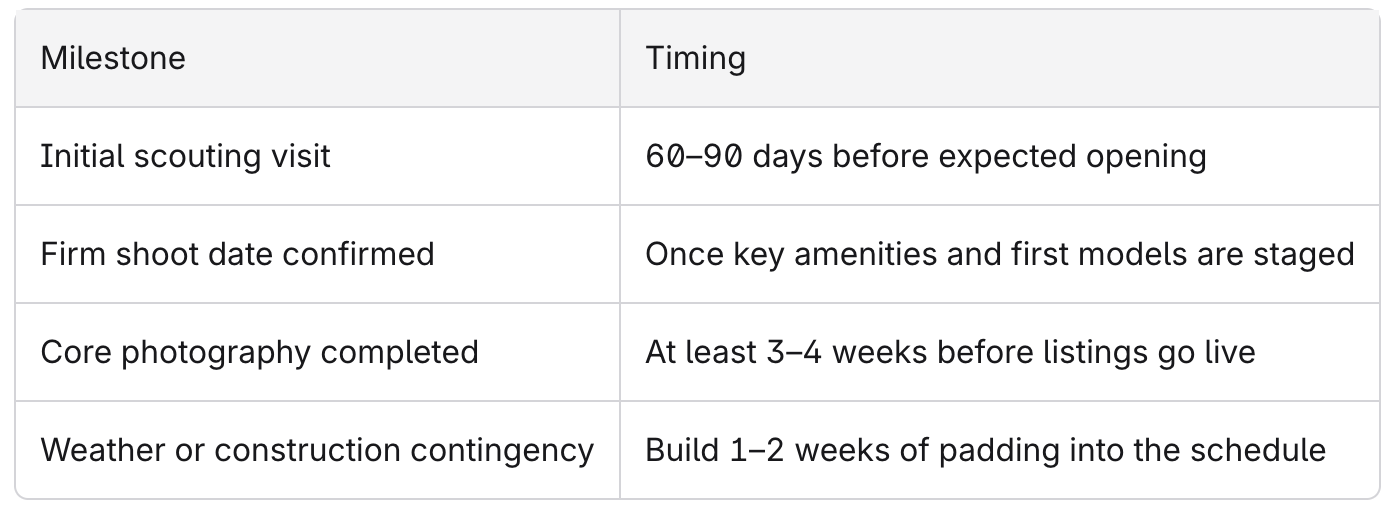
For pre-leasing, photograph early-delivery buildings, completed amenity areas, and one or two fully finished unit types even while other phases remain under construction. Seasonal timing matters: capture pools and outdoor spaces during late spring or summer. If the initial launch falls in winter, schedule a follow-up shoot when landscaping recovers.
Involve property managers and leasing teams in the timetable so units can be clean, staged, and vacant for photography days. Well-prepared spaces require less editing and create a polished impression, saving time and budget downstream.
Ground, Aerial, and Virtual Tour Coverage: Building a Complete Visual Story
Multifamily photography works best as a coordinated package: ground photography, aerial views, and walkable virtual tours that trace the full resident journey from neighborhood to front door to living room.
Ground photography shows the details prospects care about - ceiling heights, natural light, storage, and comfortable furniture layouts. A wide-angle lens captures entire rooms without excessive distortion, and professional media at this level gives customers confidence that what they see online matches what they will experience in life.
Aerial photography and drone video provide context that ground-level shots cannot. Aerial photography showcases property layouts and surrounding amenities, and aerial imagery provides a bird's-eye view of properties. Drone visuals highlight scale, layout, and location for multifamily properties, revealing proximity to retail, parks, transit, and cities nearby. Listings with drone footage sell 68% faster than those without, and aerial photography enhances listings by attracting more online viewers. Aerial perspectives and aerial coverage give prospects the confidence to narrow their search before ever visiting.

Virtual tours are no longer optional. 81% of renters want to explore apartments virtually before touring in person. Virtual tours provide a 24-hour open house experience, and listings with virtual tours receive significantly more inquiries. 3D virtual tours offer immersive experiences compatible with VR headsets, and virtual tours can increase sales calls and lead to higher prices. Aerial imagery and virtual tours should connect logically with listing copy, site maps, and floor plan diagrams so that prospects can easily move from overview to detail.
Technically, FAA-licensed drone operators are required for all drone photography. Video deliverables should include stabilized capture and hosting platforms that support 24/7 access without heavy IT overhead.
Brand-Forward Apartment Community Photography: Selling Lifestyle, Not Just Space
Leasing photography should express the community's positioning, whether that is a luxury high-rise, attainable workforce housing, student housing, active adult, or mixed-use urban village. Every image should reinforce the brand you are selling - not just the space.
Consistent imagery across exteriors, common areas, and units strengthens recognition on websites, brochures, social media, google Business Profile, and property listings. Professional photography reinforces a cohesive brand image across marketing platforms. Great photos tied to a clear brand story make your listings stand out in a crowded market.

Lifestyle cues create the connection: a laptop and notebook in a coworking nook, pool towels draped on lounge chairs, a dining table set for two. Brighter, well-lit photos increase the likelihood of attracting viewers. At the same time, editing should enhance the realism of photos without misrepresenting the property - prospects who arrive and feel misled will not sign a lease.
Balance is needed when deciding whether to include residents or models. Fair housing guidance and the owners' comfort with talent releases should drive that decision. Keep styling current but not tied to a passing trend; multifamily development images must remain relevant for several leasing seasons. If a brand refresh is planned for 2025–2027, schedule a re-shoot to match.
Preparing the Property and Team: How to Get Photo-Ready on Shoot Day
The week before the shoot determines the quality of the final portfolio. Here is what leasing and maintenance teams should manage:
Property readiness:
- Deep-clean model units and amenities
- Touch-up paint on high-traffic walls
- Replace burnt-out bulbs and ensure all signage is installed
- Groom landscaping and clear outdoor surfaces
Staging priorities:
- Make beds neatly, declutter surfaces, arrange furniture for natural traffic flow
- Add a few real plants for warmth
- Hide cleaning tools, trash cans, and personal items
Turn on all interior lights to create a warm, inviting atmosphere for photography. Using a tripod helps maintain straight horizons and avoids camera shake, especially in tight studio space or narrow hallways.
Logistics:
- Master keys ready, elevator access scheduled
- Noise sources minimized (landscaping crews, pool cleaning paused)
- Staff assigned to escort the photographer if needed
Create a concise shot list in advance that covers must-have views for marketing efforts, any pre-leased premium units, and renovations completed in recent years that should replace outdated visuals. Document weather backup plans and alternate interior-only shot lists so the assignment remains productive if exterior conditions change. Weather is not a problem if you plan for it.
From Photo Delivery to Leasing Results: Putting Multifamily Photography to Work
Once edited high resolution photos and virtual tours arrive, organize them into a central library: exteriors, amenities, unit types, seasonal sets, aerial imagery - all labeled for ongoing leasing use by clients and owners alike.
Deploy immediately across property websites, ILS listings, Google Business Profile, email campaigns, digital brochures, and social media. Leasing teams should integrate visuals into daily operations: digital touring scripts, quick-share links for prospects who call or contact via phone, and saved image sets for corporate relocation partners and potential buyers evaluating the building as an investment.
Track performance indicators after launch - tour requests, online inquiries, lease conversion rates. If certain floor plans underperform, revisit whether the photos showcase the property's unique characteristics effectively. High-quality images can increase property prices by 47% per square foot, and listings with professional photos receive significantly more inquiries. Properties with more images sell 32% faster than those with fewer, so expanding the library over time is smart.

If you are ready to enhance your marketing and create a visual story that drives rent and occupancy, plan a multifamily property photography assignment with Masterly Property Visuals. A pre-shoot consultation ensures every image serves your lease-up goals, and travel fees, price, and project scope are discussed upfront so there are no surprises.
FAQs About Multifamily Photography Assignments
How far in advance should we book a multifamily photographer? Plan to reserve dates four to six weeks ahead of your target shoot, earlier during busy season. Align the schedule with construction milestones so amenities and models are free and ready.
What deliverables are standard? Expect high resolution photos in web-optimized and print-ready formats, drone video clips, aerial views, and hosted virtual tour links. A mid-size community typically receives 50–80 final images plus virtual tour and video deliverables.
Who owns the photos? Copyright generally stays with the photographer; you receive a license. Confirm that your licensing covers use across websites, property listings, virtual tours, brochures, and offline marketing without recurring media fees.
How do we make sure the right content is captured? A pre-shoot consultation and a shared shot list tailored to your specific asset keeps the photographer aligned. Highlight the location, key amenities, and any upgraded units.
When should we refresh our photography? Re-shoot after renovations, significant landscaping upgrades, or brand changes. Many operators on a manage-and-hold strategy schedule refreshes every two to three years to keep marketing channels current and listings looking sharp across their full portfolio.
Recent Posts