
Restaurant Photography That Makes People Hungry Before They Read the Menu
June 23, 2025
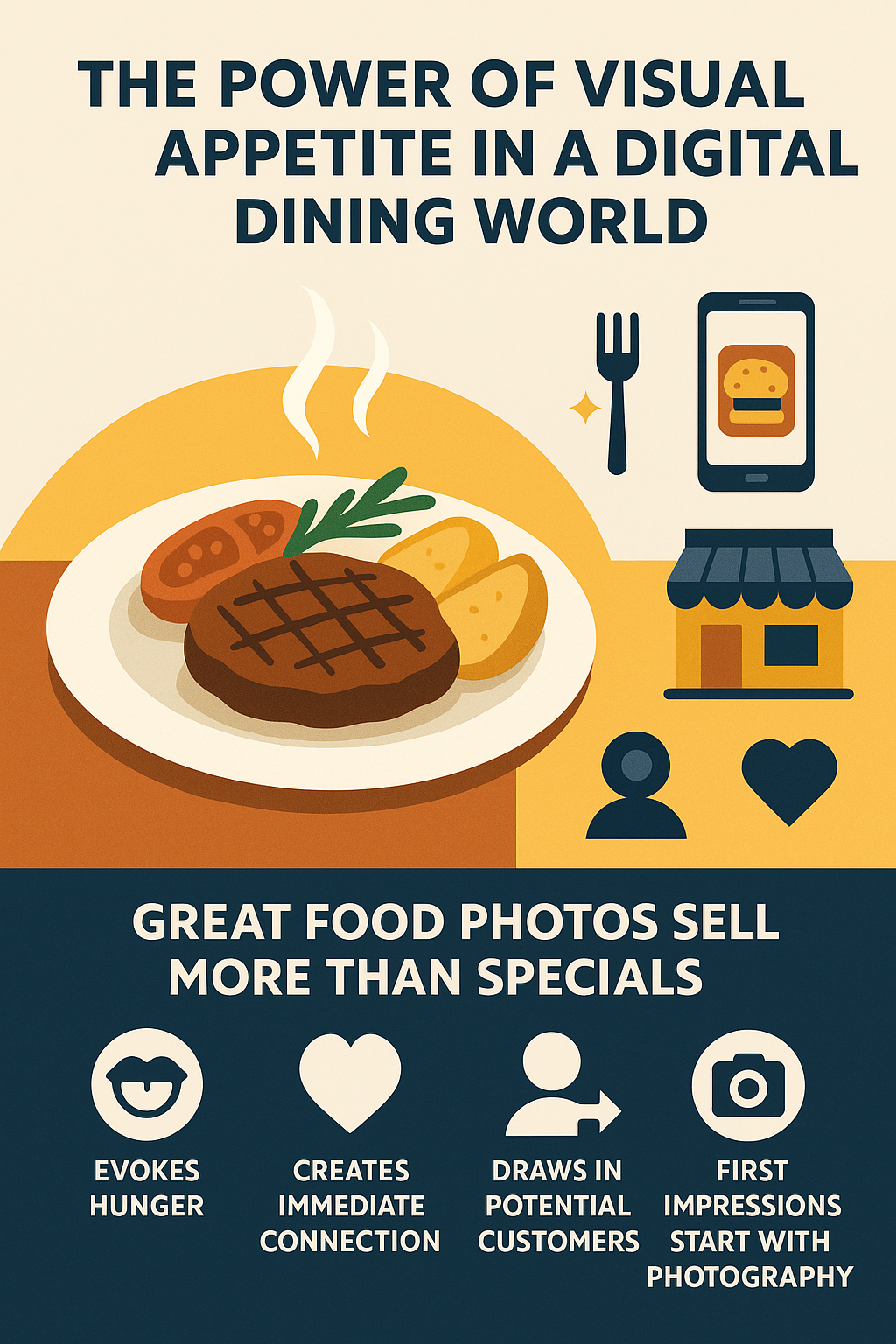
The Power of Visual Appetite in a Digital Dining World
Restaurant photography isn’t just about pretty pictures. It’s about evoking hunger, emotion, and action—before a single menu item is read. In today’s mobile-first world, your restaurant's first impression is made through food photos on social media channels, delivery apps, or your restaurant website. One powerful image of a sizzling plate can do what a thousand words can’t. That’s the true power of restaurant photography when done right.Potential customers make split-second decisions based on the visual appeal of your food. A beautifully styled dish with fresh ingredients can drive new customers through your door faster than any promotion. It’s no longer optional—it’s essential.
Great Food Photos Sell More Than Specials
Food isn’t just eaten—it’s experienced visually first. Great food photos capture textures, colors, and steam that stir emotions and appetites. Restaurant food photography creates an immediate connection between your dish and the desire to eat it. A professional photographer doesn’t just shoot food; they capture stories and experiences. From the crisp edges of fried chicken to the perfect swirl in a cocktail, details matter. Every pixel has a purpose. Every shot should sell.First Impressions Start With Restaurant Photography
Before someone decides to visit or order, they scroll. What they see determines what they crave. This is where restaurant photography becomes more than an asset—it becomes your sales tool. If your restaurant photos are dim, blurry, or outdated, potential customers move on. They assume your food looks (and tastes) the same. But when food images are crisp, bright, and styled with care, they linger, they click, they order.The Role of Light in Mouthwatering Photography
Lighting makes or breaks food photog raphy. Natural light from a nearby window creates soft, appetizing shadows and color tones that highlight the beauty of a dish. Direct sunlight, on the other hand, can wash out details and create harsh reflections. Professional photographers know how to balance natural light, artificial light, and shadow to capture the mood of your restaurant. When there isn't enough light, they bring in the right tools—not the camera's flash, which often flattens textures.Food Styling: More Than Just Plating
Great food photogra phy starts with food styling. This includes careful placement of garnish, strategic sauce drizzles, and arrangement of multiple dishes on a well-composed table. Food styling isn’t about changing the dish—it’s about showing it in its best light.Gorgeous food is the result of coordination between the chef and the food photographer. Each dish must be timed perfectly, as steam, color, and texture can change quickly. These elements equally matter in creating photos that convert.
Shooting From Different Angles and Compositions
There is no on e-size-fits-all in food photography. Some menu items shine from above, while others pop at a 45-degree tilt. Professional photographers understand the different angles that highlight textures, depth, and garnishes.We often test different compositions to find the layout that makes a dish most irresistible. The general rule? Adjust the perspective to match how the cust omer would see the food—whether it’s delivered to a table or carried out in a box.
Capturing the Human Element Without Distracting From the Dish
Incorporating t he human element can enhance storytelling. A hand reaching for a taco, a drink being poured, or steam rising as someone slices a steak adds movement and authenticity to food photos.However, balance is key. The focus must remain on the food. A helpful hand or blurred smile can add context, but the plate is still the star. Best practice includes using the human touch as a frame, not a distraction.
Taking Great Food Photos With the Right Tools
Not every device can do justice to foo d. While iPhone food photography has improved dramatically, certain dishes need more dynamic range, control, and sharpness. A professional photographer uses cameras that let them manually adjust shutter speed, lighting, and focus. That said, if you’re doing social media posts in between professional shoots, use these food photography tips:- Use natural light when possible
- Avoid the camera's flash
- Focus on one dish per photo
- Keep the background simple
- Take multiple shots from different angles
Still, for your core marketing materials, hiring a pro will always deliver better ROI.
How Photography Drives Online Orders
Before they taste i t, they must see it. For delivery-focused restaurants or ghost kitchens, restaurant photography is everything. Customers swipe through hundreds of food images, and the best food shots stop them in their tracks.Social media channels, third-party ordering apps, and your restaurant website rely on professional imagery. Bland photos reduce trust. But high-quality images instill confidence and increase order volume.
The Psychology Behind Appetite-Driven Photography
People eat with their eyes. There is real psychology behind visual appeal. Images with fresh ingredients, contrasting textures, and vivid colors are proven to spark cravings.Our brain associates more light, natural color balance, and better idea of a meal’s presentation with quality. When photography helps the customer imagine the experience, they're more likely to commit. Appetite is emotio n, and emotion drives action.
Avoiding Common Food Photography Mistakes
Poorly lit images, distrac ting backgrounds, or messy presentation ruin appetite. We often help restaurants fix issues they didn’t know were hurting sales. Here are a few helpful mistakes to avoid:- Too many elements competing in the frame
- Overuse of post production filters
- Lack of contrast or poor lighting
- Photos of food that looks dry or old
- Forgetting to clean the table or plate before the shoot
Fixing these mistakes doesn’t just make the food look better—it increases sales.
Post Production That Enhances Without Overdoing
Even the best shot needs refinemen t. In post production, we adjust lighting curves, crop for platform dimensions, and enhance contrast to bring out textures. However, we don’t change the food.Our goal is to deliver great photos that are honest, enticing, and usable across marketing channels. Too much editing can make dishes look artificial, which leads to disappointed customers and negative reviews. Better idea: photograph it right the first time.
Elevating Your Restaurant Brand Through Photography
Branding isn’t just a logo. It’s the way your food is presented across platforms. Consistent, polished restaurant photography ties everything together and positions you as a premium dining option.From online ads to dine-in menus, your food deserves to look as good as it tastes. Photography should reflect your atmosphere, ingredients, and service. In today’s competitive space, image is everything.
Highlighting the Best of Your Restaurant’s Menu Without Extra Cost
Great restaurant p hotography brings out the best of your restaurant’s menu by showcasing not just the food, but the experience. A compelling image captures three elements that matter most to your potential customers: freshness, flavor, and atmosphere. These different elements work together to create desire before anyone even reads a description. When done professionally, high-impact food images become one of the most valuable marketing tools you own—without needing constant promotions or extra cost to drive sales. Investing in visuals once can elevate your menu appeal every single day.Best Practice for Creating Photos That Convert Browsers Into Diners
When it comes to fo od imagery, following best practice is essential to turning casual views into paying customers. This means using consistent lighting, clean composition, and showcasing each dish at its peak freshness. Avoid cluttered backgrounds and always highlight your restaurant’s unique atmosphere and flavor. The best images aren’t just beautiful—they’re strategic. Incorporating best practice in your restaurant photography ensures your visuals are optimized for menus, websites, and social media engagement.Restaurant Food Photography That Turns Every Dish Into a Signature Item
In a crowded dining market, restaurant food photography can be the deciding factor between a scroll and a reservation. High-quality imagery does more than showcase your food—it elevates your entire brand. Each photo becomes a statement about your quality, creativity, and attention to detail. When your visuals match the excellence of your cuisine, you gain trust before the first bite. Professional restaurant food photography ensures that your dishes not only look amazing but also make people crave the experience your restaurant offers.What a Professional Food Photographer Brings to Your Brand
Hiring a food photographer isn’t just about getting nice pictures—it’s about capturing the essence of your dishes in a way that compels people to order. A trained photographer understands how to work with lighting, composition, and timing to make every plate look irresistible. From fresh ingredients to plating details, a professional knows how to highlight the textures, colors, and depth that generic shots often miss. When your food looks incredible, your restaurant looks premium—and that’s exactly what gets attention on social media, your website, and ordering platforms. Let a food photographer turn your everyday dishes into powerful sales tools.Let’s Help You Capture Your Best Menu Yet
If your current food photos aren’t making people hun gry, you’re leaving money on the table. At Masterly Studios, we work with restaurants nationwide to create stunning, appetite-inducing images that drive clicks, orders, and reservations. Whether you're launching a new menu, refreshing your brand , or building content for digital platforms, we can help you capture dishes at their absolute best.Contact us at 469-902-9919 to book a free consultation today. Let’s bring your restaurant’s flavor to life through bold, professional photography that speaks to hungry customers nationwide.
Recent Posts

By Angelie Te
•
August 15, 2026
Editorial Photography: How Story-Driven Images Support Brands, Publications, and Campaigns If your brand publishes articles, runs awareness campaigns, or maintains a magazine or blog, you already know that generic visuals fall flat. Readers scroll past them. Editorial photography offers something different: images built around a story, designed to make people stop, read, and remember. This guide breaks down what editorial photography is, how it differs from commercial work, where brands and publications use it, and how to plan a shoot that delivers narrative-driven results across channels. What Is Editorial Photography (and Why It Matters for Your Brand Today) Editorial photography refers to images created to support a story, article, or concept in a publication-whether that publication is a print magazine, a newspaper, a brand blog, or any of the growing number of online publications producing long-form content. The focus is on storytelling rather than selling products. Unlike stock photography, which provides generic visuals, editorial work is purpose-built to illustrate a specific narrative. This is distinct from corporate headshots, product shots, or basic branding visuals. Those assets serve important roles, but editorial photographs add narrative depth-they turn abstract ideas like sustainability, innovation, or community into human-centered stories that readers connect with emotionally. Editorial photography is often more subjective and creative than photojournalism, which is a type of photography focused on documenting real-time events. While photojournalism reports facts, editorial images interpret themes, weaving narrative through deliberate visual choices. The business case is straightforward. In surveys, roughly 46% of senior marketing executives say photography is "critical" to their storytelling efforts, and research shows that articles using strong visual storytelling can increase time-on-page by 30–50% compared with text-only content. That translates to better PR pickup, stronger campaign memorability, and deeper audience engagement. In the sections ahead, you'll learn where editorial style images fit in modern marketing, how an editorial photographer works alongside brands and editors, and how to plan a story-driven shoot from brief to delivery.

By Angelie Te
•
August 14, 2026
Why Environmental Portraits Matter for Modern Brands A studio headshot isolates a person against a neutral backdrop. An environmental portrait does the opposite: it places the subject in a real location, whether that's an engineering lab, a restaurant kitchen, or a warehouse floor, and lets the surroundings carry part of the story. Environmental portraits show subjects in their natural surroundings, revealing context, identity, and profession in a single frame. The reader problem is simple. Generic studio portraits feel interchangeable. A SaaS founder standing in a white sweep looks identical to every other founder on every other About page. Swap the background for that founder's product war room, with roadmap sketches on the wall and a prototype on the desk, and the image communicates something specific: who this person is, what they build, and how they think. Environmental portrait photography builds trust on About pages, pitch decks, LinkedIn profiles, and recruiting campaigns by showing real people in real workplaces. Key aspects of environmental portraits include context, narrative, authenticity, and compositional balance. This article covers leadership portraits, workplace portraits, and team photography in actual work environments. Masterly Visuals specializes in this kind of on-location photography. If you want to skip ahead, you can request a commercial portrait consultation at any time.

By Amber Aniston
•
August 12, 2026
Discover what commercial photography is, its key types, and how businesses use it to boost sales, recruit talent, and build brand identity. Learn how to plan a commercial image library with Masterly Visuals for consistent, high-quality visuals across all marketing channels.

By Angelie Te
•
August 8, 2026
Video marketing is essential in today's fast-moving real estate market, and commercial properties demand more from it than a simple home tour. This guide covers what real estate videography looks like when the asset is an office tower, logistics warehouse, retail center, or 200-key hotel - and why the discipline requires a fundamentally different approach than filming a family home. Below, you will find a practical breakdown of planning, shooting, editing, and deploying commercial property video to reach tenants, investors, and brand users who make decisions based on movement, scale, and location.

By Angelie Te
•
August 6, 2026
Why Brand Architecture Matters for Multi-Brand Founders Picture a founder in 2026 running a holding company with four entities: a SaaS platform, a consulting services arm, a recently acquired logistics startup, and a small media brand. Each has its own name, its own website, and its own sales deck. Prospects regularly ask, "Are these the same company?" The sales team at the SaaS platform has started describing the consulting arm as a competitor. The logistics acquisition still carries its old branding, and nobody has decided whether it should. This is a brand architecture problem. Brand architecture is the strategic framework that organizes a company's portfolio of brands, products, and services and defines both visible and invisible relationships among parent, sub, and sibling brands. It determines which names show up where, which logos appear on which materials, and how customers, investors, and employees understand your ecosystem. For founders, holding-company leaders, and multi-brand operators, brand architecture matters because it shapes customer clarity, acquisition integration speed, marketing efficiency, hiring narratives, and exit optionality. Poor brand architecture can lead to customer confusion and poor performance across every entity in the portfolio. This article covers the core brand architecture models (branded house, house of brands, endorsed, hybrid), how to choose and evolve a structure, and how to protect brand equity as your portfolio grows. What Is Brand Architecture? (Fast, Founder-Friendly Definition) Understanding brand architecture starts with a simple idea: it organizes how all the brands in your portfolio relate to each other and show up in the market. Brand architecture defines relationships between parent and sub-brands, covering everything from naming conventions and logo systems to messaging tone and website structure. It connects directly to your broader brand strategy, your brand positioning for each entity, and your day-to-day brand management decisions. This is not a chart on a slide deck. It is a set of intentional decisions about where brands share equity and where they stay independent. A well-defined brand architecture brings clarity to customers, partners, and internal teams about what belongs together and what stands apart. The classic terms you will encounter are branded house, house of brands, endorsed brands, and hybrid brand architecture. Each represents a different way of structuring brand relationships within a portfolio. The main types of brand architecture are Branded House, House of Brands, and Endorsed Brands, with hybrid models blending elements of each.