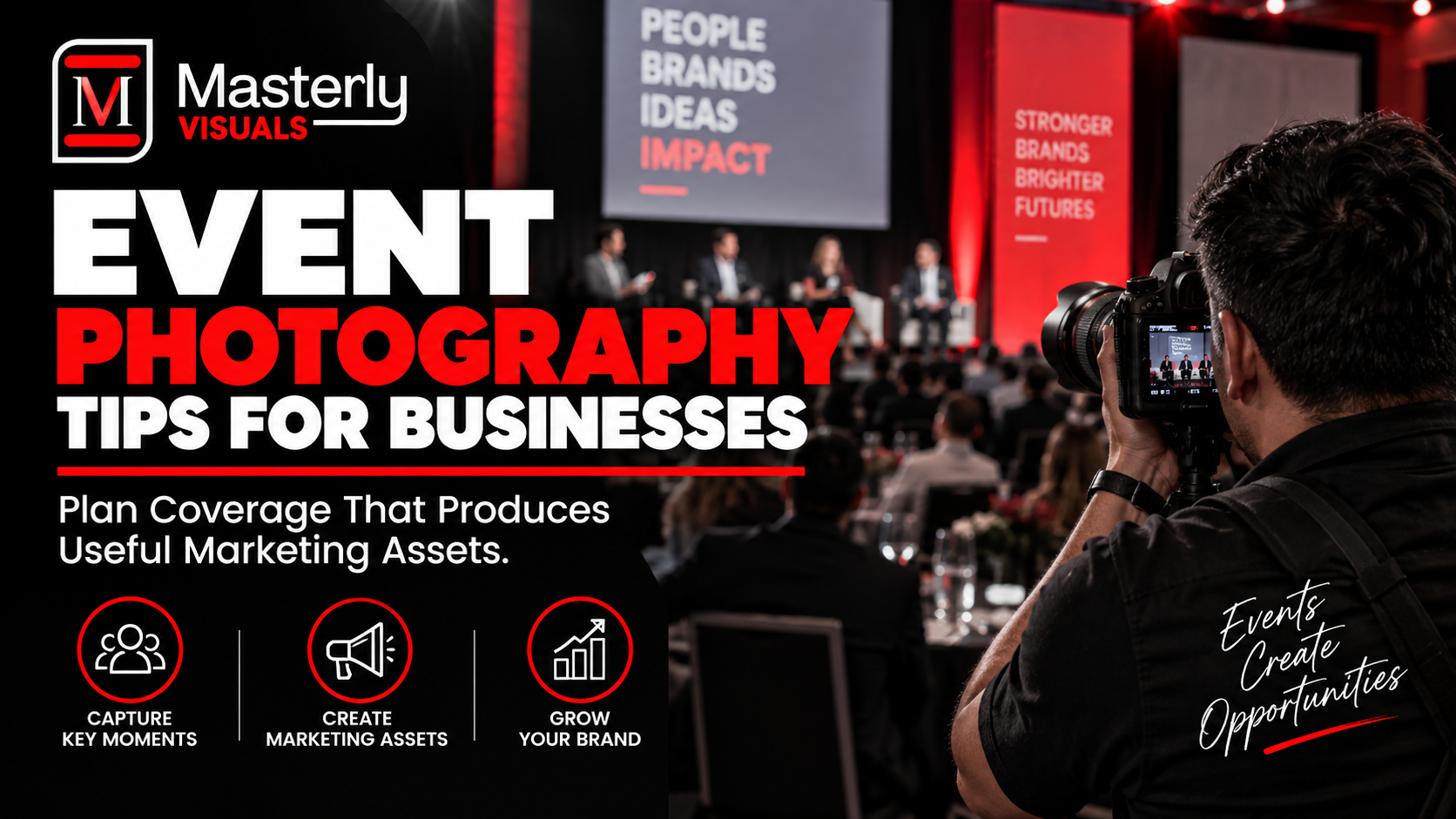
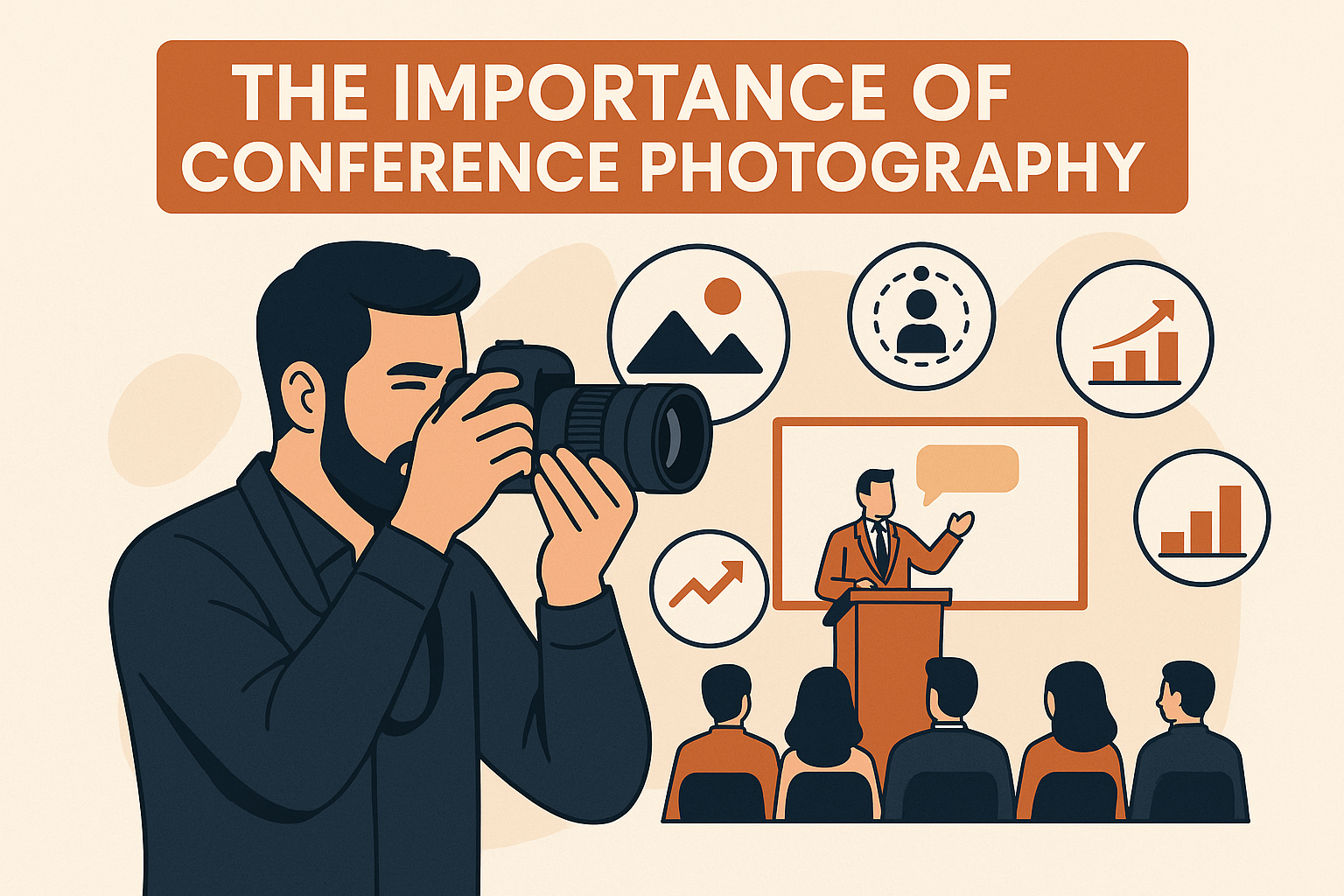

Your Conference Deserves the Expertise of a Photography Conference Team

June 27, 2025

Share this article

Planning a conference is never just an event—it’s an opportunity to make a lasting impact on your attendees and your brand. When you want every moment documented with skill and creativity, partnering with a dedicated photography conference team makes all the difference. Whether you’re hosting a trade show, festival, or industry summit, professional photographers bring experience, artistry, and an eye for detail that elevate your gathering beyond the ordinary.
Below, you’ll discover why investing in an experienced photography team is essential, what to expect from the process, and how it positions your event as a benchmark of quality in the photography industry.

The Power of Professional Photography for Conferences

High-quality v isuals are no longer a luxury—they’re expected by attendees and sponsors alike. A team of professional photographers provides the coverage that showcases your conference’s most dynamic moments, from keynote addresses to small group sessions.
When you hire seasoned photographers, you also gain:
  • Business insights about what imagery resonates with your audience.
  • Expert knowledge of photography techniques to capture everything from bustling expo halls to intimate networking opportunities.
  • An archive of marketing-ready content that builds anticipation for future events.

These images aren’t just for memories—they’re essential tools for promotion, engagement, and credibility.


Highlighting Your Brand with Visual Storytelling

Every confere nce has a story, and professional photography ensures it’s told with impact. Through visual storytelling, you can reveal the energy and purpose behind your event, whether it’s a light photography summit, a photography farm retreat, or a large-scale expo in Las Vegas.
Your dedicated photography team can document:
  • Speaker presentations and panel discussions.
  • Hands-on learning workshops and master classes.
  • Vendor booths and rare gear showcases.
  • Candid interactions between guests and industry leaders.

The result is a collection of im ages that reflect your event’s spirit and inspire people to join you next time.


Capturing the Energy of Photography Trade Shows

Photography trade shows are some of the most vibrant gatherings in the industry, bringing together major brands, independent creatives, and innovators. These events are also perfect occasions to build community and learn from top photographers and industry experts.
When your conference team captures these experiences, you gain:
  • Highlights of exclusive deals in the expo zone.
  • Scenes of bustling aisles lined with street vendors and product demos.
  • Dynamic images of attendees testing new gear and learning advanced techniques.

This coverage reinforces your reputation as a must-attend destination for serious professionals.


Celebrating Learning and Connection

Conferences thrive o n the power of connection. From small group classes to portfolio reviews and supper clubs, each experience offers a chance for attendees to grow and bond. A professional team captures:
  • Thoughtful conversations during small group mentoring.
  • Candid portraits of attendees sharing insights.
  • Action shots during styled shoots and photo walks.

These images are a testament to your conference’s value, proving you deliver more than just content—you deliver community.


Showcasing Industry Leaders and Major Speakers

Your event likely feature s industry leading speakers, including national and international voices from the world of photography. From the Xposure International Photography festival to the London Photo Video Convention, top gatherings are defined by the presence of celebrated educators and artists. Your photography team ensures you document:
  • Compelling keynote sessions.
  • Interactive Q&A moments.
  • Candid snapshots of presenters engaging with the audience.

When these visuals circulate online, they establish your conference as a trusted platform for inspiration and knowledge.


Documenting Creative Exploration and New Techniques

Attendees expect to se e and try the latest innovations, whether they’re exploring emerging technologies, hybrid photographers workflows, or experimental lighting setups. Professional photographers can cover:
  • Hands-on classes where attendees practice new techniques.
  • Deep dive sessions that examine niche topics.
  • Dedicated implementation time when skills are put into action.

These images show your commitment to staying on the cutting edge of the photography trade.


Preserving Special Moments and Milestone Events

Your conference is fu ll of milestones worth celebrating, from the opening ceremony to the final WPC Awards Ceremony. Every special moment deserves to be recorded with precision. This includes:
  • Recognition of outstanding photographers and contributors.
  • Emotional acceptance speeches.
  • Behind-the-scenes glimpses of award preparations.

Capturing these milestones honors yo ur participants and boosts your event’s credibility.


Building a Stronger Brand Presence

Photography isn’t only about documentation—it’s a crucial marketing asset. Images of packed rooms, engaged audiences, and inspiring exhibitions help future attendees imagine themselves in those moments. A strong visual record supports:
  • Ongoing promotion across social media, email, and press.
  • Sponsorship proposals for the next year.
  • Media coverage and feature stories.

This investment pays off in more registrations and stronger brand loyalty.


Showcasing the Diversity of Photography Specialties

Your conferenc e likely celebrates every corner of the industry, from wedding photographers and portrait photographers to boudoir photography specialists and documentary wedding photography pros. Your photography team can create a rich gallery that highlights:
  • Varied approaches and styles.
  • Hands-on learning for each specialty.
  • Enthusiastic participants immersed in their craft.

These images demonstrate that yo ur event welcomes photographers of all interests and backgrounds.


Capturing Global Influence and International Attendance

Many conference s attract guests from around the world, including national and international speakers, international photography organizations, and attendees eager to connect. With the right coverage, you can illustrate:
  • Global diversity in attendees and presenters.
  • Moments of cross-cultural exchange.
  • The universal language of creativity.

These visuals help your event stand out as a truly international destination.


Promoting Future Events Through Powerful Imagery

Professional images are your most persuasive marketing tool. They allow you to:
  • Build anticipation for upcoming gatherings.
  • Announce new pre-convention workshops and main stage programs.
  • Celebrate past success stories that inspire future attendance.

By investing in a skilled photography team, you’re also investing in the future of your event.


Bringing the Best of Photography to Every Session

Your photographers do n’t just show up with cameras—they bring years of photography skills , an understanding of business forward events, and a passion for helping you shine. Their approach includes:
  • Blending candid and posed shots.
  • Capturin g detail-rich images for social media and press.
  • Offering quick turnaround so you can share highlights fast.

Every frame is crafted to showcase your conf erence’s energy and professionalism.


Enhancing Engagement with Cutting Edge Technology

Modern photogra phy teams use cutting edge technology to deliver exceptional results. From wireless image transfer to instant editing and display, these tools ensure no moment is missed. This capability supports:
  • Real-time sharing of event highlights.
  • Quick production of promotional materials.
  • Seamless delivery of high-resolution files to your team.

When you work with professionals, yo u benefit from the latest innovations in the field.


Encouraging Community Building and Collaboration

Your conference thrives when peop le connect, whether in entrepreneur villages, citywide fringe programs, or informal networking sessions. Skilled photographers document:
  • Informal gatherings that build trust.
  • Master classes that spark creative ideas.
  • Shared moments that make your event unforgettable.

These visuals help you showcase your commitment to fostering a supportive community.


Elevating Your Event Beyond Expectations

When you choos e a dedicated photography team, you elevate your conference from a simple gathering to an unforgettable experience. You also position your event as one of the top photography events in the industry.
Whether you’re hosting in San Diego, Panama City Beach, or Rotterdam Art Week, a professional team ensures every detail is captured beautifully and shared widely.

Showcasing Creative Photographers and Industry Professionals at Every Conference

A successful c onference is more than presentations—it’s a celebration of the entire photography business, from independent photographers and newborn photographer specialists to creative photographers redefining the art form. By working with an experienced photography team, you can gain insights into how attendees engage, network, and explore exhibitions that feature the latest trends in visual storytelling.
Your photographers will capture everything from dynamic community building activities and vibrant film festival screenings to educational panels with top industry leaders. Whether your event includes a dedicated Imaging USA pavilion, a bustling trade floor, or a dedicated space for small group learning, professional coverage ensures every moment is documented beautifully. These images become essential tools for sharing your business strategies, promoting future events, and inspiring photographers at all stages of their careers.

Ready to Capture Every Moment of Your Conference?

Your event deserv es imagery that reflects its importance, energy, and impact. Our team of experienced photographers is passionate about telling your story and helping you stand out in the photography community.
From han ds-on lea rning sessions to inspiring main stage talks, we’re committed to documenting every moment with artistry and care. We work with clients throughout the country and nationally, delivering visuals that support your goals long after the event ends.
Contact us at 469-902-9919     to book a free consultation and discover how we can make your next photography conference truly unforgettable.

Recent Posts

By Angelie Te August 15, 2026
Editorial Photography: How Story-Driven Images Support Brands, Publications, and Campaigns If your brand publishes articles, runs awareness campaigns, or maintains a magazine or blog, you already know that generic visuals fall flat. Readers scroll past them. Editorial photography offers something different: images built around a story, designed to make people stop, read, and remember. This guide breaks down what editorial photography is, how it differs from commercial work, where brands and publications use it, and how to plan a shoot that delivers narrative-driven results across channels. What Is Editorial Photography (and Why It Matters for Your Brand Today) Editorial photography refers to images created to support a story, article, or concept in a publication-whether that publication is a print magazine, a newspaper, a brand blog, or any of the growing number of online publications producing long-form content. The focus is on storytelling rather than selling products. Unlike stock photography, which provides generic visuals, editorial work is purpose-built to illustrate a specific narrative. This is distinct from corporate headshots, product shots, or basic branding visuals. Those assets serve important roles, but editorial photographs add narrative depth-they turn abstract ideas like sustainability, innovation, or community into human-centered stories that readers connect with emotionally. Editorial photography is often more subjective and creative than photojournalism, which is a type of photography focused on documenting real-time events. While photojournalism reports facts, editorial images interpret themes, weaving narrative through deliberate visual choices. The business case is straightforward. In surveys, roughly 46% of senior marketing executives say photography is "critical" to their storytelling efforts, and research shows that articles using strong visual storytelling can increase time-on-page by 30–50% compared with text-only content. That translates to better PR pickup, stronger campaign memorability, and deeper audience engagement. In the sections ahead, you'll learn where editorial style images fit in modern marketing, how an editorial photographer works alongside brands and editors, and how to plan a story-driven shoot from brief to delivery.
By Angelie Te August 14, 2026
Why Environmental Portraits Matter for Modern Brands  A studio headshot isolates a person against a neutral backdrop. An environmental portrait does the opposite: it places the subject in a real location, whether that's an engineering lab, a restaurant kitchen, or a warehouse floor, and lets the surroundings carry part of the story. Environmental portraits show subjects in their natural surroundings, revealing context, identity, and profession in a single frame. The reader problem is simple. Generic studio portraits feel interchangeable. A SaaS founder standing in a white sweep looks identical to every other founder on every other About page. Swap the background for that founder's product war room, with roadmap sketches on the wall and a prototype on the desk, and the image communicates something specific: who this person is, what they build, and how they think. Environmental portrait photography builds trust on About pages, pitch decks, LinkedIn profiles, and recruiting campaigns by showing real people in real workplaces. Key aspects of environmental portraits include context, narrative, authenticity, and compositional balance. This article covers leadership portraits, workplace portraits, and team photography in actual work environments. Masterly Visuals specializes in this kind of on-location photography. If you want to skip ahead, you can request a commercial portrait consultation at any time.
Commercial photography studio capturing professional brand imagery for business marketing.
By Amber Aniston August 12, 2026
Discover what commercial photography is, its key types, and how businesses use it to boost sales, recruit talent, and build brand identity. Learn how to plan a commercial image library with Masterly Visuals for consistent, high-quality visuals across all marketing channels.
Virtual staging transforms an empty room with digital furniture for real estate marketing.
By Amber Aniston August 10, 2026
Discover how virtual staging transforms real estate marketing by digitally furnishing empty spaces to attract buyers, reduce time on market, and enhance listing visuals with fast, cost-effective, and customizable solutions from Masterly Property Visuals.
Product photographer creating professional commercial product images
August 10, 2026
Hire a product photographer for ecommerce, catalog, commercial, and product launch photography with professional image licensing and product photography services.
Corporate photography services for business professionals
August 10, 2026
Corporate photography services for executives, employees, and businesses. Build a professional image library with strategic commercial photography planning.
By Angelie Te August 8, 2026
Video marketing is essential in today's fast-moving real estate market, and commercial properties demand more from it than a simple home tour. This guide covers what real estate videography looks like when the asset is an office tower, logistics warehouse, retail center, or 200-key hotel - and why the discipline requires a fundamentally different approach than filming a family home. Below, you will find a practical breakdown of planning, shooting, editing, and deploying commercial property video to reach tenants, investors, and brand users who make decisions based on movement, scale, and location.
Brand photographer creating executive and business brand photos for a professional company
August 7, 2026
Need a brand photographer for your business? Masterly Visuals creates professional image libraries for founders, executives, firms, websites, sales, and marketing.
Professional product photography services for brands
August 7, 2026
Need consistent product photography services? Masterly Visuals creates professional ecommerce, catalog, white-background, and lifestyle images for leading brands.
By Angelie Te August 6, 2026
Why Brand Architecture Matters for Multi-Brand Founders Picture a founder in 2026 running a holding company with four entities: a SaaS platform, a consulting services arm, a recently acquired logistics startup, and a small media brand. Each has its own name, its own website, and its own sales deck. Prospects regularly ask, "Are these the same company?" The sales team at the SaaS platform has started describing the consulting arm as a competitor. The logistics acquisition still carries its old branding, and nobody has decided whether it should. This is a brand architecture problem. Brand architecture is the strategic framework that organizes a company's portfolio of brands, products, and services and defines both visible and invisible relationships among parent, sub, and sibling brands. It determines which names show up where, which logos appear on which materials, and how customers, investors, and employees understand your ecosystem. For founders, holding-company leaders, and multi-brand operators, brand architecture matters because it shapes customer clarity, acquisition integration speed, marketing efficiency, hiring narratives, and exit optionality. Poor brand architecture can lead to customer confusion and poor performance across every entity in the portfolio. This article covers the core brand architecture models (branded house, house of brands, endorsed, hybrid), how to choose and evolve a structure, and how to protect brand equity as your portfolio grows. What Is Brand Architecture? (Fast, Founder-Friendly Definition) Understanding brand architecture starts with a simple idea: it organizes how all the brands in your portfolio relate to each other and show up in the market. Brand architecture defines relationships between parent and sub-brands, covering everything from naming conventions and logo systems to messaging tone and website structure. It connects directly to your broader brand strategy, your brand positioning for each entity, and your day-to-day brand management decisions. This is not a chart on a slide deck. It is a set of intentional decisions about where brands share equity and where they stay independent. A well-defined brand architecture brings clarity to customers, partners, and internal teams about what belongs together and what stands apart. The classic terms you will encounter are branded house, house of brands, endorsed brands, and hybrid brand architecture. Each represents a different way of structuring brand relationships within a portfolio. The main types of brand architecture are Branded House, House of Brands, and Endorsed Brands, with hybrid models blending elements of each.
Show More