Commercial Photography Tips: How Businesses Get More Value From a Professional Shoot
A commercial photography project can become expensive when the business does not have a clear plan for what the images need to accomplish. A company may finish a shoot with hundreds of photographs, yet still discover that it is missing the right banner image, executive portrait, product angle, campaign variation, or content for an important marketing channel.
These are the problems that make commercial photography tips valuable for business leaders and marketing teams.
The goal is not simply to produce more photographs. It is to create the right visual assets for the brand, campaign, website, advertising, social media, sales materials, and future marketing needs.
Masterly Visuals provides professional commercial photography for businesses that need a structured production process and images designed around real business objectives.
Start With the Business Objective, Not the Camera
The first question should be simple: What does the business need these photographs to accomplish?
A commercial shoot may support a product launch, website redesign, advertising campaign, annual marketing plan, employer branding initiative, corporate communications, or a new brand direction.
The answer affects almost every part of the project.
It can influence the people needed on set, the locations, the number of photographs, the image formats, the creative direction, and the final delivery.
This is why professional business photography tips should begin with business goals rather than equipment or technical details.
A clear objective gives the photography project a purpose.
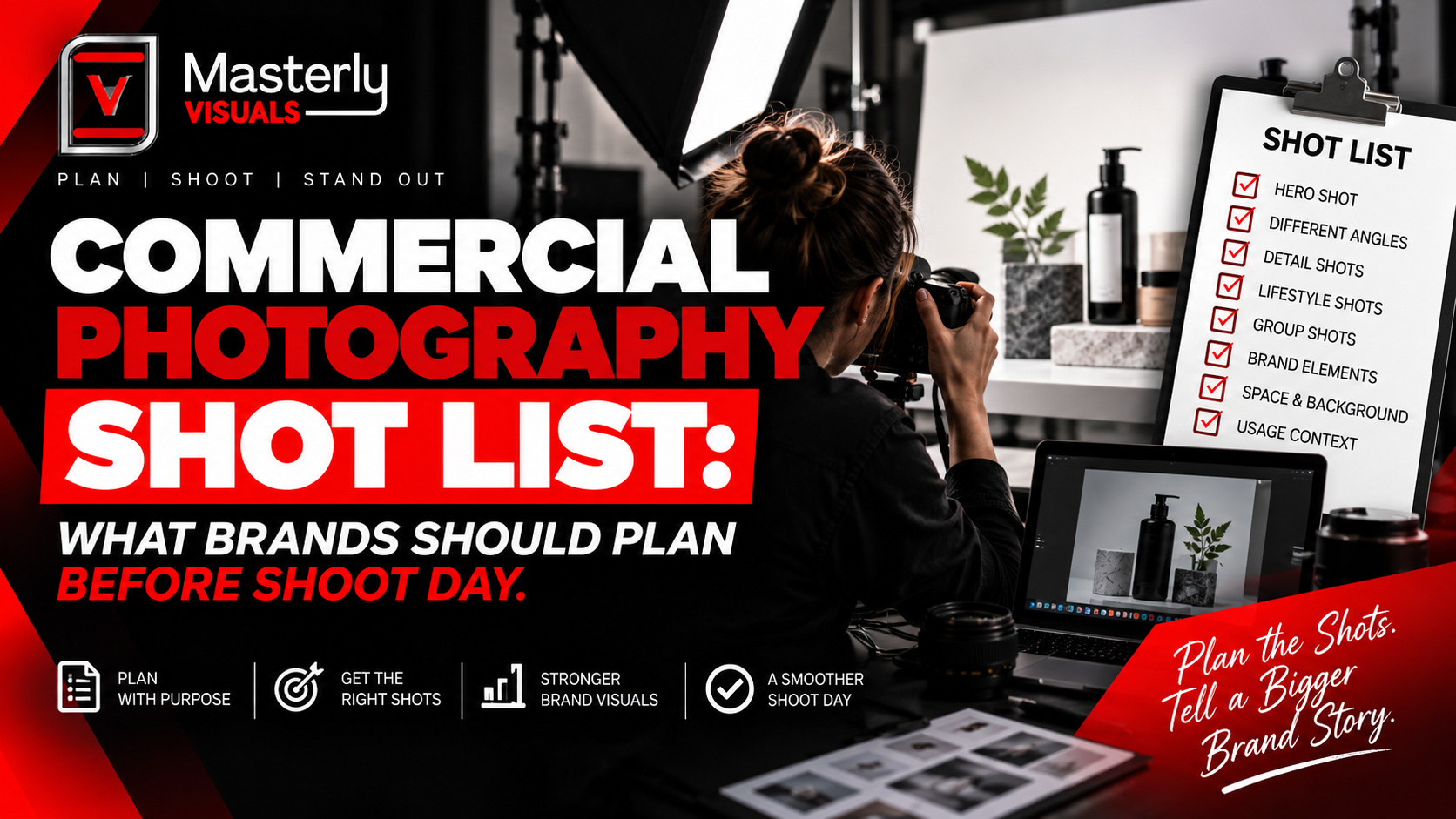
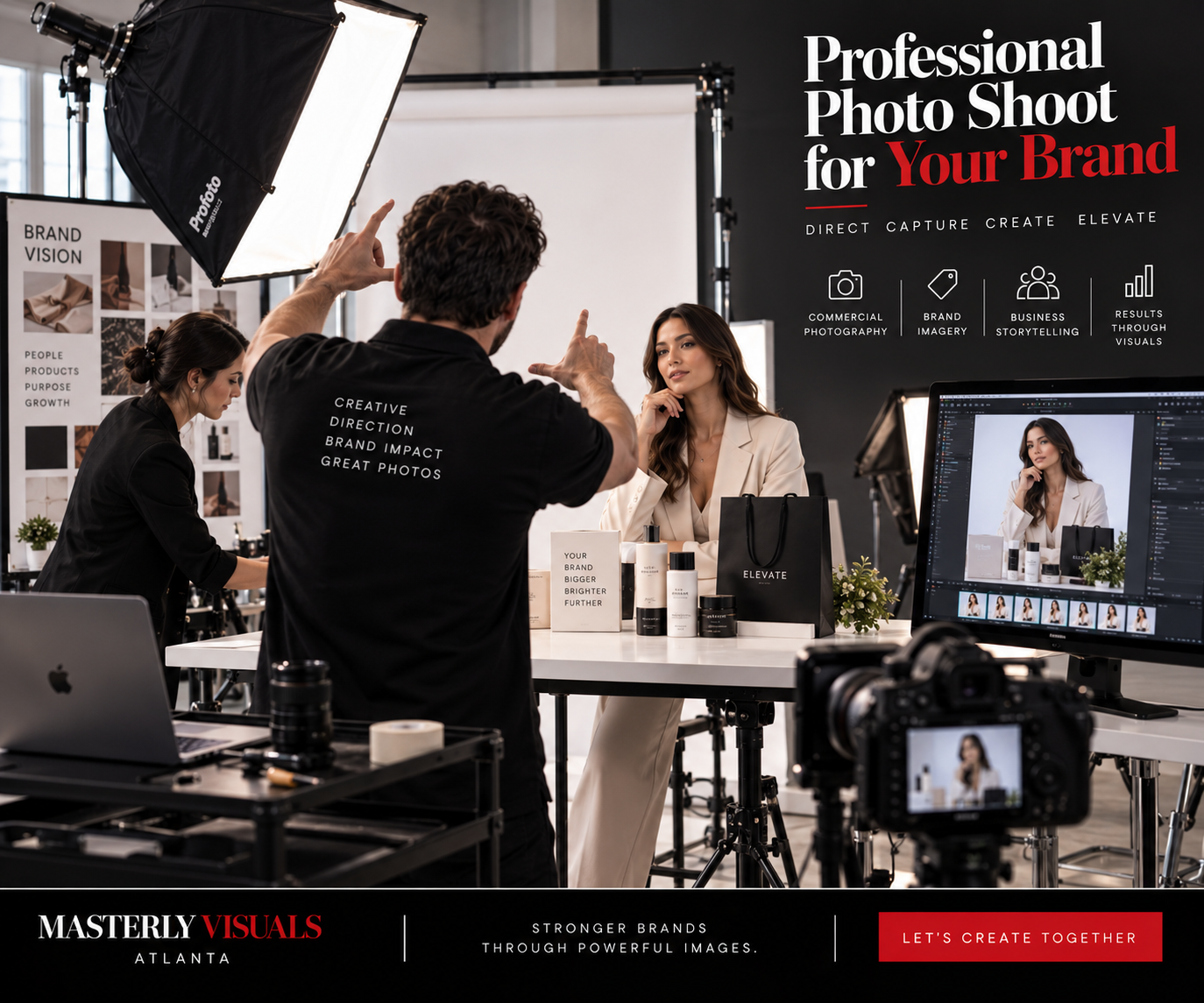
Commercial Shoot Planning Starts With a Clear Shot List
A strong shot list helps turn a broad creative idea into a practical production plan. Build it through direct talk with clients so the team can cover the job properly and know the needed photos before the shoot.
The list can identify the photographs the business actually needs, such as:
- Hero campaign images
- Website banners
- Product photographs
- Team images
- Executive portraits
- Customer-facing lifestyle images
- Social media assets
- Advertising variations
- Detail photographs
- Vertical and horizontal compositions
Ask for example images and create an inspiration board, since most clients need help clarifying their vision and aligning expectations for each photo.
A shot list can also identify priority images that must be captured even if the schedule becomes tight.
This helps the photography team understand what matters most before production begins. Clear client communication at this stage helps avoid reshooting later.
Brand Standards Should Guide the Visual Direction
A commercial shoot should look like it belongs to the company.
If the brand already has established colors, typography, visual references, photography styles, or other brand standards, those elements should be considered during planning, and brand references should communicate the intended style clearly before production begins.
The photography may need to match an existing website or campaign.
For example, a company may prefer clean and minimal images, while another brand may use warmer lifestyle photography. A technology company may need modern environmental images, while a hospitality brand may require more atmosphere and human interaction.
Professional photography should support the existing brand rather than create disconnected visuals.
Commercial Photography Production Planning Reduces Unnecessary Problems
Photography production planning brings the creative and practical parts of the project together.
It can include:
- Creative direction
- Shot list
- Schedule
- Talent
- Wardrobe
- Hair and makeup
- Location
- Props
- Lighting requirements
- Equipment needs
- Image formats
- Approvals
- Delivery requirements
- Intended image usage
Strong pre-production skills are essential for photographers, and the more time you pre plan and spend here, the higher the quality of the final commercial images.
The more complex the project, the more important this planning becomes.
A commercial shoot involving several locations and talent requires a different level of preparation from a simple executive portrait session.
Good planning gives the production team a shared understanding of what needs to happen.
Talent Should Match the Purpose of the Images
People appearing in commercial photographs should fit the project.
Depending on the campaign, talent may include employees, executives, professional models, customers, actors, or other participants.
The right choice depends on the brand and intended audience.
Businesses should also consider scheduling, appearance, wardrobe, releases, and availability before the shoot.
When talent planning is handled early, the photography team can focus on creating the images rather than solving avoidable production problems on the day.
Location Can Change the Entire Look of a Campaign
Location is another major part of commercial photography.
A business may choose an office, studio, retail space, outdoor location, event venue, production facility, or another environment that supports the brand.
The location should serve a purpose.
A photograph showing employees in a real workplace may communicate company culture. A controlled studio may provide a cleaner environment for product or advertising photography, especially when the subject needs to stand out clearly. For product photography, changing the background or using a variety of surfaces can create different
compositions and change the look of the final images, and including a hand or prop in the frame can add context when it fits the concept.
The right location depends on what the business wants the audience to understand.
Plan for Different Image Formats and Marketing Channels
A single photograph may not work equally well everywhere.
Websites, social media platforms, digital advertising, print materials, presentations, and email campaigns can require different image orientations and compositions.
A commercial shoot should consider these needs before photography begins.
For example, a business may need:
- Horizontal website images
- Vertical social media assets
- Square campaign images
- Wide banner photographs
- Cropped advertising variations
- Images with usable negative space for text that helps keep focus on the subject
Planning these requirements in advance can make the final image library much more useful.
Clarify Usage Rights Before Production
Commercial photography can involve important questions about how photographs may be used.
Businesses may need images for websites, advertising, social media, print campaigns, packaging, publications, or other marketing channels.
The intended usage should be discussed as part of the project scope.
Usage terms can vary depending on the photographer, talent, production, and project requirements.
Clarifying these details before the shoot helps avoid confusion later and gives the business a clearer understanding of what it can do with the final assets.
Approvals Should Be Part of the Process
Commercial projects often involve several decision-makers.
Professional clients usually expect reliable approvals, technical precision, and fewer last-minute surprises.
A marketing director may approve the creative direction. A brand manager may review visual consistency. A legal or communications team may have additional requirements.
If these approvals happen too late, production can become slower and more expensive.
A clear approval process helps everyone understand who needs to review the project and when.
This is particularly useful for larger campaigns where the photography will be used across multiple business channels.
Think Beyond the First Campaign
One of the biggest opportunities in commercial photography is asset reuse.
A carefully planned shoot can produce photographs for more than one immediate campaign.
Images may later support:
- Website updates
- Social media
- Email campaigns
- Sales presentations
- Advertising
- Press releases
- Blog content
- Company profiles
- Recruiting materials
- Seasonal promotions
This does not mean every photograph needs to be used everywhere.
Instead, the production should consider whether certain images can serve multiple future purposes.
That can increase the practical value of the photography investment.
Build an Image Library, Not Just a One-Time Gallery
Businesses with ongoing content needs may benefit from creating a broader visual library.
Instead of producing completely new photography every time marketing needs an image, an annual or seasonal content plan can create a collection of assets in advance.
This may include several campaigns, team photographs, products, environments, executives, lifestyle images, and supporting content.
A planned image library can help marketing teams work faster because professional assets are already available when needed.
Commercial Photography Tips for Better Executive Decisions
For business leaders, the most useful photography questions are often not technical. Even so, mastering lighting matters because a controlled lighting setup shapes consistency, image quality, and the level of control you have over the final look, whether you use natural light or artificial light.
They are questions such as:
- What business goal does this shoot support?
- Which images are essential?
- Where will the photographs be used?
- Who needs to approve them?
- Which people and locations are required?
- What rights are needed?
- Can the assets be reused?
- What needs to be delivered immediately?
- Will the shoot rely on flash photography, reflectors to fill shadows, or other light modifiers rather than expensive gear to get the intended result?
- Can this production support future campaigns?
Answering these questions before the shoot can make the project easier to manage and easier to measure.
Masterly Visuals Provides a Structured Commercial Photography Solution
Masterly Visuals works with businesses that need professional photography tied to real marketing and communication goals.
The project can be scoped around the business objective, creative direction, shot list, talent, locations, usage requirements, approvals, and final deliverables, with room to talk with clients from scoping through final delivery.
This allows the photography production to be planned as part of the larger marketing strategy.
Rather than leaving the business with a large collection of disconnected images, the goal is to create useful visual assets that have clear purposes.
Explore Masterly Visuals to learn more about professional commercial photography services.
When a Commercial Photography Project Needs Professional Planning
Professional production becomes especially useful when a business is:
- Launching a major campaign
- Updating its website
- Building a new content library
- Handling product photography for multiple products
- Creating executive or team imagery
- Expanding into new marketing channels
- Working with professional talent
- Photographing multiple locations
- Managing strict brand standards
- Needing more control over light with a more complex lighting setup
- Planning content for an entire year
The larger the project, the more valuable a clear production scope becomes.
Professional Photographer and Commercial Production Make a Difference
Hiring a professional photographer for a commercial photo shoot is about more than taking photos with expensive equipment. A skilled commercial photographer understands how to create images that represent the brand, showcase the actual product, and appeal to potential clients. During a professional shoot, factors such as ambient light, a shoot through umbrella, shutter speed, lens choice, and camera bodies are considered together to create the right visual result. The goal is not simply to capture a perfect shot, but to produce a consistent collection of images that can support commercial work, marketing campaigns, advertising, ecommerce, and portfolio work.
Professional Gear, Experienced Models, and Post Processing
A professional gear list can include multiple camera bodies, professional lenses, lighting equipment, modifiers, and tools for controlling depth and exposure. When experienced models are involved, the photographer can also focus on creating natural expressions, movement, and compositions that make the images feel purposeful. After the photo shoot, post processing and editing help refine the images while preserving the appearance of the product, people, and brand. Tools such as Adobe Photoshop can be part of this process, but professional photography is not about editing a weak picture until it looks perfect. Strong lighting, composition, direction, and production decisions happen first.
Better Photos Should Support the Business
For most people, the value of professional photography becomes clear when images need to do more than simply look good. Better photos can help a company showcase its products, services, people, or brand across websites, social media, advertising, and marketing materials. A strong image can communicate quality and give potential customers a clearer sense of what a business offers. This is especially important when the image has a direct point or purpose, such as helping a customer understand a product, remember a brand, or make a purchase decision.
Cost Effective Photography Creates More Usable Content
Professional photography can also be cost effective when one planned shoot produces a wide range of useful assets. Instead of paying for separate photography every time new content is needed, businesses can plan a production around multiple uses and deliverables. A single session can create images for a website, campaign, social posts, advertising, portfolio, and other marketing needs. This approach can save time and reduce the amount of money spent recreating similar content later.
Experiment With Creative Direction Without Losing the Brand
A commercial shoot can provide room to experiment with composition, lighting, movement, color, and visual depth while maintaining a clear brand direction. The photographer may capture several variations rather than relying on one perfect shot, giving the marketing team more options after the shoot. These images can later be used to showcase the brand, support commercial work, or create new campaign materials. The result is a professional image library designed to help the business communicate, market, and sell more effectively.
Frequently Asked Questions About Commercial Photography Tips
What are the most important commercial photography tips for businesses?
Start with the business objective, create a clear shot list, define brand standards, plan talent and locations, clarify usage, establish approvals, and consider how the images can be reused. It also helps to talk with clients, stakeholders, or internal teams early to confirm the needed photos and the overall vision.
What is commercial shoot planning?
Commercial shoot planning is the process of organizing the creative and production requirements for a professional photography project before the shoot takes place. Teams often pre plan approvals, styling, and alignment before shoot day.
Why are business photography tips important?
Business photography tips help companies connect photography decisions to marketing goals, brand standards, customer needs, and future content requirements.
What is photography production planning?
Photography production planning coordinates the people, locations, schedule, creative direction, equipment, image requirements, approvals, and delivery needs for a shoot. It also covers the lighting setup when consistency matters, because controlled lighting is essential for consistent commercial results and gives the team more control.
Should a commercial shoot have a shot list?
Yes. A shot list helps identify priority images and gives the production team a clear understanding of what needs to be photographed.
Do businesses need to plan image usage?
Yes. Knowing where photographs will appear can help determine the appropriate formats, compositions, deliverables, and usage requirements.
Should usage rights be discussed before a commercial shoot?
Yes. Usage terms should be clarified before production so the business understands how the final images can be used.
Can one commercial shoot create content for multiple channels?
Yes. With proper planning, photographs can be created for websites, advertising, social media, print, email, sales materials, and other marketing uses.
Can Masterly Visuals help plan a commercial photography project?
Yes. Masterly Visuals can scope commercial photography around your business goals, shot list, brand requirements, talent, locations, usage needs, approvals, and final deliverables. Before production begins, we align with clients on vision, needed photos, and approvals.
Request a Commercial Photography Scope for Your Business
The value of commercial photography is not measured by the number of images delivered.
It is measured by how useful those images are to the business.
Clear objectives, thoughtful commercial shoot planning, strong brand alignment, careful production planning, appropriate usage rights, and asset reuse can help businesses get more value from a professional photography investment.
Masterly Visuals can help turn those requirements into a focused commercial photography production, with a clear scope that helps clients understand exactly what service is being provided.
Invite Businesses to Scope a Campaign or Annual Content Library
If your business has an upcoming campaign, website project, product launch, or ongoing need for professional visual content, contact Masterly Visuals to discuss the scope.
A commercial photography project can be planned around your brand standards, marketing goals, content requirements, and future asset needs.
Call (404) 726-7261 to request a commercial photography consultation.
Visit Masterly Visuals to get started.
Recent Posts