Event Photography Tips for Businesses: Plan Coverage That Produces Useful Marketing Assets
An important business event can be full of valuable moments, but without the right photography coverage, many of those moments can be missed. Executives may leave without strong photographs. Sponsors may not receive useful brand images. Important signage may never be captured. Marketing teams may end up with hundreds of photographs but very few that are actually useful after the event.
These are the problems that make event photography tips valuable for businesses planning conferences, corporate gatherings, launches, networking events, award ceremonies, and other professional occasions.
The goal is not simply to photograph everything that happens.
The goal is to create a planned collection of images that supports the event itself and gives the business useful marketing assets afterward.
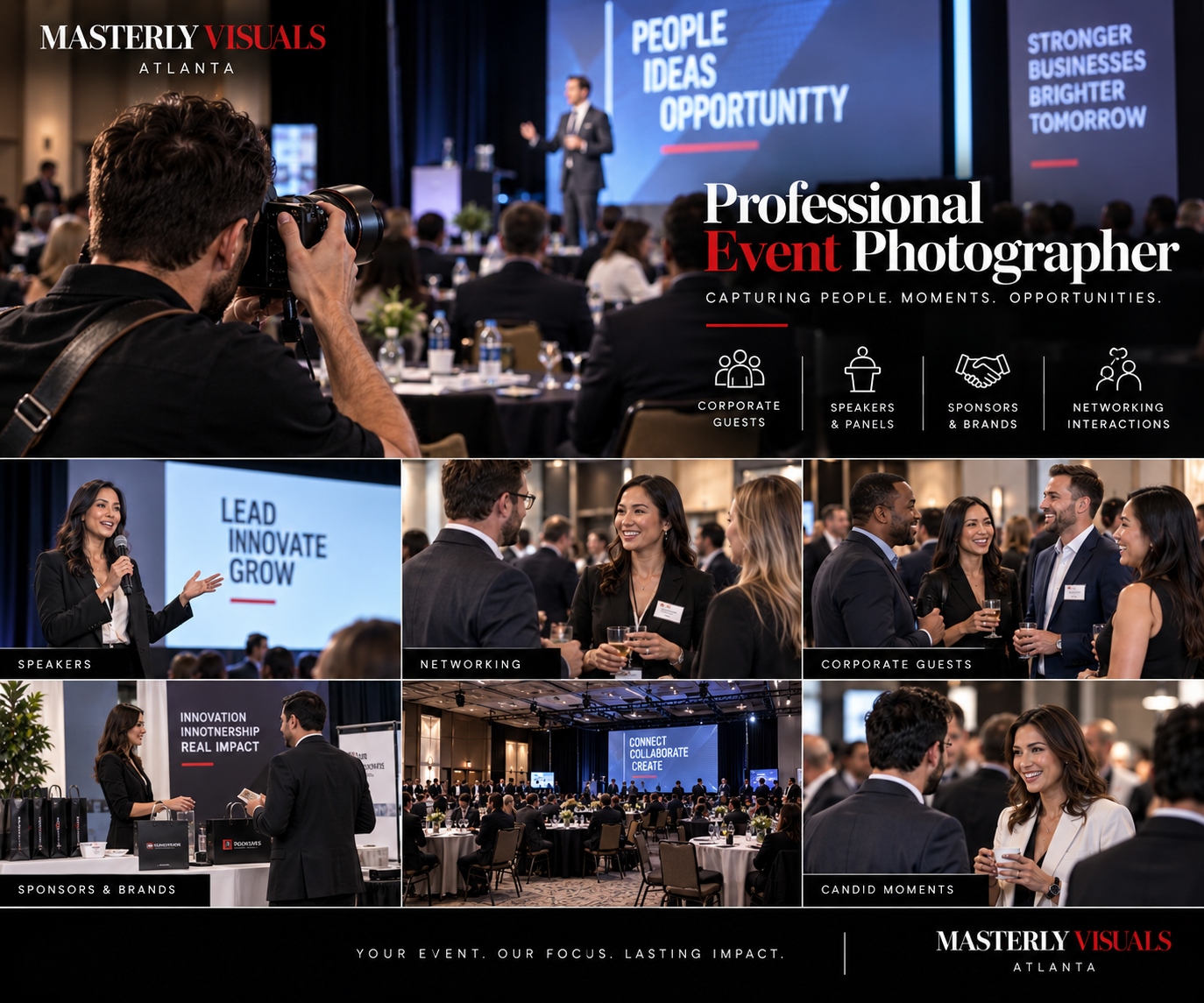
Masterly Visuals provides professional event photography for businesses and organizations that need reliable coverage, strong visual storytelling, and images that can continue working long after the event ends.
Why Event Photography Needs a Business Purpose
Event photography is often treated as documentation.
But professional event photographs can do much more.
They can support:
- Social media content
- Company websites
- Press releases
- Internal communications
- Sponsor reports
- Marketing campaigns
- Future event promotion
- Speaker profiles
- Corporate announcements
- Annual reports
- Email marketing
- Public relations
That means the photography plan should begin before the event.
Marketing teams should know what images they need and how those images will be used.
When photography is planned around those goals, the final gallery becomes more useful to the business.
Event Photography Tips Start With the Right Shot List
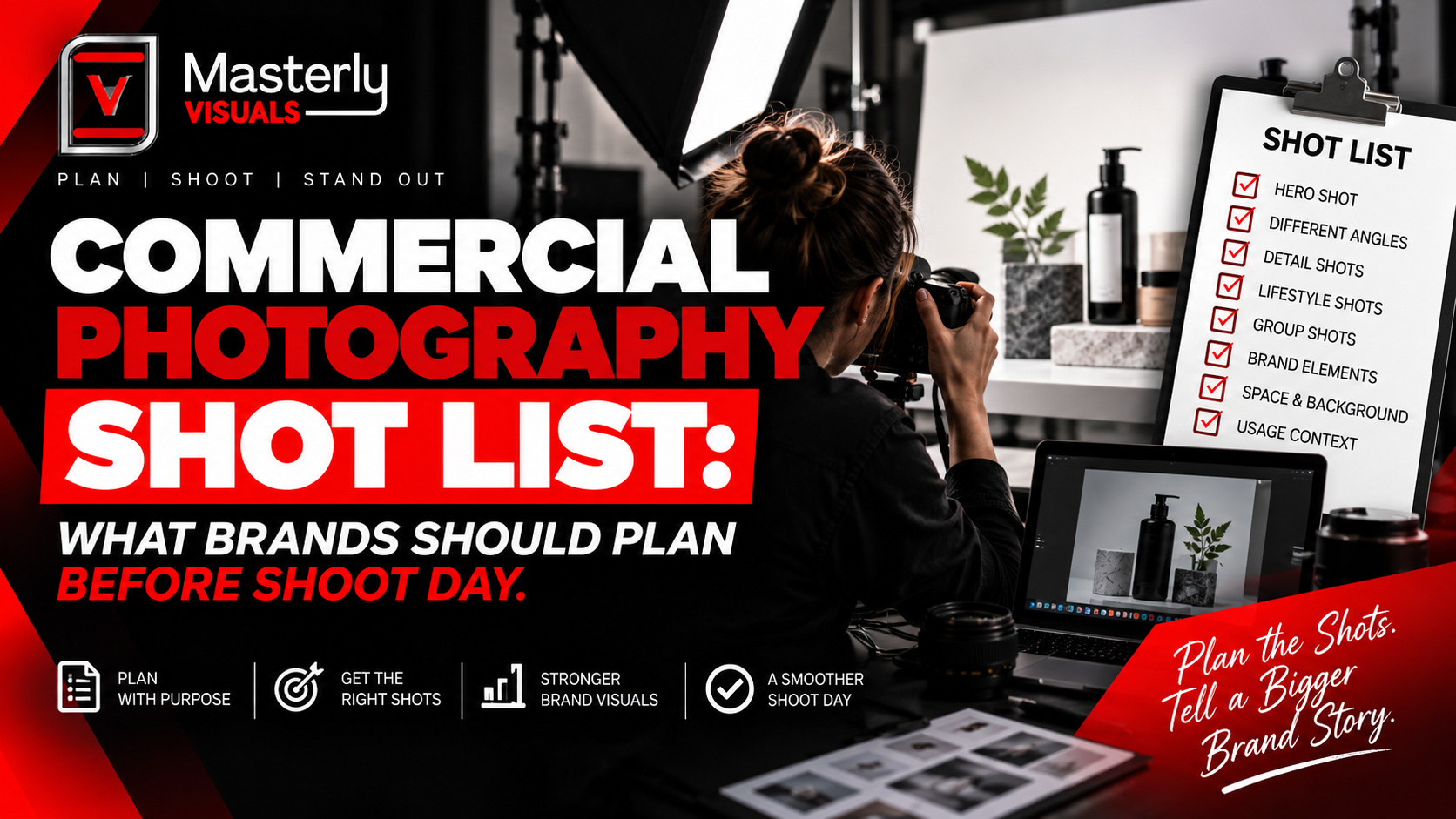
One of the most important planning tools is an event shot list.
When the client sends it at least one week before the event, it works as a practical photography checklist of priorities rather than a last-minute wish list. A good photography shot list is usually organized chronologically around the event schedule so nothing important gets missed.
A strong list may include:
- Event exterior
- Venue details
- Registration
- Welcome signage
- Branded displays
- Sponsors
- Speakers
- Executives
- Panel discussions
- Audience reactions
- Networking
- Group photographs
- Product displays
- Award presentations
- Entertainment
- Candid interactions
- Closing moments
The exact list should match the event.
Review the agenda with the client to confirm the must have shots, note any venue restrictions, and capture any specific requests before the day begins. A corporate leadership conference may need more executive and speaker coverage. A product launch may require more product and brand photography. A networking event may focus on relationships and attendee interaction.
The shot list gives the photographer a clear priority before the event begins.
How to Photograph Events Without Missing Important People
A common problem at large events is uneven coverage.
A photographer may capture many attendee interactions while missing an executive who only appears for a short period. A sponsor may have a branded activation that is not photographed properly. A speaker may finish a presentation before the photographer gets the right angle.
Professional planning reduces this risk.
Before the event, identify the people who must be photographed.
This may include:
- Company executives
- Key speakers
- VIP guests
- Sponsors
- Partners
- Award recipients
- Event organizers
- Important clients
- Special guests
Knowing who matters most allows the photography team to prioritize coverage when the schedule becomes busy.
Corporate Event Photos Should Show More Than the Stage
A common mistake is to focus almost entirely on speakers.
Stage photographs are important, but they are only one part of the story.
Strong corporate event photos can also show people listening, talking, networking, celebrating, learning, and interacting with the brand. Watch the crowd so you can anticipate reactions and interactions as they happen, not just wait for stage moments.
These photographs can communicate the atmosphere of the event in a way that a stage photograph alone cannot.
For example, an image of an audience reacting to a speaker may be more useful for future marketing than another photograph of the same presentation slide. A simple three-shot approach helps here: start with wide venue shots, add mid-range interactions that show people engaged, and then make room for a close up that captures genuine laughter or other natural reactions. Mixing shot types also leads to stronger candid shots and more useful close up shots across the event.
The goal is variety with purpose, and the best shots support the story rather than repeat the same angle.
Sponsors and Signage Deserve Planned Coverage
Sponsors often invest money and resources into an event.
Their branding should be visible in the final photography.
This may include:
- Sponsor walls
- Logos
- Branded booths
- Branded signage
- Step-and-repeat displays
- Product placements
- Sponsored sessions
- Promotional materials
- Branded attendee experiences that show attendees interacting with displays as part of the overall event branding
Capturing venue details before guests arrive also helps preserve clean context images for sponsor and branding use.
These images can be useful for sponsor reports and future partnership discussions.
Marketing teams should identify important sponsor requirements before the event so the photography team knows which branding elements need dedicated coverage.
Executive Photography Can Create Long-Term Marketing Value
Executives often appear at important business events, but their photographs can serve uses beyond the event itself.
A strong event photographer can capture executives speaking, interacting with attendees, meeting partners, participating in key moments, and creating posed portraits when images are needed later for PR or profile use.
These images can later support:
- Leadership profiles
- Company announcements
- LinkedIn posts
- Press coverage
- Website content
- Speaker pages
- Corporate communications
This makes executive coverage an important part of an event photography plan.
Capture Real-Time Marketing Assets
Modern marketing teams often need images quickly.
An event may generate social media opportunities while it is still happening.
A strong photography plan can account for real-time content needs.
Depending on the project, the client may need selected photographs quickly for:
- Same-day social posts
- Speaker announcements
- Sponsor recognition
- Media outreach
- Event recaps
- Internal communications
Turnaround expectations should be discussed before the event.
For corporate clients, it also helps to agree on expected final image volume in advance, such as delivering 50-75 final images per hour of coverage.
This allows the photography team to understand which images need priority and when they are required.
Plan for Post-Event Reuse
The value of event photography does not end when the event closes.
A well-planned gallery can continue supporting marketing for weeks or months.
Images can be reused for:
- Recap articles
- Future event promotions
- Social media
- Email campaigns
- Company websites
- News releases
- Sponsor materials
- Internal presentations
- Annual reports
- Speaker promotions
This is why businesses should think about image usage before hiring an event photographer.
The more clearly the final uses are defined, the easier it is to plan appropriate coverage.
Event Photography Tips Should Include Turnaround Expectations
Turnaround is an important part of the photography scope.
A business may need a small selection of images quickly while the full gallery can be delivered later.
For example, the project may require:
- A few priority images during the event
- A same-day selection
- A next-day preview
- A complete edited gallery after the event
There is no single turnaround schedule for every event.
The correct timeline depends on the size of the event, number of photographers, image volume, editing requirements, and intended use.
Discussing this before the event helps prevent confusion.
How Professional Event Coverage Protects Your Brand
Event photographs become part of your company's public image.
Poorly timed photographs, missed branding, weak composition, inconsistent editing, or harsh direct flash can make an important event look less polished than it actually was.
Professional coverage helps create a stronger visual record.
The photographer is not simply recording what happens.
They are looking for moments that communicate the quality, energy, relationships, and purpose of the event.
That can make a significant difference when the photographs are later shared publicly, especially when stronger coverage comes from using available light well for a more natural look instead of relying on flash.
Masterly Visuals Provides Planned Event Photography Coverage
Masterly Visuals works with businesses and organizations that need professional event photography with a clear purpose.
Coverage can be planned around the event schedule, key people, sponsors, branding, important moments, marketing requirements, and delivery timeline.
Before the event, the photography scope can address:
- Event schedule
- Coverage hours
- Number of photographers
- Priority people
- Shot list
- Sponsor requirements
- Branding
- Group photographs
- Executive coverage
- Real-time image needs
- Turnaround
- Final image delivery
- Post-event usage
- Arrive early, at least 30 minutes before the event starts, for venue scouting, lighting checks, and photos of the event space before guests enter.
- Review the event management team's setup and layout before coverage begins so movement, timing, and camera bodies are planned around the venue flow.
- Set up two camera bodies and dual-card recording during coverage so there is backup in case one memory card fails.
This helps ensure the photography supports the business rather than simply producing a large collection of photographs.
Explore Masterly Visuals to learn more about professional event photography services.
When Professional Event Photography Makes Sense
Professional coverage is particularly useful for events that involve:
- Executives or VIPs
- Sponsors
- Important clients
- Product launches
- Conferences
- Corporate meetings
- Awards
- Networking events
- Media attendance
- Large audiences
- Significant brand investment
If the event matters to your business, the photography should be planned with the same level of care as the rest of the production, and a professional photographer will scout the venue early to find the best angles, identify the best shooting positions, check lighting conditions in different areas, and avoid distracting backgrounds by checking for clutter before coverage begins.
Event Planners Need Coverage That Tells the Complete Story
Professional event planners need photographs that show more than isolated moments. Establishing shots can introduce the venue, room layout, and overall atmosphere before the closer images begin. Wide shots can capture the scale of the event, while photographs of sponsor booths, branded displays, and venue details can document the experience for clients and partners.
For most events, the strongest gallery combines the large picture with smaller moments. This may include a business card exchange, networking conversations, genuine interactions, and guests enjoying the event. The goal is to create a complete visual record without relying on repetitive images.
Capture Genuine Networking Interactions
Networking is often one of the most valuable parts of a business event, yet it can be easy to overlook when attention stays on the stage.
Photographs of networking interactions can show attendees speaking with executives, making connections, exchanging a business card, or discussing ideas between sessions. These moments can feel more natural than formal group photographs and can give future audiences a better sense of the event experience.
Rather than asking people to constantly stop and pose, professional event coverage can focus on genuine interactions as they naturally happen.
Wide Shots Show the Scale of the Event
Wide shots help communicate how large and active an event really was.
An image showing the entire room, audience, stage, lighting, and event design can provide important context. These photographs work especially well for conferences, a corporate gala, award ceremonies, product launches, and large networking events.
They can also give event planners useful visual material for promoting future events.
Speakers, Panels, and Award Winners Need Dedicated Coverage
Important people should not disappear into a large event gallery.
When an event includes a panel, coverage can include the entire panel as well as individual speakers and audience reactions. At an awards event, photographs of award winners receiving recognition can become important marketing and public relations assets.
These moments often happen quickly, so identifying priority people and scheduled moments before the event helps the photography team prepare.
Sponsor Booths and Branded Spaces Add Marketing Value
Sponsor booths can represent a major investment for an event.
Photographs should show both the branding and the people interacting with the activation. These images can later support sponsor reports, social media, event recaps, and future partnership discussions.
Venue branding, signs, displays, and promotional materials can also help establish where the event took place and who supported it.
Natural Light and Venue Lights Shape the Atmosphere
Lighting conditions can change throughout an event.
A daytime gathering may benefit from natural light, while evening events may rely heavily on venue lights and ambient light. A reception or gala may move from a bright main room to a darker networking space or dance floor.
Professional event coverage needs to account for these changing conditions while keeping the final gallery visually consistent.
Low-Light Events Require Careful Coverage
Some of the most important event moments happen in low light.
A corporate gala, evening reception, awards presentation, or dance floor can create challenging lighting conditions. Technical choices involving shutter speed, exposure, white balance, and motion can affect whether an image looks sharp and natural.
For example, uncontrolled motion blur can make an important moment difficult to use, while overly bright images can remove the atmosphere of the venue.
Professional event photography is designed to handle these changing conditions while preserving the feeling of the event.
Candid Moments Are More Than Quick Snap Photos
It can be tempting to simply snap photos throughout an event and sort through them later.
Professional coverage takes a more intentional approach.
The photographer watches for expressions, relationships, reactions, movement, and meaningful interactions. This can include guests laughing during a conversation, attendees responding to a speaker, colleagues meeting for the first time, or guests celebrating on the dance floor.
These genuine moments often become some of the most useful images after the event.
Event Coverage Requires Awareness of Constant Movement
Events are constantly changing.
Guests move between rooms. Speakers enter and leave the stage. Attendees gather around sponsor booths. Networking groups form and separate. People may move quickly through crowded spaces.
A professional photographer needs to remain aware of what is happening while taking notes on important schedule details and priority moments.
This allows coverage to remain flexible without losing sight of the event's main objectives.
Why Event Photography Is Different From Street Photography
Event photography may sometimes have a candid feeling similar to street photography, especially when capturing people naturally interacting.
However, business event photography has a specific purpose.
The images need to support the client, event planners, sponsors, speakers, and marketing team. Coverage must balance candid moments with required photographs of branding, executives, speakers, attendees, and key activities.
The result should feel natural while still meeting the professional needs of the event.
Test Shots Help Establish the Visual Standard
Before important moments begin, test shots can help the photography team understand the lighting and environment.
This is especially useful when moving between rooms or when venue lighting changes.
The goal is to establish a consistent visual approach before the most important moments take place. This can help reduce technical surprises when the event becomes busy.
Professional preparation means the photography team can focus more attention on the event itself once the key activities begin.
Frequently Asked Questions About Event Photography Tips
What are the most important event photography tips for businesses?
Start with the event goals, identify priority people and moments, create an event shot list organized chronologically by the event schedule so coverage priorities are easier to manage, plan sponsor and branding coverage, and plan ahead for equipment, changing conditions, and turnaround requirements before the event.
How to photograph events professionally?
Professional event photography combines planned coverage with the ability to capture important moments as they happen. The photographer should understand the schedule, people, branding, and intended image uses. It also requires confidence with technical details, since mastering camera settings for tricky lighting and practicing how to change them without looking at your camera helps you adjust quickly in changing light.
What should an event shot list include?
An event shot list acts as a checklist of must-have photos. Clients should ideally share that list at least one week prior to the event.
An event shot list can include speakers, executives, attendees, sponsors, signage, networking, venue details, products, awards, group shots, posed photos, and important candid moments.
Why are corporate event photos important?
Corporate event photos can document the event while also provide marketing content for websites, social media, press, internal communications, and future promotions. In corporate event photography, the strongest galleries usually pair posed group shots for documentation with candid images that show atmosphere and engagement.
Should executives be included in event photography?
Yes. Executive photographs can provide valuable content for company websites, leadership profiles, press materials, and corporate communications.
Should sponsors be photographed?
Yes. Sponsor branding and activations should be included when they are important to the event and sponsorship agreement.
How quickly should event photos be delivered?
The timeline depends on the project. Some businesses need selected images quickly, while the complete gallery may be delivered later.
Can event photos be reused after the event?
Yes. Professional event images can support social media, websites, marketing campaigns, email content, press materials, reports, and future event promotions.
How many photographers does an event need?
It depends on the size, schedule, number of locations, and coverage requirements. Larger events may benefit from more than one photographer.
Can Masterly Visuals create a photography plan for our event?
Yes. Masterly Visuals can scope event photography around your schedule, priority people, shot list, sponsors, marketing needs, turnaround, and final image usage.
Request Event Photography Coverage Before Your Next Major Event
The best event photography is planned around what the business needs from the images.
That planning also includes practical expectations for on-site professionalism, including how photographers dress appropriately so guests feel more comfortable around the camera.
Instead of discovering after the event that an important executive, sponsor, product, or marketing moment was missed, create a clear photography scope before the event begins.
Masterly Visuals provides professional event photography designed to produce useful images for businesses, organizations, sponsors, and marketing teams.
Invite Event Teams to Plan Coverage Before Q4 and Early-2027 Events
If your team has conferences, corporate events, launches, networking events, awards, or other major gatherings planned for Q4 or early 2027, now is the right time to define the photography requirements.
Create your priority shot list, identify key people and sponsors, decide which images need fast turnaround, determine how the final gallery will be used after the event, and discuss lighting challenges in advance for indoor events.
Then contact Masterly Visuals to discuss your coverage needs.
Call (404) 726-7261 to request a scoped event photography consultation.
Visit Masterly Visuals to get started.
Recent Posts