Commercial Property Photography: The Images Brokers Need Before a Listing Goes Live
Why Commercial Property Photography Matters in 2026
In 2026, nearly every commercial real estate search begins online. Decision-makers - investors, tenant reps, leasing agents - scroll through dozens of commercial listings daily, and first impressions happen in under three seconds. Professional photography shapes the first impression of a commercial property, and if your images don't stop the scroll, your property gets skipped.
This guide focuses on commercial property photography for office, retail, industrial, mixed-use, and hospitality assets - not residential real estate photography. The stakes in a competitive market are concrete: listings with professional photos receive 61% more views, and high quality images can help properties sell 32% faster compared to standard photography.
Properties that make a positive first impression online convert more tour requests, shorter vacancy periods, and stronger letters of intent.
We'll cover everything from exterior commercial building photos and interior office photography to retail property photography, industrial spaces, and aerial photography and video - plus how to get a fast turnaround from shoot to published listing.

What Is Commercial Property Photography? (And How It Differs from Residential)
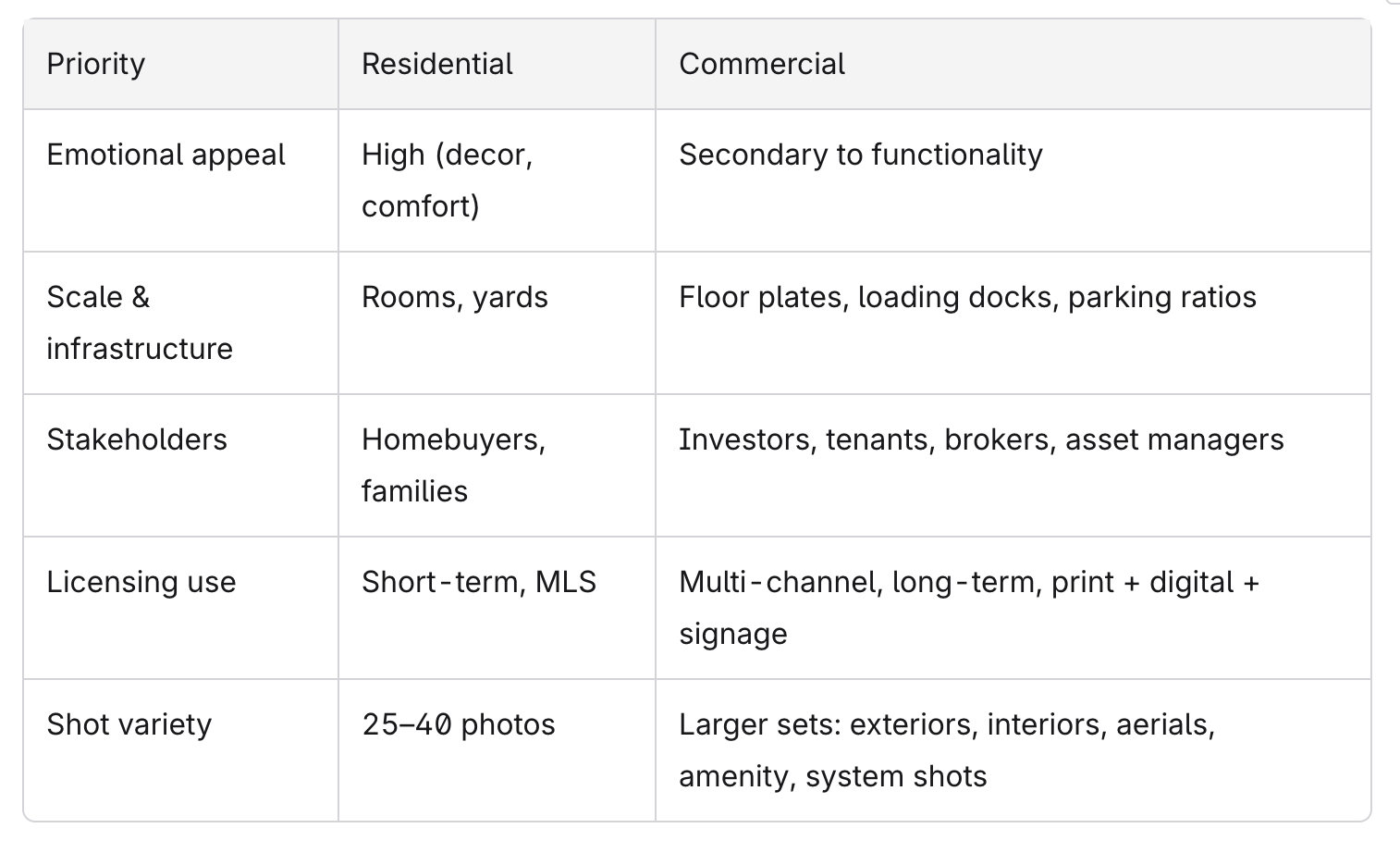
Commercial real estate photography is the specialized practice of photographing properties used for business and income generation - office buildings, medical suites, retail centers, warehouses, and hotels. Unlike residential shoots that emphasize living space, comfort, and decor, commercial shoots focus on access, visibility, signage, parking, floor plates, loading infrastructure, and surrounding infrastructure.
Professional photography highlights features important to businesses and investors. Ground photography captures detailed interior and exterior property features, while clear accurate photography helps visualize a property's layout and condition. The stakeholders are different too: potential buyers, potential tenants, investors, REITs, asset managers, and leasing teams replace individual homebuyers.
Consider two examples. A 20,000 sq ft flex building requires dock bays, clear height, truck court, and roof condition. A 3,000 sq ft restaurant space demands shopfront presence, street visibility, parking flow, and interior highlights. The priorities diverge completely.

Key Benefits of Professional Commercial Real Estate Photography
In the real estate industry, professional photos are no longer optional for serious landlords, developers, or brokers. Amateur photos signal neglect. High quality images communicate professionalism and make commercial listings stand out in a crowded market where potential clients scroll past dozens of properties daily.
Compelling images generate more engagement on listing portals like LoopNet and CoStar, increasing dwell time, click-through rates, and quality inquiries. According to research from the National Association of Realtors, properties with more images sell faster and for higher prices. Properties with 20 photos sell within a month. High quality images can increase sales prices by 9%, and professional photos can increase asking prices by up to 47%. High quality visuals lead to 1,200% more social media shares, amplifying buyer engagement far beyond the listing page itself.
Compelling images don't just attract attention - they drive quicker sales and higher prices across every asset class.
Professional photography is an investment in marketing effectiveness for commercial properties. Professional presentation can support premium positioning of a property, giving you a competitive edge. In a competitive real estate market, high quality imagery is what makes listings stand and what makes a property stand above standard photography.
Benefits by stakeholder:
- Landlords/owners: Higher occupancy rates, stronger perceived quality, ability to command premium rents, images sell faster
- Brokers and real estate agents: More listing appointments, stronger win rates on pitches, more engagement from prospective buyers
- Potential tenants: Better understanding of layout, condition, and suitability before touring - fewer wasted site visits
Types of Commercial Properties and How to Photograph Each
Different commercial properties demand different photographic strategies. A single approach won't work across asset classes.
Office photography: Focus on lobbies, reception, common areas, typical floor plates, conference rooms, and amenity zones like wellness rooms or fitness centers. Natural light makes office environments feel open and inviting - capture daylight penetrating through window walls. Show architectural features such as ceiling heights, column spacing, and modern collaboration zones. Wide-angle lenses capture the expansive property scale of open-plan workspaces effectively. Highlight a property's interior by photographing furnished conference rooms and break areas to convey functionality.
Retail property photography: Street frontage, signage visibility, and traffic flow are critical. For shopping centers, show anchor tenants, co-tenancy, pedestrian circulation, and parking accessibility. Capture unique features like outdoor seating, facade details, and curb cuts. Photograph during peak hours if demonstrating foot traffic matters.
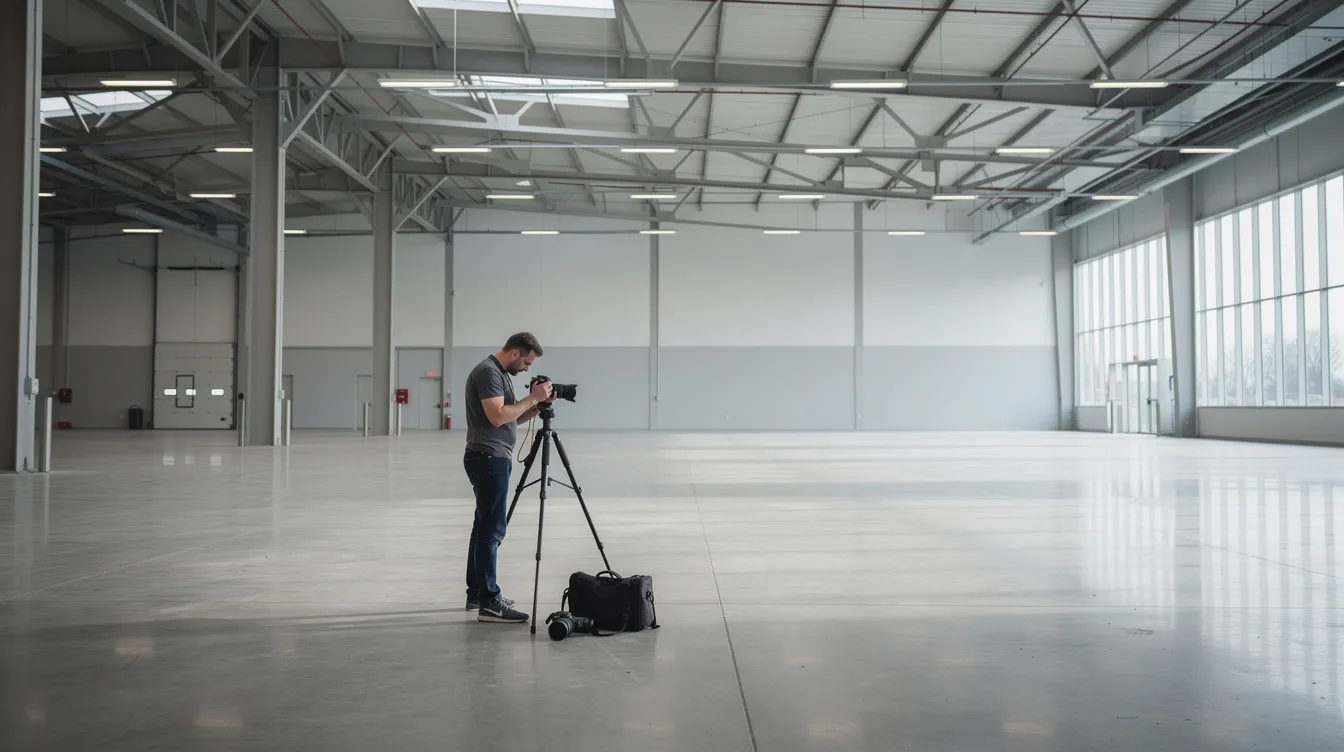
Industrial and logistics: Loading docks, clear heights, column spacing, truck courts, turning radii, and highway proximity are priorities. Shoot warehouse interiors with lights on, minimal clutter, and clean racking. Natural light enhances interior photos when dock doors are open - shoot during golden hours for the best balance.
Hospitality and mixed-use: Capture lobbies, F&B outlets, rooftop amenities, guest circulation, and streetscape context. Mixed-use commercial buildings require both commercial utility and residential-style warmth, blending architectural details with inviting atmosphere.
Planning a Commercial Property Photo Shoot
Pre-production for a commercial photo shoot is significantly more complex than for residential work. Capturing high quality images requires architectural precision and technical know-how, plus coordination with multiple tenants, security teams, and building management.
Schedule shoots when primary facades receive the best natural light - typically early morning or late afternoon. Work around tenant operating hours to capture spaces when they are clean, presentable, and free from operational noise. Different shots may require different times of day, so plan accordingly.
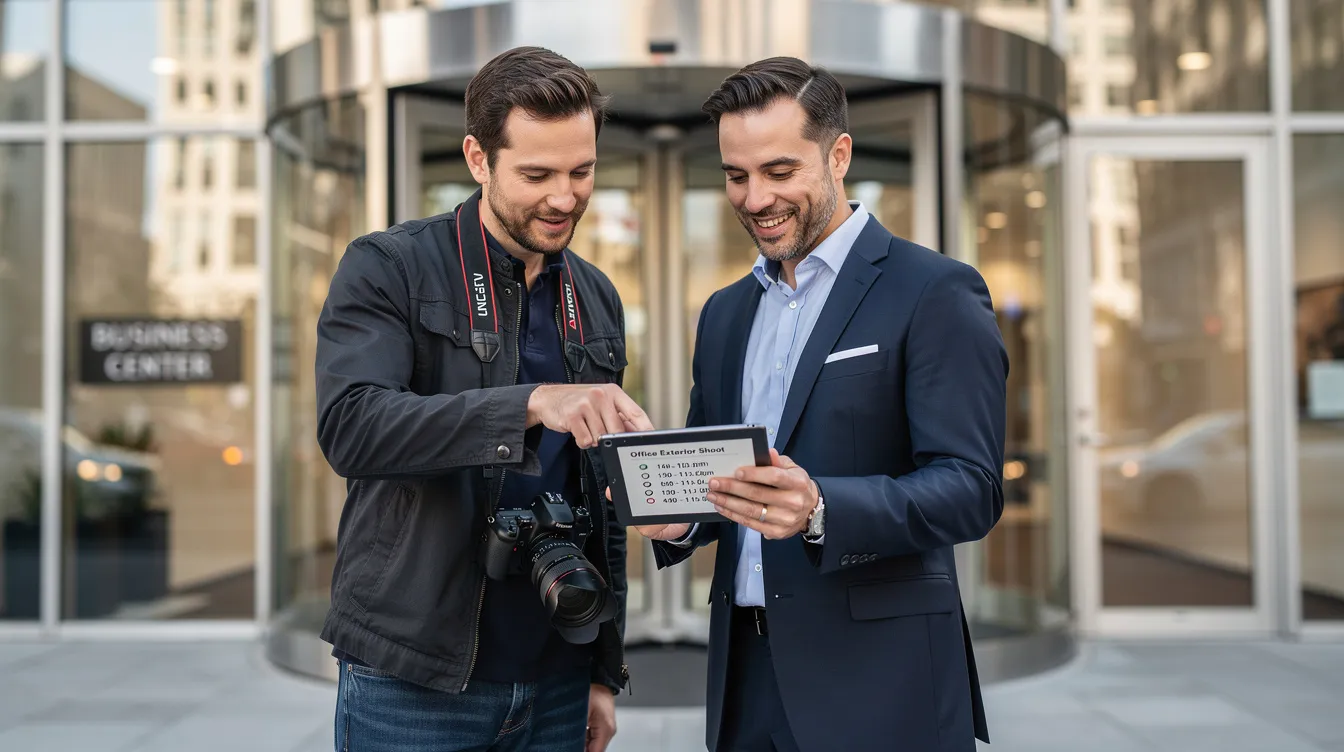
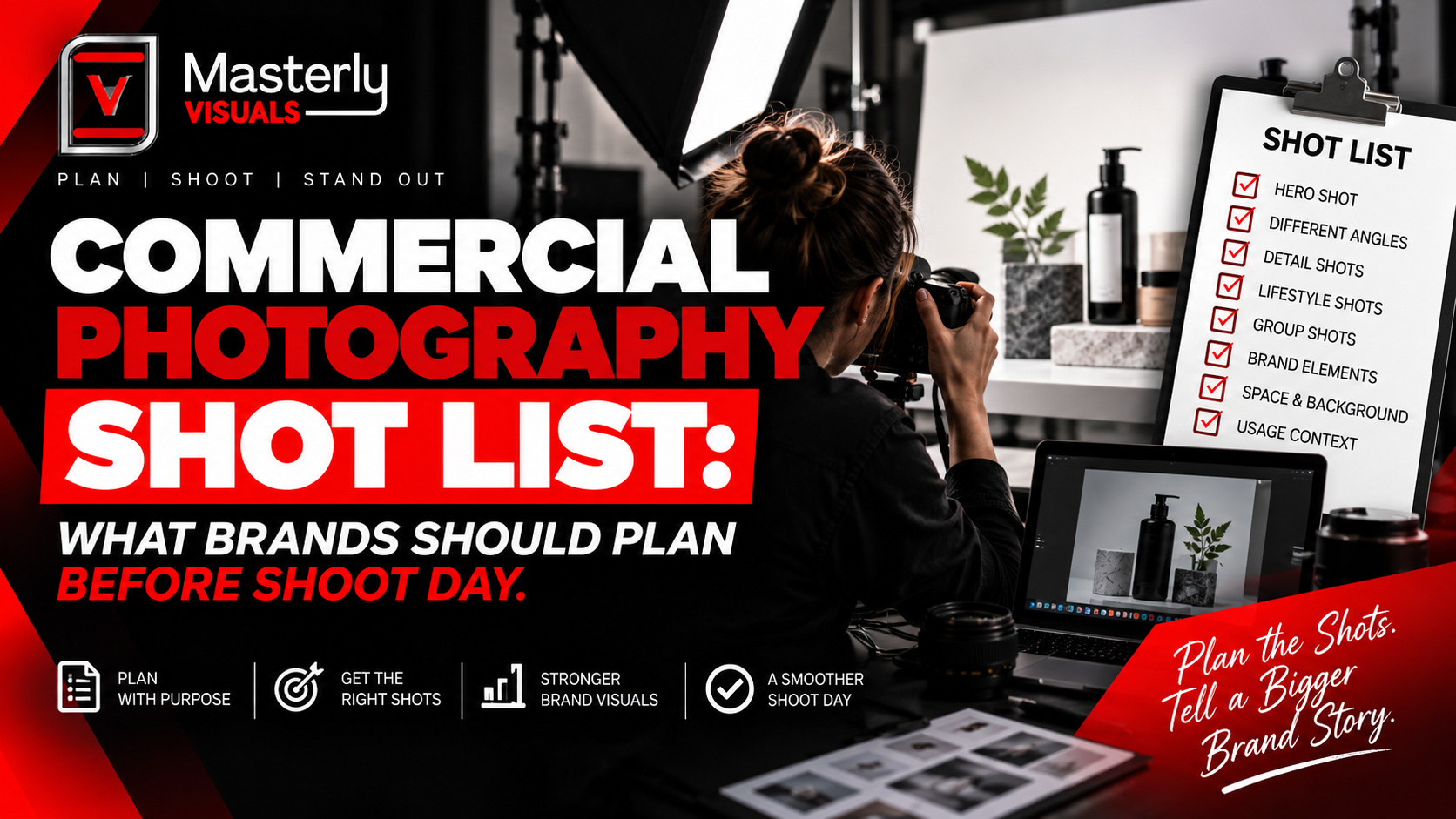
Coordinate access permissions, security escorts, and loading dock instructions in advance. Confirm which suites will be photographed, whether people should appear for scale, and which tenant logos can be visible. A clear shot list is essential - a multi-tenant retail center needs signage, multiple façades, and anchor fronts, while a single-tenant net-lease property may focus narrowly on the façade and landlord-controlled areas.
Shooting from chest height provides a more natural perspective for interior spaces and avoids the "looking-down" distortion common in rushed shoots.
One-week-before checklist:
- Interior spaces cleaned and decluttered
- Landscaping trimmed, parking lot swept
- All interior and exterior lighting tested
- Temporary signage removed
- Windows cleaned, elevators polished
- Furniture arranged, restrooms checked
Keep this as a printable one-page PDF for property managers and brokers to reference before every shoot.
Technical Foundations: Gear and Settings for Commercial Real Estate Photographers
While equipment alone doesn't replace skill, a qualified commercial real estate photographer working in 2026 relies on specific special tools as standard.
Professional commercial real estate photography requires dslr cameras (or mirrorless equivalents) with full-frame sensors for reliable dynamic range and low-light performance. Wide angle lenses - specifically wide-angle lenses in the 16–35mm range - are essential for emphasizing space in commercial buildings without extreme distortion. Tilt-shift lenses prevent vertical convergence on tall office buildings and warehouse interiors, producing crisper photos with straight lines.
A tripod with a geared head is mandatory for perfectly level compositions. Portable continuous lights or strobes balance deep interiors, lobbies, and windowless corridors where ambient light falls short. HDR techniques balance highlights and shadows in commercial photography - bracket three to five exposures and merge them so both the bright window view and the interior detail are visible. HDR photography captures a wide range of light and color that single exposures simply cannot.
Shoot at moderate apertures (f/8–f/11) for peak sharpness and depth of field. Keep ISO low for clean, noise-free files. Always shoot RAW for maximum editing flexibility, and deliver high resolution photos in multiple formats: web-optimized for listing portals, print-ready for offering memorandums, and large-format for signage. These workflows produce high quality results that hold up across every use case.

Aerial Photography and Video for Commercial Real Estate
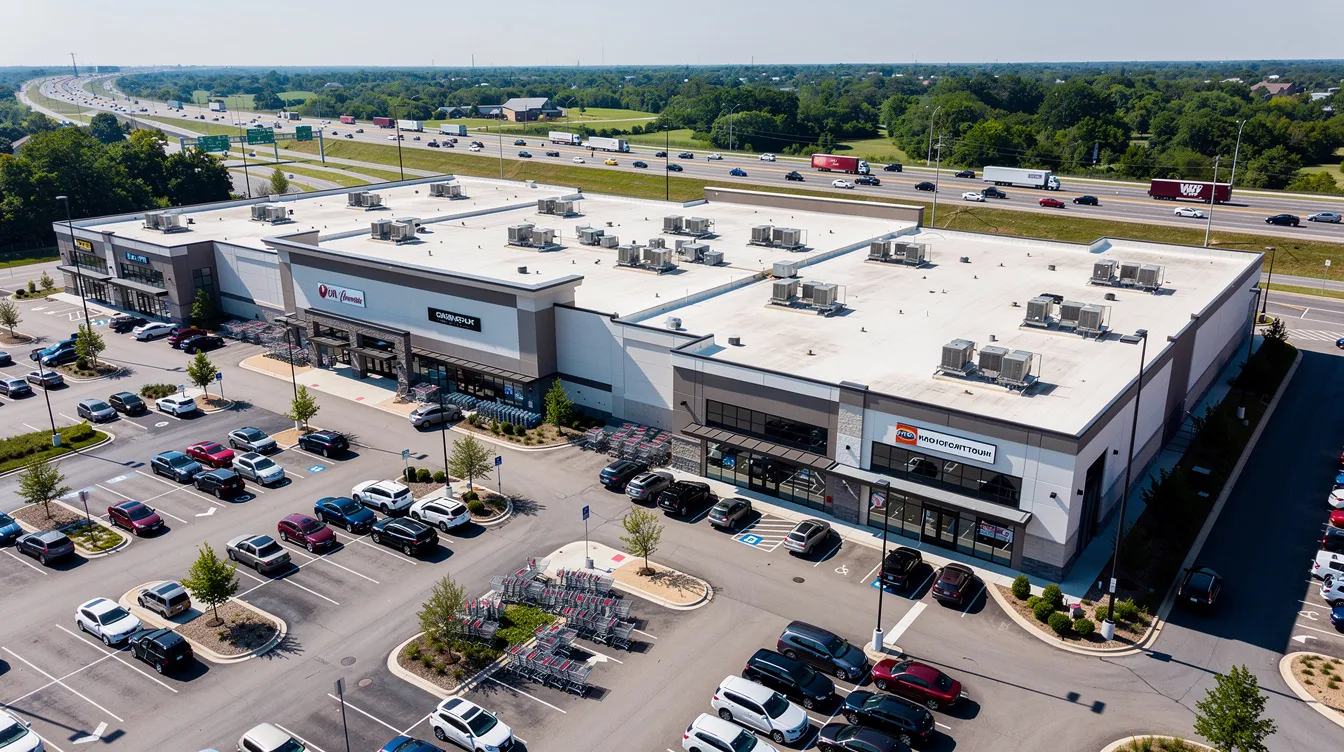
Aerial photography and drone videos have become standard for marketing larger commercial properties, business parks, land tracts, and retail centers. Aerial photography provides bird's-eye views of properties that ground-level shots simply cannot replicate - showing a property's location, parking ratios, ingress/egress patterns, neighboring brands, and nearby amenities at a glance.
Commercial photography may include drone photography for site access, and in the U.S., operators must hold FAA Part 107 certification and comply with local airspace regulations. No-fly zones near airports and rooftop helipads on downtown towers require extra waivers.
Aerial footage can help listings sell 68% faster, making it one of the highest-ROI additions to any shoot. Drone footage can help listings sell 68% faster because it provides context that static ground images lack. Cinematic property videos enhance property marketing through storytelling - slow fly-throughs showing highway access, rail proximity, and the surrounding competitive landscape.
Typical aerial deliverables:
- 8–12 aerial photos (top-down site plans, oblique angles)
- 1–2 short video clips (30–90 seconds)
- Optional 360-degree panoramas
- Digital overlays: property outlines, distance callouts to highways and transit
3D virtual tours provide immersive experiences for potential buyers, creating an interactive experience that complements still photography. When combined with virtual tours, aerial photos create a comprehensive media package that dramatically increases engagement.

Styling, Staging, and Timing for High-Impact Images
Even the best gear cannot compensate for poor preparation. Clean, organized spaces photograph dramatically better and deliver the visual appeal that drives inquiries.
Offices: Declutter desks, hide cables, add minimal greenery, and ensure meeting rooms look presentation-ready. Remove personal items and stray paperwork.
Retail: Tidy merchandise, ensure consistent lighting across storefronts, and remove promotional banners unless they are strategically important to the brand story.
Industrial: Clear safety hazards, tidy floor markings, and consider staging minimal activity - a forklift or truck at a dock - to convey property scale.
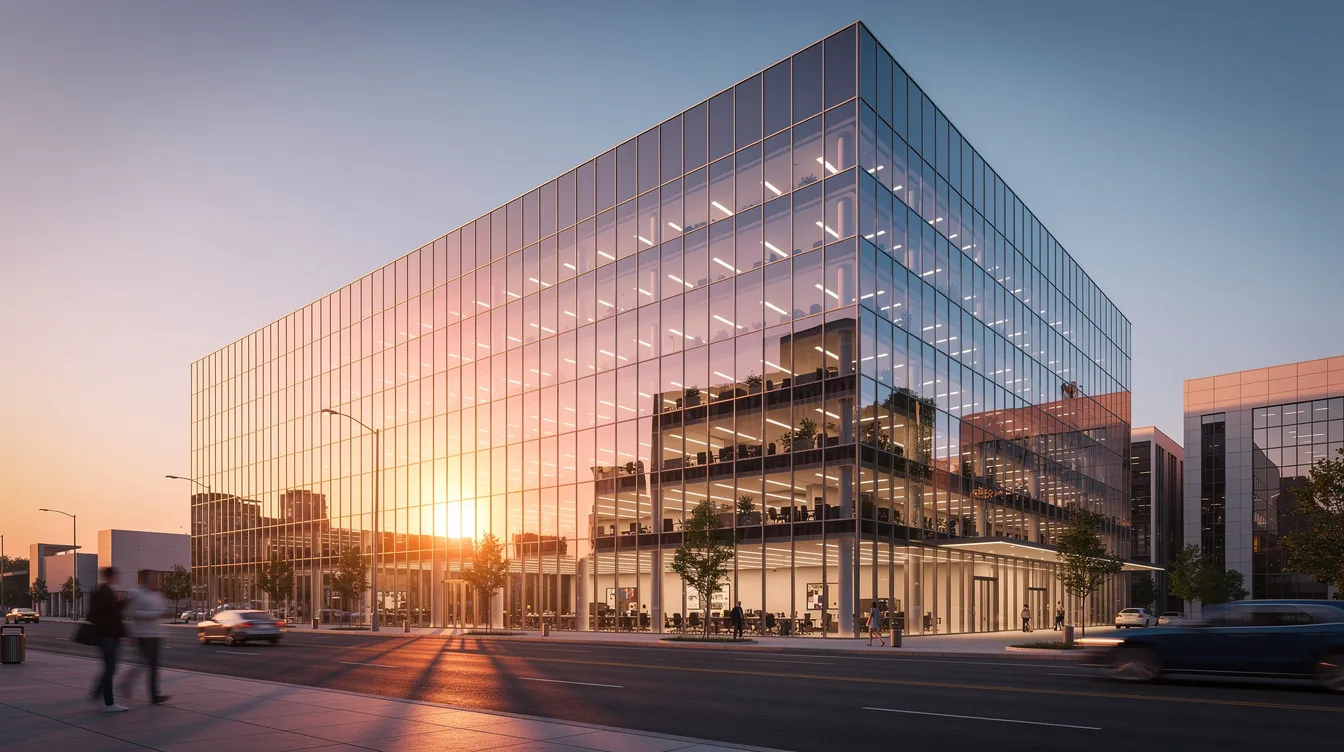
Timing matters. Capture exteriors when key elevations are front-lit. Golden hour provides soft warm lighting for exterior shots, and early morning sessions avoid harsh midday shadows. For retail centers and office towers, twilight sessions highlight signage and interior glow. Adjust for outdoor conditions - overcast skies can actually reduce harsh contrast on large facades.
Verify privacy and branding: blur sensitive content on whiteboards and monitors, and confirm whether tenant logos should be emphasized or de-emphasized in multi-tenant projects. Capture architectural details like ornamental entries, unique façade materials, and lobby installations that convey quality.
Day-of-shoot checklist:
- All lights (interior and exterior) turned on
- Flooring mopped, windows cleaned
- Furniture arranged per shot list
- Signage present and illuminated
- Parking areas clean and unobstructed
Post-Production: Editing Standards for Commercial Listings
Consistent editing creates a reliable visual language across a portfolio of commercial properties, so that every asset in a firm's lineup looks like it belongs to the same brand.
Keep colors neutral and accurate - avoid heavy stylization. Balance interior and exterior brightness so windows aren't blown out and interiors aren't murky. Correct vertical lines on tall commercial buildings and interiors, and avoid over-stretching wide-angle perspectives that misrepresent usable space.
Retouching should follow clear ethical boundaries: remove temporary clutter, sensor dust, and stray cables, but do not digitally erase structural defects or add amenities that don't exist. Virtual staging of an empty office or retail shell is acceptable when clearly disclosed - it helps potential buyers and potential tenants envision the space without misrepresenting its condition.
Real estate professionals expect a quick turnaround. Standard delivery in commercial real estate is 48–72 hours, with rush options at 24 hours for a surcharge.
Standard editing pipeline:
- RAW import and flagging
- Lens correction and perspective adjustment
- Bracketed exposure merge (HDR where needed)
- White balance and color correction
- Minor retouching (clutter, dust, cables)
- Export in multiple formats: web, print, signage
- Deliver crops in horizontal, vertical, and square orientations
Selecting and Working with a Commercial Real Estate Photographer
Hiring the right photographer is as important as the shoot itself. Real estate photography services for commercial assets differ substantially from residential work.
Portfolio review: Look for experience with similar property types - Class A office in a major metro, suburban retail strips, or regional industrial parks. Evaluate consistency, technical quality (straight lines, accurate color), and the ability to show context beyond just the property's interior. The best shots convey both the asset and its surroundings.
Service scope and pricing: Pricing in 2026 for U.S. commercial shoots ranges from $300–$500 for small retail bays to $700–$1,200 for mid-size office or industrial properties. Full institutional packages with aerials, twilight sessions, video, and large exteriors can exceed $2,000. Confirm what's included: ground exteriors, interiors, aerial photography options, editing, licensing, and fast turnaround times.
Communication: Share a clear shot list in advance. Schedule a pre-shoot walkthrough with the photographer and property managers. Designate a single point of contact onsite for access and security. Written agreements should cover usage rights, reshoot policies, and weather contingencies.
RFP checklist for sourcing a photographer:
- Sample portfolio of similar assets
- List of deliverables (interiors, exteriors, aerials, video, twilight)
- Pricing schedule with surcharges
- Licensing terms and duration
- Turnaround time guarantees
- Insurance and certifications (Part 107 for drones)

This is paragraph text. Click it or hit the Manage Text button to change the font, color, size, format, and more. To set up site-wide paragraph and title styles, go to Site Theme.
Recent Posts