
Editorial Photography: How Story-Driven Images Support Brands, Publications, and Campaigns

Angelie Te • August 15, 2026

Share this article

Editorial Photography: How Story-Driven Images Support Brands, Publications, and Campaigns


If your brand publishes articles, runs awareness campaigns, or maintains a magazine or blog, you already know that generic visuals fall flat. Readers scroll past them. Editorial photography offers something different: images built around a story, designed to make people stop, read, and remember.


This guide breaks down what editorial photography is, how it differs from commercial work, where brands and publications use it, and how to plan a shoot that delivers narrative-driven results across channels.


What Is Editorial Photography (and Why It Matters for Your Brand Today)


Editorial photography refers to images created to support a story, article, or concept in a publication-whether that publication is a print magazine, a newspaper, a brand blog, or any of the growing number of online publications producing long-form content. The focus is on storytelling rather than selling products. Unlike stock photography, which provides generic visuals, editorial work is purpose-built to illustrate a specific narrative.


This is distinct from corporate headshots, product shots, or basic branding visuals. Those assets serve important roles, but editorial photographs add narrative depth-they turn abstract ideas like sustainability, innovation, or community into human-centered stories that readers connect with emotionally.


Editorial photography is often more subjective and creative than photojournalism, which is a type of photography focused on documenting real-time events. While photojournalism reports facts, editorial images interpret themes, weaving narrative through deliberate visual choices.


The business case is straightforward. In surveys, roughly 46% of senior marketing executives say photography is "critical" to their storytelling efforts, and research shows that articles using strong visual storytelling can increase time-on-page by 30–50% compared with text-only content. That translates to better PR pickup, stronger campaign memorability, and deeper audience engagement.


In the sections ahead, you'll learn where editorial style images fit in modern marketing, how an editorial photographer works alongside brands and editors, and how to plan a story-driven shoot from brief to delivery.

Editorial vs. Commercial Photography: Usage, Intent, and Storytelling


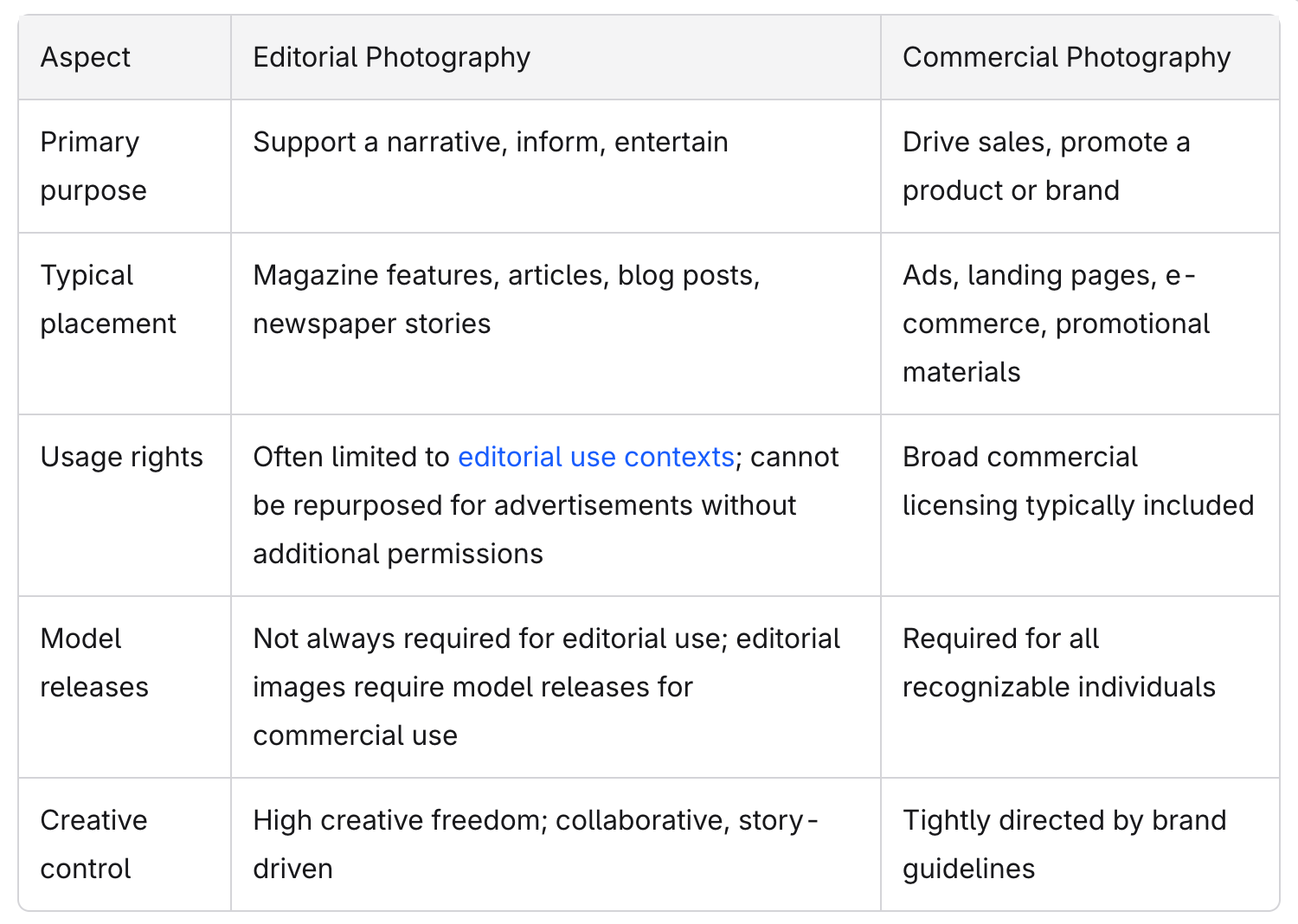
The dividing line between editorial and commercial photography comes down to intent and usage. Both demand technical skill, the right gear, and a strong creative eye-but they serve fundamentally different purposes.


Commercial photography aims to generate sales for businesses. Editorial photography exists to inform, inspire, or provoke thought, telling a story rather than pushing a product.

For example, a photo essay on urban farming in Brooklyn published in an online feature is editorial-it shows people, process, and place in context. A product hero shot for a grocery app homepage with clean background and pricing callout is commercial.


The same shoot can sometimes produce both editorial and commercial-strength assets when releases and contracts are structured correctly. But the photographer needs to know the intended use from the start. Editorial images often have limited usage rights compared to commercial images, and images for editorial use cannot simply be repurposed for advertising without renegotiating terms.


Where Brands and Publications Use Editorial Images


Editorial images carry narrative power across a wide range of channels. Here are the most common use cases:

  • Magazine photography: Cover stories, multi-page features, and recurring columns-such as a quarterly "Founders to Watch" spread in a business publication-where editorial photographs illustrate character, environment, and journey.
  • Online publications and brand newsrooms: Features like interviews, annual reports, op-eds, and behind-the-campaign stories that benefit from context-rich imagery showing people and process, not just polished product.
  • Campaign photography: Awareness campaigns, cause marketing, and product launches that focus on people and place. Fashion editorials can tell stories without accompanying text, relying entirely on visual sequence to convey mood and ideas.
  • Digital channels: LinkedIn articles by executives, long-form blog stories, interactive microsites, and email newsletters where narrative-driven photos increase reader dwell time and trust.
  • Internal communications: Culture stories, employee features, and CSR reports where editorial style images humanize abstract corporate information and connect teams to shared values.
  • Cross-channel repurposing: A single editorial photoshoot, planned strategically, yields lead visuals for articles, supporting images for social media, slides for leadership decks, and press kit assets-all within agreed usage rights.


Editorial photography can include candid shots of events or people, and it captures unposed moments and genuine emotions that staged corporate visuals simply cannot replicate.

The Core Elements of Editorial Style


Editorial style isn't a single look-it's a visual philosophy. Every image in a series works together to tell a story, creating a world the reader can step into.


Here are the traits that define it:

  • Visual storytelling sequences: Establishing shots (wide frames showing the environment), character shots (portraits in context), and detail shots (hands, objects, textures) form a narrative arc rather than isolated frames.
  • Authentic posing: Directing subjects in editorial photography encourages natural gestures. People may be gently positioned but should still feel real-not frozen in rigid ad setups. The best editorial photographers capture the moment between the poses.
  • Environment as character: The environment in editorial photography can be integral to the narrative. A founder photographed in their workshop tells a different story than the same person against a white backdrop. Even details like street lights or worn surfaces add meaning.
  • Mood and tone: Light, color palettes, and composition set the emotional register. Cool, quiet tones for a night-shift hospital feature; warm chaos for a festival piece. Styling and art direction enhance the visual storytelling, helping create a specific mood that resonates with readers.
  • Color and visual consistency: Color and visual consistency across a series are essential in editorial photography. A cohesive palette ties individual frames into one visual chapter.


Consider editorial wedding photography as an example of these principles at work. It tells a story through images, capturing emotions and personalities of individuals present on the big day. Editorial wedding photos often include intentionally blurry images to convey motion and feeling. Good lighting and editing are essential for editorial wedding photos, and these images aim to be magazine-worthy in style and quality-the same standard that applies across all editorial genres, from fashion photography to portraiture.


A strong editorial photographer has a recognizable own style but can adapt to the voice of different publications and brands. Over time, consistent editorial style across campaigns helps audiences recognize your brand even in non-promotional contexts.


How Editorial Photographers Work with Publications and Brands


Editorial photographers are collaborators. They translate narrative briefs into visual stories, working across disciplines-writers, editors, creative directors, marketers-to align on message, tone, and usage.

  • Commissioning: A creative director, photo editor, or content marketing lead issues a brief for a specific feature or campaign, defining purpose, audience, and mood.
  • Interpreting the brief: The photographer reads drafts or story outlines to identify key scenes, subjects, and supporting details. Editorial images often require planning and preparation before shoots-gathering as much information as possible about the subject and context.
  • Pre-production alignment: Location scouts, moodboards, shot lists, and pre-production calls ensure alignment between photographer, writer, and stakeholders. This is where creativity meets logistics.
  • Flexibility on set: Real storytelling sometimes means deviating from the plan. Weather shifts, an unexpected interaction, a change in light-the photographer must focus on the narrative during the photoshoot while protecting core story objectives and finding the best light for each scene.
  • Delivery and sequencing: Final editorial images are delivered with options for lead image, secondary visuals, and supporting detail shots for different formats-print spreads, mobile web layouts, social crops.
  • Usage and licensing: Clear contracts specify where, how long, and in what contexts images can appear. If cross-channel reuse is needed, commercial rights must be negotiated separately.


If you need story-led visuals for an upcoming campaign or feature, consider requesting an editorial or commercial photography consultation to assess story fit and style before production begins.


Planning a Story-Driven Editorial Photoshoot


Planning determines whether a shoot produces forgettable snapshots or a visual story worth publishing. Here's how to approach it:

  • Clarify the story first: Define the central message, audience, and desired emotional response before discussing locations, wardrobe, or gear. What inspiration should the reader take away?
  • Research the subject in depth: Research your subject before the photoshoot. Understand the initiative, the people, the place, the history. Visit the environment if possible. The more the photographer knows, the more meaningful moments they can anticipate and capture.
  • Build a concise creative brief: Include a story summary, key themes, reference editorial images, must-have shots, and constraints (timing, access, budget). This brief becomes the shoot's North Star.
  • Create a moodboard: Create a moodboard to align the shoot's aesthetic. Gather references for lighting, color, editorial style, and pacing. This visual alignment tool saves hours of miscommunication between photographer, writer, editor, and stakeholders.
  • Handle logistics: Secure permits, access permissions, and contingency locations. Plan timing around natural light. Secure necessary paperwork like model releases for shoots-especially if any commercial repurposing is anticipated.
  • Plan for multiple formats: Consider how images will appear across channels. A vertical social cut, a horizontal web banner, and a full-bleed magazine spread all require different compositions. Shoot with negative space and cropping flexibility in mind. Whether the photographer uses a mirrorless camera or medium format, compositions should allow room for text overlays and different aspect ratios.


Developing a Cohesive Editorial Style for Your Brand


Your editorial style should be an extension of your brand voice-not a random aesthetic chosen shoot by shoot.

  • Define a visual point of view: Is your tone formal or conversational? Global or local? Minimalist or richly detailed? These answers shape color tendencies, lighting feel, and approach to candidness across all editorial work.
  • Create simple brand guidelines for editorial images: Document preferred color palettes, lighting approaches (natural daylight vs. dramatic studio), typical compositions, and diversity representation expectations. These don't need to be rigid-just clear enough to maintain coherence.
  • Partner consistently: Working with the same editorial photographers over multiple campaigns builds rapport, refines shared visual shorthand, and protects your style over time. This is how a publication's visual identity matures.
  • Allow flexibility within consistency: Seasonal palettes, campaign-specific color accents, or experimental features keep content fresh-but anchor everything to core style traits. Think of fashion editorials that shift theme each issue while maintaining a recognizable house aesthetic.
  • Treat style as a differentiator: A recognizable editorial style can distinguish your brand's online publications or magazine from competitors covering similar topics-even without logos or overt branding present. It becomes part of your brand's art and culture.


From Capture to Delivery: Post-Processing and Editorial Workflow


Post processing is where raw captures become finished editorial photos. It's not about adding artificial beauty-it's about reinforcing the story.

  • Shoot with layout in mind: During the shoot, leave negative space for headlines and overlay text. Capture multiple aspect ratios. Think about how lead images differ from detail shots in the final published layout.
  • Post-processing reinforces narrative: Post-processing in editorial photography should reinforce the narrative, not mask it. Post-processing enhances editorial photos beyond simple snapshots by refining contrast, color grading, and tonal balance to match the story's emotional register.
  • Tools and decisions: Adobe Lightroom is commonly used for post-processing editorial images, handling batch adjustments and raw conversions efficiently. Adobe Photoshop handles finer retouching. Post-production editing can remove unwanted objects from images when they distract from the story. But the real skill is knowing what to fix and what to leave-keeping skin tones natural, preserving ambient light, avoiding over-retouching documentary-style scenes. Custom presets can streamline editing for large batches of photos, ensuring tonal consistency without re-inventing the wheel each time.
  • Sequence consistency: Quality editing is essential for magazine-worthy editorial images. Every image in a feature should feel like one cohesive visual chapter-consistent in mood, tone, and color grading. Post-production editing is essential for editorial photos at this level.
  • Delivery details: Use naming conventions aligned with article sections (e.g., 01_lead, 02_enviro, 03_detail). Deliver multiple resolutions for print and web. Include basic metadata, captions, and photographer credits to help editors place each image correctly.


Choosing an Editorial Photographer for Your Next Campaign or Publication


Finding the right editorial photographer is less about technical specs and more about narrative capability. Here's what to evaluate:

  • Portfolio depth: Review portfolios specifically for editorial images-look for series that carry a narrative over multiple frames, not just isolated portraits or product shots. Check their website for sequences showing range: wide, medium, detail, and mood coherence.
  • Relevant experience: Have they worked with publications or brands similar in scale or audience? Experience with magazine features, brand newsrooms, or campaign photography matters.
  • Style fit and adaptability: Does the photographer have a distinct own style that complements your brand voice? Can they adapt across campaigns without losing coherence? Review past editorial work across different subjects and tones.
  • Process and collaboration: Ask how they research a story, build shot lists, handle tight timelines, and coordinate with writers, art directors, or PR teams. Strong process signals reliable delivery.
  • Licensing and usage transparency: Discuss usage rights upfront-editorial vs. commercial, duration, geography, exclusivity. These are topics to clarify before the shoot, not after.


If you're planning a publication, campaign, or feature that needs story-driven imagery, request an editorial or commercial photography consultation. The right conversation at the start saves time, budget, and creative energy throughout the entire project.


FAQs About Editorial Photography for Brands and Publications


What is the difference between editorial and commercial photography in practice? Editorial photography serves a narrative or journalistic purpose-it tells stories through images accompanying text in articles, features, or publications. It differs from commercial photography by focusing on storytelling. Commercial work is designed to drive sales or direct conversion and typically appears in advertising and promotional materials.

Can we use editorial images in advertising? Only if the photographer's licensing agreement and model or property releases specifically permit commercial usage. Many editorial-use licenses explicitly prohibit advertising or promotional repurposing. Always confirm terms with your photographer and legal team before changing the context of any image.

How far in advance should we plan an editorial photoshoot? For multi-subject or location-intensive shoots, plan four to eight weeks ahead to allow for briefing, research, location permits, casting, and scheduling. Simpler features may need less lead time, but rushed planning almost always compromises depth and quality.

What kinds of stories work best for editorial photography? Founder or leader profiles, behind-the-scenes looks at company initiatives, community partnerships, day-in-the-life features, and product-in-context stories all work well. The common thread is a real narrative with real people-not staged glamour.

How many images do we need for a typical editorial feature? Quality matters more than volume. Expect a lead image, a set of supporting visuals (environment, portraits, action shots), and detail shots. For a magazine spread or online feature, 10–20 images is common. For campaign rollout repurposed across formats, you may need more-but sequences (opener, medium shots, details) matter more than sheer count.

Recent Posts

By Angelie Te August 14, 2026
Why Environmental Portraits Matter for Modern Brands  A studio headshot isolates a person against a neutral backdrop. An environmental portrait does the opposite: it places the subject in a real location, whether that's an engineering lab, a restaurant kitchen, or a warehouse floor, and lets the surroundings carry part of the story. Environmental portraits show subjects in their natural surroundings, revealing context, identity, and profession in a single frame. The reader problem is simple. Generic studio portraits feel interchangeable. A SaaS founder standing in a white sweep looks identical to every other founder on every other About page. Swap the background for that founder's product war room, with roadmap sketches on the wall and a prototype on the desk, and the image communicates something specific: who this person is, what they build, and how they think. Environmental portrait photography builds trust on About pages, pitch decks, LinkedIn profiles, and recruiting campaigns by showing real people in real workplaces. Key aspects of environmental portraits include context, narrative, authenticity, and compositional balance. This article covers leadership portraits, workplace portraits, and team photography in actual work environments. Masterly Visuals specializes in this kind of on-location photography. If you want to skip ahead, you can request a commercial portrait consultation at any time.
Commercial photography studio capturing professional brand imagery for business marketing.
By Amber Aniston August 12, 2026
Discover what commercial photography is, its key types, and how businesses use it to boost sales, recruit talent, and build brand identity. Learn how to plan a commercial image library with Masterly Visuals for consistent, high-quality visuals across all marketing channels.
Virtual staging transforms an empty room with digital furniture for real estate marketing.
By Amber Aniston August 10, 2026
Discover how virtual staging transforms real estate marketing by digitally furnishing empty spaces to attract buyers, reduce time on market, and enhance listing visuals with fast, cost-effective, and customizable solutions from Masterly Property Visuals.
Product photographer creating professional commercial product images
August 10, 2026
Hire a product photographer for ecommerce, catalog, commercial, and product launch photography with professional image licensing and product photography services.
Corporate photography services for business professionals
August 10, 2026
Corporate photography services for executives, employees, and businesses. Build a professional image library with strategic commercial photography planning.
By Angelie Te August 8, 2026
Video marketing is essential in today's fast-moving real estate market, and commercial properties demand more from it than a simple home tour. This guide covers what real estate videography looks like when the asset is an office tower, logistics warehouse, retail center, or 200-key hotel - and why the discipline requires a fundamentally different approach than filming a family home. Below, you will find a practical breakdown of planning, shooting, editing, and deploying commercial property video to reach tenants, investors, and brand users who make decisions based on movement, scale, and location.
Brand photographer creating executive and business brand photos for a professional company
August 7, 2026
Need a brand photographer for your business? Masterly Visuals creates professional image libraries for founders, executives, firms, websites, sales, and marketing.
Professional product photography services for brands
August 7, 2026
Need consistent product photography services? Masterly Visuals creates professional ecommerce, catalog, white-background, and lifestyle images for leading brands.
By Angelie Te August 6, 2026
Why Brand Architecture Matters for Multi-Brand Founders Picture a founder in 2026 running a holding company with four entities: a SaaS platform, a consulting services arm, a recently acquired logistics startup, and a small media brand. Each has its own name, its own website, and its own sales deck. Prospects regularly ask, "Are these the same company?" The sales team at the SaaS platform has started describing the consulting arm as a competitor. The logistics acquisition still carries its old branding, and nobody has decided whether it should. This is a brand architecture problem. Brand architecture is the strategic framework that organizes a company's portfolio of brands, products, and services and defines both visible and invisible relationships among parent, sub, and sibling brands. It determines which names show up where, which logos appear on which materials, and how customers, investors, and employees understand your ecosystem. For founders, holding-company leaders, and multi-brand operators, brand architecture matters because it shapes customer clarity, acquisition integration speed, marketing efficiency, hiring narratives, and exit optionality. Poor brand architecture can lead to customer confusion and poor performance across every entity in the portfolio. This article covers the core brand architecture models (branded house, house of brands, endorsed, hybrid), how to choose and evolve a structure, and how to protect brand equity as your portfolio grows. What Is Brand Architecture? (Fast, Founder-Friendly Definition) Understanding brand architecture starts with a simple idea: it organizes how all the brands in your portfolio relate to each other and show up in the market. Brand architecture defines relationships between parent and sub-brands, covering everything from naming conventions and logo systems to messaging tone and website structure. It connects directly to your broader brand strategy, your brand positioning for each entity, and your day-to-day brand management decisions. This is not a chart on a slide deck. It is a set of intentional decisions about where brands share equity and where they stay independent. A well-defined brand architecture brings clarity to customers, partners, and internal teams about what belongs together and what stands apart. The classic terms you will encounter are branded house, house of brands, endorsed brands, and hybrid brand architecture. Each represents a different way of structuring brand relationships within a portfolio. The main types of brand architecture are Branded House, House of Brands, and Endorsed Brands, with hybrid models blending elements of each.
University photographer capturing college campus images
August 6, 2026
Elevate your institution with a university photographer specializing in college campus photography, leadership portraits, research imagery, and student recruitment.
Show More