Food Photographer: What Restaurants and Brands Really Need From Their Food Images
Your food may look exceptional in person, but if the images on your menu, website, delivery platform, packaging, or advertising do not show that quality, customers may never see what makes your food worth choosing.
A strong image needs to do more than make a dish look attractive. It needs to show the food clearly, represent your brand accurately, and give your marketing team useful visual assets they can use across the channels that matter to your business.
That is where a professional food photographercan make a difference.
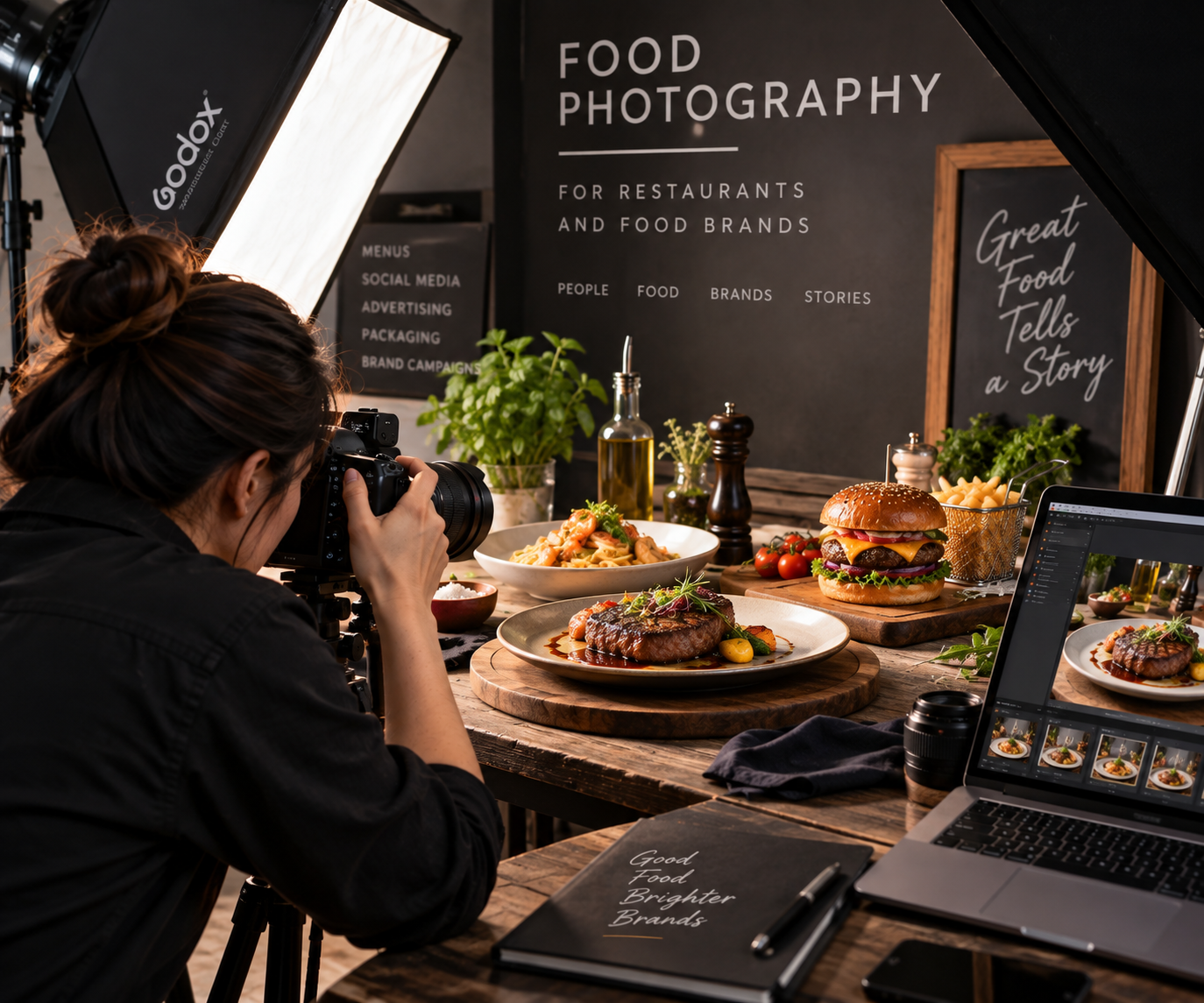
Masterly Visuals provides commercial food photography for restaurants, hospitality groups, packaged-food brands, chefs, agencies, and marketing teams that need polished images for menus, campaigns, websites, packaging, social media, and other commercial uses.
When Your Food Looks Better in Person Than It Does Online
Customers often see your food before they taste it.
They may find your restaurant through a website, digital menu, delivery platform, social media post, search result, or advertisement. For a packaged-food brand, the first impression may come from an ecommerce listing, product page, retailer presentation, or campaign.
The photograph has to communicate quickly.
If the food looks flat, poorly lit, inconsistent, or different from what customers expect, the image can weaken the presentation of an otherwise excellent product.
Professional food photography gives your business a stronger visual foundation.
It can show texture, color, freshness, presentation, ingredients, and portion details while keeping the overall image consistent with your brand.
The goal is not to make your food look unrealistic. The goal is to present it at its best while keeping the final image credible and commercially useful.
Why Your Business Needs a Commercial Food Photographer
Food photography becomes a business asset when your images need to serve a clear purpose.
For a restaurant, photographs may need to help customers understand menu items and choose what to order.
For a hospitality group, images may need to maintain a consistent visual standard across multiple restaurants, properties, or locations.
For a packaged-food brand, photographs may need to work across ecommerce, packaging, advertising, retailer materials, and product launches.
For a marketing team or agency, the images may need to follow a creative brief and fit an established campaign.
A professional food photographerconsiders these requirements and communicates clearly with clients and collaborators before creating the images.
This helps ensure the photography is not simply a collection of attractive dishes. It becomes a commercial image library that your team can actually use.
Menu Photography That Makes Every Dish Easy to Understand
Your menu is one of the most important places for food images to work.
Customers need to recognize the dish, understand what they are ordering, and see enough detail to make a decision.
Menu photography should therefore be consistent across the menu rather than treating every dish as a separate visual project. Consistent layouts can be built with the rule of thirds and planned negative space, which helps create dynamic, visually pleasing images.
A restaurant with dozens of menu items can quickly look unorganized when photographs have different lighting, backgrounds, colors, or a changing camera angle, so it helps to keep a repeatable approach across dishes, including 0-45˚, 45˚, or 90˚ views when appropriate.
Masterly Visuals can create a cohesive visual approach for menu photography so individual dishes still feel like part of the same restaurant brand. The 45˚ angle often gives a more descriptive view of menu items, while negative space enhances the visual appeal when a layout needs balance.
The result can support digital menus, printed menus, delivery platforms, websites, promotional materials, and other customer-facing uses.
Commercial Food Photography for Restaurants and Hospitality Groups
Restaurants need photography that represents more than individual dishes.
Depending on the project, your image library may include signature dishes, beverages, desserts, dining scenes, tablescapes, interiors, chef-focused images, or other food-related content, with selected props and other visual elements used to support the scene on the table when needed. A well-chosen prop can enhance the storytelling aspect of a food photo.
Props should complement the food without overwhelming it.
For hospitality groups, consistency becomes even more important.
Multiple locations may have different spaces, menus, and teams while still needing to communicate the same brand standard.
Commercial food photography can give your organization a consistent visual language while allowing each restaurant or property to maintain its own character.
Masterly Visuals can work with your team to determine which food images are needed and how they should support your overall photography requirements.
Food Photography for Packaged-Food Brands
Packaged-food brands have different visual needs from restaurants.
Your product may need to appear in an ecommerce listing, advertising campaign, retailer presentation, website, packaging-related content, or product launch.
The image needs to show the package clearly while also communicating what the customer can expect from the food itself.
Depending on the project, photography may include the packaged product, prepared food, serving suggestions, ingredients, close ups captured with a macro lens to show small food details, or lifestyle scenes.
The visual style should remain consistent with your brand across these applications.
Masterly Visuals provides commercial food photography designed around the actual uses of your images, helping your team build a professional collection and a polished final product, with high-resolution cameras especially useful for packaging and larger print applications rather than commissioning disconnected images for every campaign.
Your Food Images Should Match Your Brand
A fine-dining restaurant should not necessarily look like a fast-casual restaurant.
A premium packaged-food brand may need a different visual approach from a family-focused food company.
A hospitality group may need images that communicate both the food and the experience surrounding it.
Photography helps communicate these differences.
Lighting, composition, neutral, matte backgrounds chosen to avoid distractions, surfaces, styling, color, and the amount of surrounding environment can all affect visual appeal and how customers perceive the main subject.
Framing objects in photos can help direct attention back to the dish or product.
Masterly Visuals works with your creative direction and brand requirements to create food images that feel appropriate for your business.
The goal is consistency without making every photograph look identical.
One Shoot Can Support Social Media and Multiple Marketing Needs
Your marketing team may need food images in several formats and for several channels, with different image shapes and compositions depending on where those food photos will appear.
Instead of creating one photograph for one specific use, a commercial photography project can be planned around the larger image library your business needs.
Images may support:
- Digital and printed menus
- Restaurant websites
- Delivery platforms
- Social media, where social media food photography emphasizes shareable, appealing images designed for online viewing
- ad campaigns
- Email marketing
- Packaged-food ecommerce
- Retailer presentations
- Product launches
- Promotional materials
- Brand campaigns
Planning around these uses from the beginning can make the final photography more useful to your team.
It also gives your business a clearer understanding of what needs to be photographed before production begins.
Consistency Matters When You Have Many Dishes or Products
A single beautiful food photograph can make a strong impression.
A collection of inconsistent photographs can do the opposite.
When customers see multiple dishes together, differences in lighting, color, composition, background, styling, layering, choices that create more depth, and subject isolation become noticeable, along with whether each frame has a clear point of focus.
This is especially important for restaurants with large menus and food brands with multiple flavors, sizes, or product variations.
A professional photography project establishes a consistent visual direction across the collection.
Layered compositions and a shallow depth of field can be repeated across a collection to keep the food prominent.
That consistency helps your website, menu, campaign, or product catalog feel more organized and professional.
Photography with Natural Lighting Planned Around Your Commercial Use
Different photography projects require different deliverables.
Your marketing team may need high-resolution files for print, optimized images for websites, vertical images for social media, or specific compositions for advertising, and post-production requirements should be defined in advance as part of the overall process.
An agency may have its own creative specifications.
A packaged-food company may need images for multiple marketing applications.
These requirements should be discussed before production begins.
That includes post-processing for color correction and final image enhancement using tools such as Adobe Lightroom and Photoshop.
Masterly Visuals can work with your team to understand where the images will be used, what types of photographs are required, and what the finished project needs to deliver.
This makes the photography more useful from the beginning.
A Food Photographer and Food Stylist Should Solve the Production Problem, Too
The challenge is not always simply getting a good photograph.
A restaurant may need dozens of dishes photographed while coordinating with a busy kitchen.
A hospitality group may need consistent imagery across several locations.
A food brand may need product and prepared-food images for a campaign.
A marketing team may have a fixed launch date and specific creative requirements.
These projects require planning as well as actual photography, with a clear process and the patience and adaptability to keep production moving when details change during a food shoot.
Masterly Visuals approaches commercial food photography as a complete production service, working with the project requirements, creative direction, food presentation, managing freshness so dishes stay appealing under studio lights, lighting-wise decisions that support consistency, post-production, and final image delivery.
Your team can focus on the food and the business while the photography is handled as a professional commercial project.
Why Hire Masterly Visuals for Food Photography?
Masterly Visuals works with restaurants, hospitality groups, packaged-food brands, chefs, agencies, and marketing teams that need professional food imagery for commercial use.
The project begins by understanding what your business needs from the images.
From there, the photography can be planned around your menu, products, campaign, brand direction, intended uses, and production requirements. When the brief calls for it, planning may also involve a food stylist to help prepare each styled dish for camera-ready presentation; many come from culinary training or chef backgrounds.
The best-looking version is often chosen as the hero image for the shoot.
Whether you need a focused menu photography project or a larger campaign image library, the goal is to create polished, consistent photographs that your business can use across its most important customer-facing channels.
For broader commercial photography needs, you can also explore [Commercial Photography Services]. If your project involves restaurant-focused imagery, link to the relevant [Restaurant Photography] support page. When you are ready to discuss your project, use the [Masterly Visuals inquiry path].
Frequently Asked Questions About Hiring a Food Photographer
What does a food photographer do?
A food photographer creates professional images of food for commercial uses such as menus, websites, advertising, packaging, ecommerce, social media, and brand campaigns. To photograph food well, the field typically relies on specialist equipment and technique, and it broadly splits into six working types. Examples include editorial food photography for magazines and cookbooks, and social media food photography focused on shareable online photos.
Why should a restaurant hire a food photographer?
A professional food photographer creates consistent images that show dishes clearly and represent the quality and style of the restaurant.
What is commercial food photography?
Commercial food photography is professional photography created for business purposes, including menus, advertising, packaging, ecommerce, websites, campaigns, and other marketing materials. Unlike many DIY shoots, professional photographers rely on lighting control to shape natural lighting or build an artificial setup, and mastering aperture, shutter speed, and ISO is crucial to the result. Soft, diffused lighting is commonly used to keep food looking fresh and appetizing.
What is menu photography?
Menu photography creates professional images of individual dishes and menu items for printed or digital menus, websites, delivery platforms, and other customer-facing uses. It often relies on one frame and repeatable 0-45˚, 45˚, or 90˚ camera angles depending on the dish. For many plated menu items, the 45˚ angle is often the most descriptive view of the food.
Can Masterly Visuals photograph an entire restaurant menu?
Yes. A menu photography project can be planned around the restaurant's number of dishes, priorities, schedule, creative direction, and intended uses.
Can you photograph packaged food products?
Yes. Commercial food photography can include packaged food, prepared dishes, ingredients, serving presentations, and lifestyle images depending on the project, and packaged-food projects may also involve selecting the hero serving or hero product presentation. If a beverage or other glass element is part of the shot, prep may include cleaning and styling it for camera. Some styled details, such as acrylic ice for cold beverages, may be used when appropriate to keep the product camera-ready. For fresh produce or garnishes, a light mist of cold water may also be used to help them look crisp on set.
Can food photography be used for advertising?
Yes. Food images can be created for advertising campaigns when the intended commercial use is included in the project scope and licensing agreement. For campaign work, off-camera flash or other artificial light can be a food photographer’s best friend because it delivers consistent results regardless of time across campaign assets. Lighting is often shaped from a single source, with side or back light preferred over direct sunlight to add depth, avoid the same angle as the camera, and create controlled shadows that still feel natural.
Can you work with a marketing team or agency?
Yes. Masterly Visuals can collaborate with clients, marketing teams, creative agencies, chefs, and brand teams, communicating clearly on briefs and deliverables to meet expectations shaped by many clients while aligning the photography with the project's creative direction and deliverables.
Can one food photography project provide images for multiple channels?
Yes. The project can be planned around different commercial uses, including websites, menus, social media, advertising, ecommerce, and print.
How do I hire a food photographer?
Contact Masterly Visuals with details about your restaurant, brand, products, project goals, number of dishes or products, intended uses, and timeline. The team can then discuss the appropriate photography scope. Photo shoots can be planned as studio sessions or on location shoots at your restaurant, hotel, or other venue.
How far in advance should we book?
The timing depends on the size and complexity of the project. Menu photography may require less planning than a large campaign, multi-location project, or packaged-food production. Larger productions may also benefit from test shoots, which are preliminary sessions used to evaluate lighting, styling, and composition before the final shoot. If you are working within two hours of a decision or a hard deadline, mention that during the inquiry so the production schedule can be planned accordingly.
What can affect the scope of a food photography project?
The number of dishes or products, creative direction, food styling, locations, production requirements, image quantity, post-production, usage, licensing, and delivery requirements can all affect the project scope, and scope can also change based on the level of post-processing needed for color correction and final image enhancement before the final product is delivered.
Ask about a food photography project.
Your food represents your restaurant, brand, or culinary work before the customer ever takes a bite.
Professional photography gives your team a consistent collection of images that can support menus, websites, campaigns, ecommerce, advertising, packaging, and other commercial needs.
If you are looking for a food photographer for your restaurant, hospitality group, packaged-food brand, or marketing campaign, talk with Masterly Visuals about your project.
Masterly Visuals
Phone: (404) 726-7261
Website:
https://www.masterlyvisuals.com/
Recent Posts