Brand Photography: Planning a Consistent Commercial Image Library
Introduction: What Brand Photography Is and Why It Matters in 2026
If your website, social media, or marketing materials rely on generic stock images or inconsistent phone snapshots, you're already blending into the noise. Brand photography is the strategic creation of a curated image library - portraits, lifestyle shots, product visuals, workspace scenes - that visually represents your business, your personality, and the story only you can tell. This guide is for small business owners, founders, creatives, service providers, and e-commerce brands ready to stop blending in and start standing out.
The difference between a random collection of pictures and a genuine brand photo library is strategy, consistency, and storytelling. Stock photos are fast but forgettable. Selfies and DIY snapshots have their place but rarely build the kind of trust that converts a browser into a buyer. Brand photography, on the other hand, is built around your visual identity - your colours, your aesthetic, your audience, and your goals.
In this guide, you'll walk through everything from defining your brand foundations and planning your branding photo shoot, to choosing the right photographer, preparing for shoot day, and putting your new images to work across every channel. Whether you need a few photos for a website refresh or a full day of shooting for a 2026 product launch, this is your practical, step-by-step roadmap.
What Is Brand Photography?
Brand photography is a curated set of images that visually represent a brand's personality, values, offer, and audience. It goes far beyond simple headshots - brand sessions create a library of images for marketing use, covering everything from portraits and product shots to lifestyle imagery, workspace environments, detail close-ups, and behind-the-scenes moments. These images are designed for consistent use across your website, social media, ads, print materials, PR, and pitch decks.
There's an important distinction between two main branches:
- Company brand photography focuses on teams, products, processes, and spaces - telling the story of a business and its culture.
- Personal branding photography highlights the individual behind the brand - their expertise, lifestyle, passion, and signature style. This is especially relevant for coaches, consultants, creatives, and founders whose personal brand is the business.
A complete brand photo library typically includes:
- Professional portraits and headshots (but with more personality and context than traditional corporate shots)
- Lifestyle and working shots showing real interactions and processes
- Product or service imagery styled for campaigns and catalogues
- Workspace and environment photos that build trust and authenticity
- Detail, flat lay, and abstract images for backgrounds and social content
- Event or campaign-specific photography for launches and seasonal storytelling
Brand photography tells the story of a business and its values. It's this intentional, strategic approach that separates it from random snapshots or cookie-cutter stock imagery.
Why Brand Photography Is Essential for Modern Brands
Visual content increases user retention and engagement rates - and in 2026, that matters more than ever. With AI-generated visuals flooding every feed, research by Getty Images (VisualGPS) shows that approximately 87% of global consumers believe authenticity is important in imagery. Meanwhile, 78% feel that AI-generated images cannot be truly "real." Your audience can sense the difference between stock filler and images that feel authentic. Professional brand photos enhance visual identity and trust - and that trust translates directly into conversions.
Brand photography humanizes a business and showcases its culture and values. It builds emotional rapport before customer interactions even begin. Here's how that plays out in concrete benefits:
- Improved first impressions: Your website and social profiles are often the first touchpoint. High-quality images boost your brand's credibility instantly, even before you're face to face or talking with a potential client.
- Higher engagement: One small brand that shifted from generic visuals to real, on-brand imagery saw Instagram engagement jump from roughly 1.9% to 4.9%, and customer acquisition cost dropped from $30 to about $6.58.
- Stronger brand recognition: Cohesive brand images - consistent colours, lighting, composition - enhance marketing effectiveness and make you instantly recognisable.
- Better perceived professionalism and price justification: Professional photos signal quality. Potential clients who see polished, intentional visuals are more willing to pay premium prices.
- Time saved on content creation: When you have a ready-to-use image library, you're not scrambling for visuals before every post, email, or campaign. Professional photos save time on content creation week after week.
- Differentiation: Brand photography helps differentiate you from competitors who still rely on the same overused stock images.
Consider a local bakery that moved from phone photos to styled product and lifestyle photography - the cleaner, well-composed images elevated customers' perception of professionalism and made the brand look as good as its products tasted. Or take a cleaning company in Norfolk, VA, that invested in strategic brand photography and reported attracting more aligned client inquiries, shortening sales conversations, and building credibility before the first phone call. Brand photography helps attract ideal customers by conveying the right personality to the world.
Brand Photography vs Stock Photography vs DIY Photos
Many brands mix all three approaches - custom brand photography, stock, and DIY - but misunderstand when each serves them well and when it actively hurts credibility. Here's a clear comparison to help you decide where to invest:
Brand photography (custom, strategic):
- Created specifically to represent your brand story, aesthetic, and audience
- Reusable across channels - designed with crops, orientations, and formats in mind
- Higher upfront cost but delivers stronger ROI through conversions, trust, and consistency
- Brand photography creates a library of unique images no competitor can replicate
- One case study showed a 32% increase in product sales within 45 days after deploying consistent, professionally shot visuals
Stock photography:
- Quick and inexpensive - useful as filler, background textures, or when custom shots aren't feasible
- Highly generic and often overused: that "handshake in a conference room" photo on your About page? Your competitor probably uses the same one
- Less control over subject, lighting, colour, and orientation
- Can misrepresent your brand and feel inauthentic to savvy visitors
DIY photos:
- Flexible and timely - great for spontaneous content, stories, and casual updates
- Lower cost for incremental, behind-the-scenes moments
- Often inconsistent in lighting, framing, and resolution
- Risk of diluting your visual identity when used as your primary imagery
The bottom line: stock and DIY photos have their place for day-to-day content and placeholders, but your core marketing assets - website heroes, About page portraits, product pages, ad campaigns - deserve custom brand photography. Putting a generic stock image where a real photo of you or your team should be doesn't just look lazy; it actively erodes trust.
Core Elements of Effective Brand Photography
Great brand images share consistent visual and strategic characteristics. Whether you're a wellness brand favouring soft tones and natural light or a fintech startup leaning into clean minimalism, these core elements apply across every industry:
- Visual consistency: A unified colour palette, lighting style, editing approach, and framing across all images. This is what makes a collection of photos feel like a cohesive brand, not a random grab bag.
- On-brand mood and emotion: Every image should evoke the feeling you want your audience to associate with you - calm and nurturing, bold and energetic, luxurious and refined. Brand photos should align with your brand's aesthetic and values.
- Clarity of subject: In every image, it should be immediately obvious who or what is the hero - you, your product, or the experience you deliver.
- Storytelling context: Environment, props, people, and interactions all contribute to narrative. A coach photographed mid-session with a client tells a completely different story than the same coach standing stiffly against a white wall.
- Composition and negative space: Designers need room to add headlines, CTAs, and text overlays. Shoot with intentional negative space so images work as banners, story backgrounds, and ad creatives - not just standalone pictures.
- Versatility: A usable library includes horizontal and vertical crops, close-ups and wide shots, solo portraits and group photos. If you only shoot one orientation, you'll run out of options fast.
- Technical quality: Sharpness, resolution suitable for both web and print, accurate colour reproduction. Blurry or poorly exposed images undermine everything else.
A wellness brand might use warm, golden-hour light with organic textures and relaxed posing, while a cybersecurity firm would favour controlled studio lighting, clean backgrounds, and precise compositions. The elements are the same - but the visual choices are completely different. That's the power of intentional brand photography.
Types of Brand Photography (with Practical Examples)
A complete brand library rarely relies on just one type of image. Each category serves a different purpose in your marketing, and the strongest brands mix all of them. Here's what to capture and why.
Brand Headshots and Portraits
Headshots are typically simple images, often shoulders up. They serve a purpose - but they don't convey much about a business's personality on their own. Brand portraits go further: they include environmental context, movement, and personality. Think of a founder photographed at their workbench, a consultant leaning against a bookshelf, or a creative walking through their studio.
These portraits appear on website About pages, speaker bios, LinkedIn profiles, media kits, and pitch decks. For teams, keep a cohesive style - consistent lighting, backdrop, or colour accents - so your group photos feel unified rather than like everyone was shot by a different person on a different day.
Vary your setups: classic head-and-shoulders, environmental portraits, and natural movement shots all add range to your library.
Lifestyle and "Day-in-the-Life" Brand Photography
Lifestyle imagery shows you working or interacting with clients - the brand in motion. These are the images that make potential clients think, "I can see myself working with this person."
Scene ideas: a designer sketching at their desk, a barista pulling espresso, a coach on a video call, a team brainstorming on a whiteboard, a client workshop in progress. Capturing candid moments can enhance the appeal of brand photography - real interactions and genuine expressions land better than stiff, over-directed poses.
Lifestyle shots build relatability because they show processes, not just polished results. They let your audience feel what it's like to work with you before they ever reach out.
Product and Service Imagery
Product photography showcases items in situ or isolated settings. There are two main approaches:
- Clean product shots: On a neutral background for catalogues, e-commerce listings, and comparison pages.
- Styled product shots: With props, textures, and brand colours for campaigns, social media, and editorial features.
For service-based businesses, service imagery shows non-physical offers in action - consulting sessions, treatments, coaching calls, creative reviews. Consistency in backgrounds, lighting, and styling across product lines is essential, especially for collections launching in 2024–2026 and beyond.
Consider angles, scale, and context carefully. A flat, front-on photo tells customers what something looks like; an in-use lifestyle shot tells them how it fits into their life.
Workspace and Environment Photos
Environmental images capture your workspace or favorite locations - the real office, studio, kitchen, clinic, or shop. Showing these spaces builds trust and authenticity. Customers want to see where the work happens.
Capture wide shots of the full space, detail shots of textures, equipment, and décor, and working scenes with team members. Even home offices and shared coworking spaces can look intentional and on-brand with a little styling - clearing clutter, adding brand-coloured accents, and choosing flattering angles.
Detail, Flat Lay, and Abstract Brand Images
Abstract photography focuses on details to create atmosphere. Detail shots - hands at work, tools in use, in-progress projects - and flat lays (top-down arrangements of objects) are social media staples and versatile design assets.
Abstract images - light, textures, colour swatches - serve as backgrounds for quotes, announcements, or ad copy where you need the brand palette without a distracting subject.
Concrete examples: a stationery flat lay for a 2026 planner launch, a tech brand capturing keyboard and screen details for LinkedIn content, or a florist arranging blooms as a process shot for Instagram Stories.
Event and Campaign-Specific Brand Photography
Launches, pop-ups, workshops, conferences, and seasonal campaigns are all part of ongoing brand storytelling. Capturing these moments provides a rich source of content for PR, case studies, and future promotional materials.
Plan for: crowd shots, speaker photos, signage and branded materials, client interactions, and key moments. A local bookshop that used one signature event photo across channels saw foot traffic increase by 27.3% over 18 months and social media engagement rise 412% - proof that even a single powerful image from an event can drive real results.
Planning Your Brand Photography Strategy
Good photos start with clarity, not the camera. Before you book a photographer or buy a new outfit, get your strategy right. Here's a mini checklist to guide the process:
- Who is your audience? What do they need to see and feel?
- What's your core message and brand story?
- Which platforms and formats will these images serve?
- How frequently do you publish visual content?
- What launches, seasons, or campaigns are coming in the next 6–12 months?
Planning a photoshoot requires understanding the brand's identity and goals. Think ahead - the images you shoot today should serve your content plan for the next year or more.
Clarify Your Brand Foundations First
Before you create a single image, review or define:
- Brand values and mission: What you stand for and who you serve.
- Brand personality: Playful? Luxurious? Minimalist? Edgy? Nurturing? This shapes every visual decision.
- Colour palette, fonts, and basic visual guidelines: If they exist, bring them. If not, now is the time to nail them down.
A yoga studio's brand photography will feature soft light, organic textures, calm expressions, and earthy tones. A cybersecurity firm will lean into precision, clean lines, dark tones, and controlled environments. Same photography principles - entirely different visual identity.
Set Clear Goals for Your Brand Photos
Your goals determine what you shoot. Common reasons business owners invest in branding sessions include:
- Updating a 2026 website redesign with fresh, cohesive visuals
- Launching a new digital product, course, or service line
- Building authority for speaking, podcasting, or media appearances
- Improving social media consistency across Instagram, LinkedIn, and TikTok
- Refreshing outdated imagery that no longer represents the brand
Goals influence shot list priorities. If you're building a speaker page, you need dynamic stage-ready portraits. If you're focused on social content, you need a high volume of vertical lifestyle shots and detail images.
Create a Shot List and Content Map
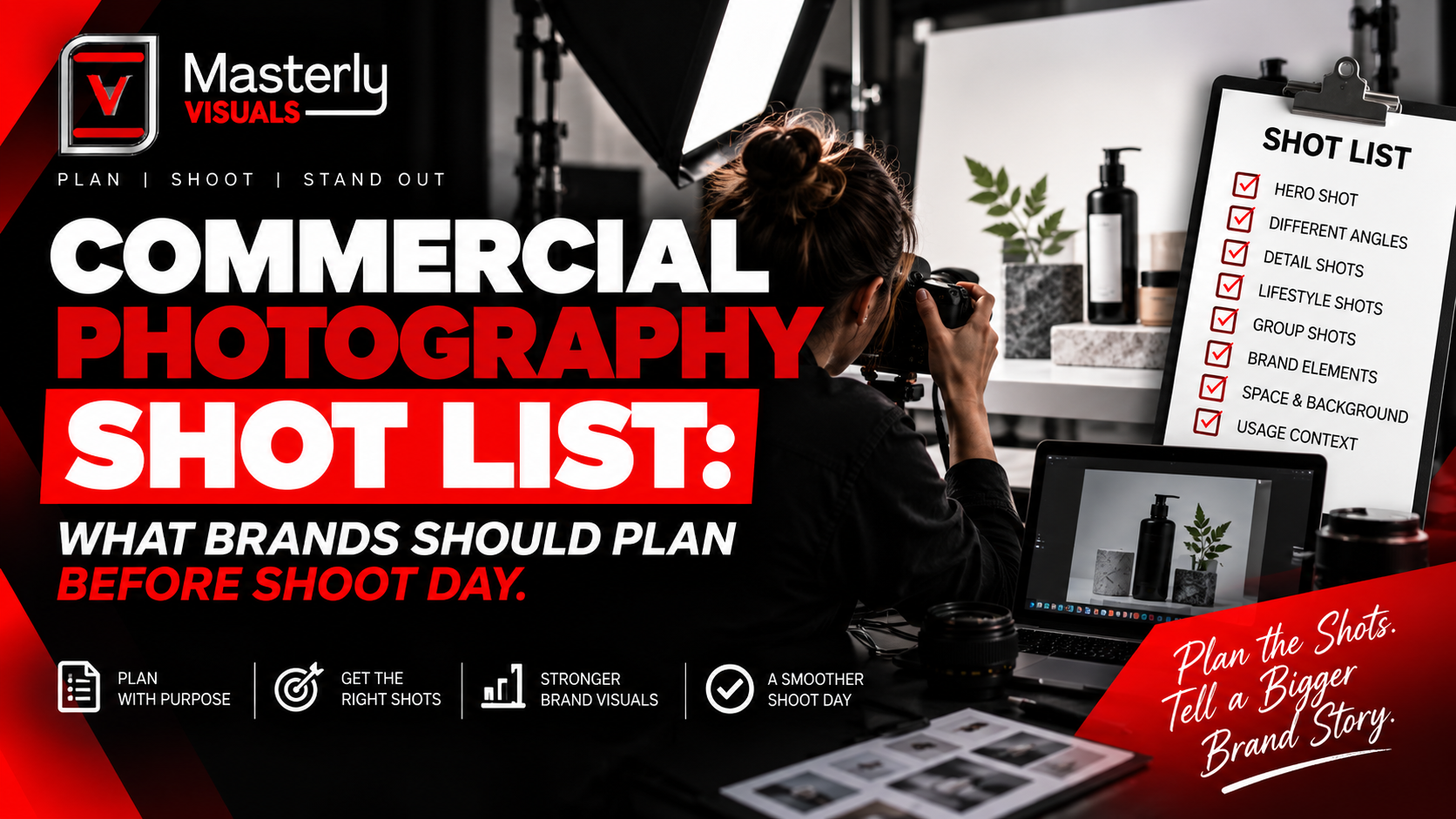
A shot list is your roadmap for the entire shoot - it prevents gaps, rushed ideas, and wasted time on shoot day. A brand photo shoot requires a detailed planning questionnaire to get this right.
Group shots by use:
- Website pages: Home hero, About portraits, Services imagery, Contact page, Blog hero images
- Social media: Feed posts, story backgrounds, reel covers, profile photos, ad creatives
- Launch assets: Sales pages, email headers, webinar slides, lead magnet covers
Include quantities and orientations - for example, at least 10 vertical and 10 horizontal hero images. The more specific your shot list, the more efficient and productive your session will be.
Choosing the Right Brand Photographer
Finding the right brand photographer is about more than price or availability. It's about skill, personal fit, and understanding of how images serve a business - not just how to operate a camera.
Match Their Style to Your Vision
Review portfolios carefully. Look for consistent editing, posing, and storytelling across multiple shoots - not just one standout image. A great photographer's style should be evident across their entire body of work.
Check full client galleries, not only Instagram highlight reels, to see how they cover a complete brand story from start to finish. As you browse, notice how the images make you feel. Energetic? Calm? Luxurious? Friendly? That feeling is exactly what they'll bring to your shoot.
Assess Experience with Brand and Commercial Work
There's a meaningful difference between wedding photography, family portraits, and brand photography. A personal branding photographer understands marketing context - how images will be used on websites, in ads, in sales funnels. That business awareness shapes every decision they make during a shoot.
Look for:
- Case studies or blog posts explaining brand shoots and their strategic thinking
- Experience with similar industries - tech, wellness, retail, creative fields
- Comfort shooting in varied locations: offices, outdoors, retail spaces, client homes
Communication, Process, and Support
On a discovery call, ask:
- Do they help with concepts, locations, and styling - or do you need to arrive with everything figured out?
- What's their timeline from booking to delivery?
- How many final images are included, and how are they licensed?
A great photographer will make you feel comfortable in front of the camera. Their personality, energy, and direction style matter as much as their technical skill - especially if you're someone who gets nervous being photographed.
Budget, Packages, and Licensing
Common pricing structures include session fees plus per-image pricing, packages with a set number of images, and retainers for recurring shoots. Costs vary widely by market, photographer experience, number of locations, image count, retouching level, and licensing scope.
Clarify licensing upfront: typical small business brand shoots include usage rights for web, print, social, and ads. If you plan to use images in paid advertising, confirm this is covered.
Brand photography is best viewed as an annual or biannual investment - not a one-off expense. The images you shoot today will fuel your marketing for 12–18 months or more.
Preparing for a Brand Photoshoot
Preparation dramatically affects both your confidence and the quality of the final results. The time you invest before the shoot is often more valuable than extra time behind the camera.
Define Themes and Stories You Want to Capture
Choose 3–5 themes to guide the session. For example:
- "At work": Behind-the-scenes process, your tools, your craft
- "With clients": Sessions, consulting, studio visits, interactions
- "Life outside work": Optional humanising lifestyle angles that show the person behind the business
- "Products or tools": Close-ups, making processes, packaging, ingredients
Create moodboards - Pinterest works well - to align expectations with your photographer. Sharing visual references avoids misunderstandings and makes the session run more smoothly.
Picking Locations That Fit Your Brand
Locations should offer variety for diverse photo backgrounds. Consider:
- Home office or studio: Authentic, accessible, can be styled to match your brand. Best for personal branding photoshoot sessions, and often ideal for personal branding photos because it shows the person behind the business in a real environment.
- Rented studio or coworking space: Controlled light, blank canvas. More cost, but more flexibility.
- Outdoor or on-location: Parks, city streets, cafés, client sites. Adds context, variety, and energy.
Think about light (time of day matters enormously), permissions, ambient noise, and travel time between spots if you're using multiple locations.
Wardrobe: What to Wear for Brand Photography
Align clothing with your brand colours, target audience expectations, and formality level. Clients should bring 2–3 outfit options for variety - ideally 3–5 outfits with mix-and-match layers like jackets, scarves, and accessories.
General wardrobe advice:
- Avoid tight patterns, heavy logos, or anything that dates quickly
- Ensure clothes fit well and allow natural movement
- Choose pieces that represent your brand's personality and the essence of how you want to be perceived
- If you're unsure, try on a few outfits, take a few photos, and ask a trusted, fashion-conscious friend for a second opinion
For different professions: a creative director might wear a bold jacket over a simple tee; a wellness practitioner might choose flowing, neutral-toned fabrics; a corporate consultant might opt for tailored blazers in brand colours. Outfit changes create visual variety without needing a new location.
Props and Tools of Your Trade
Props support storytelling and make posing less awkward - they give your hands something natural to do and add context to every shot.
Useful categories:
- Work tools: Laptop, sketchbooks, camera, tablet, instruments, ingredients
- Printed materials: Business cards, packaging, brochures, books you've authored
- Brand-coloured items: Mugs, notebooks, textiles, flowers to reinforce your colour palette
Bring more props than you think you'll need. Your photographer can select the most relevant ones on the spot.
People: Team Members, Clients, and Models
Consider featuring:
- Real clients (with advance notice and signed model releases) for authentic interaction shots
- Team members to show company culture and the people behind the brand
- Professional models when real clients or team aren't available
Including different people in your shoot adds warmth, variety, and relatability. Just remember to handle legal basics - model releases and permissions - for anyone who appears in commercial images.
Logistics and Shoot-Day Prep
Practical tips to keep shoot day running smoothly:
- Create a timeline with buffers between locations and outfit changes
- Prepare a checklist: outfits, makeup, props, snacks, water, phone charger
- Confirm addresses, parking, access codes, and permissions in advance
- Plan weather contingencies if shooting outdoors (backup location or reschedule plan)
- Simple self-care: good sleep, hydration, a light meal, and avoid last-minute experiments like a dramatic new haircut the day before
What Actually Happens During a Brand Photography Session
If you've never had a personal branding photoshoot before, nerves are completely normal. Here's what to expect so you can walk in with confidence.
Step 1: Arrival, Walkthrough, and Warm-Up
Your photographer arrives, sets up gear, and does a quick walkthrough of the location. You'll review the shot list together, discuss any last-minute ideas, and do a few test shots to check lighting and angles. Expect some simple warm-up poses - standing, sitting, walking - to help you relax and get used to the camera. Most people feel more natural within the first ten minutes.
Step 2: Working Through Your Shot List
A brand photo shoot typically lasts 2–4 hours, though brand photo shoots can last 2 to 8 hours depending on scope. A brand photo shoot includes portraits, lifestyle, and environmental shots - your photographer will move through themes and outfits in a planned order.
Expect the photographer to give you posing direction and small adjustments - hand placement, posture, facial expressions, and prompts for natural actions like talking, walking, or interacting with props so the images feel less stiff. They'll periodically check images on camera with you to make sure you're both aligned on the look and feel. In a typical 2-hour session, you can realistically cover 2–3 outfit changes and 2–3 location setups.
Step 3: Wrap-Up and Next Steps
At the end of the session, you'll do a final quick review to make sure priority shots are covered. Your photographer will discuss editing style, delivery timeline (often 1–4 weeks), and the number of final images. Some photographers let you choose favourites from a proof gallery; others curate the final selection themselves.
If you're wondering how you looked - remember, photographers are used to directing non-models. They've seen the same nervousness hundreds of times and know how to bring out your best. Trust the process.
After the Shoot: Editing, Delivery, and Organization
The work isn't finished when the camera turns off. How you handle the files after delivery determines their long-term value.
Your photographer will cull the raw images, select the strongest shots, and apply colour correction, retouching, and their signature editing style. Realistic delivery timeframes range from 1 to 4 weeks depending on workload and the number of final images.
Once you receive your files:
- Name and organise: Set up folders by date, campaign, or platform (e.g. "2026-Q1-Website," "Instagram-Portraits," "Product-Lifestyle").
- Create multiple exports: Full-resolution files for print, web-optimised versions for faster loading, and pre-cropped social media versions.
- Back up everything: Store files in at least two places - cloud storage and a local hard drive. Losing your brand photo library is an expensive mistake.
A well-organised image library makes it easy to find and repurpose photos for months and years to come.
How to Use Brand Photos Across Your Marketing
Unused photos have zero ROI. The entire point of brand photography is to create a working library that fuels your content across every channel. Here's how to get maximum mileage from your investment.
Website and Landing Pages
Your website is your digital storefront. Place brand photos strategically:
- Hero images on your Home page and key service pages - horizontal with negative space for headlines and CTAs
- About page portraits and day-in-the-life sequences that tell your brand story
- Product and sales pages with lifestyle and detail shots showing your offer in context
Brand photos can be used for websites and social media - but they need to be placed with intention, not dropped in randomly.
Social Media (Instagram, TikTok, LinkedIn, Pinterest)
- Curate a visual grid on Instagram using a mix of portraits, lifestyle shots, and detail images
- Use vertical photos as reel covers and story backgrounds on Instagram and TikTok
- Update LinkedIn with professional portraits, banners, and company page visuals
- Pin brand images to Pinterest boards linked to blog posts, services, or shop listings
Branding photos give your social presence a cohesive, recognisable look that stops the scroll.
Email Marketing, Blogs, and Lead Magnets
Integrate brand photos into:
- Newsletter headers and email signature portraits
- Blog post hero images and in-content visuals
- PDF guides, checklists, workshop workbooks, and lead magnet covers
Consistency matters - what subscribers see in their inbox should match what they see on your website and social profiles.
Ads, PR, and Speaking
On-brand imagery increases ad performance and credibility:
- Paid social ads, display ads, and sponsored content all perform better with authentic, high-quality images. One DTC brand that replaced custom photography with AI-generated visuals to save costs saw an 11% drop in conversion - proof that quality matters in paid media.
- Media features, press releases, and contributor bios need polished, professional portraits
- Speaker pages, event brochures, and podcast cover art all benefit from intentional brand imagery
Common Brand Photography Mistakes (and How to Avoid Them)
Most business owners learn these lessons by trial and error. Here's how to skip the expensive mistakes:
- No clear strategy or goals before shooting: Without a plan, you end up with a random assortment of pictures that don't serve your marketing. Define goals and a shot list before anything else.
- Inconsistent styles from multiple photographers: Using different things from different photographers without visual guidelines creates a disjointed brand. One study showed a 23% lift in conversion simply by unifying inconsistent product imagery.
- Cluttered backgrounds and distracting props: Every element in the frame should be intentional. If it doesn't support the story, remove it.
- Ignoring target audience expectations: Too casual for corporate clients, too stiff for creative brands. Know your audience and style accordingly.
- Forgetting to shoot for specific formats: No verticals for reels, no horizontals for website heroes. Plan formats into your shot list from the start.
- Letting images sit unused: If there's no content plan, even fantastic photos will collect dust in a hard drive. Map images to a publishing calendar before the shoot.
How Often to Refresh Your Brand Photos
Several factors determine when it's time for new images:
- Visual trends shift every 1–3 years: What looked fresh in 2024 may feel dated by 2027. Adobe's research shows nearly 48% of creatives plan to refresh their brand identity in 2026.
- Major business changes: A rebrand, new offers, team growth, relocation, or a shift in your target market all call for updated visuals.
- Content velocity: If you're posting daily, you'll cycle through your library faster than a business that posts weekly.
Broad guidelines for most brands:
- Full brand shoot: Every 12–24 months for most small businesses
- Mini or seasonal top-up shoots: Every 3–6 months for content-heavy brands that need a constant stream of fresh material

Frequently Asked Questions About Brand Photography
If you have more questions before booking, these are the ones that come up most often.
How much does a brand photography session typically cost?
- Prices vary widely by market, photographer experience, session length, and deliverables. Mini sessions (1 hour, limited images) sit at one end; full day shoots with multiple locations and extensive retouching sit at the other.
- Key cost factors: photographer experience, number of locations, total image count, retouching level, styling support, and licensing scope.
- View the investment as spread over 12–18 months of marketing content. When you calculate cost per image per month of use, brand photography is often more cost-effective than constantly buying stock or running ad creative without strong visuals.
How many images do I need from one brand shoot?
- For a basic refresh (website and profiles), 20–40 curated images may be sufficient.
- For content-heavy businesses posting daily across social media, 80–150+ images from a full day session gives you the range you need.
- Prioritise quality and variety - portraits, lifestyle, product, detail, horizontal, vertical - over sheer quantity. A diverse collection of 50 excellent images beats 200 mediocre ones.
Do I really need professional hair and makeup?
- Professional styling can boost confidence and ensures a polished look for high-visibility uses like speaking, media appearances, or corporate sectors.
- Some brands intentionally choose a minimal or "everyday" look to feel authentic and relatable - and that's a perfectly valid creative choice.
- Align grooming with your brand personality and what your audience expects. A wellness practitioner's "no-makeup makeup" look communicates something very different from a luxury brand's editorial styling.
Can I reuse my brand photos across different platforms and campaigns?
- Yes - this is the entire goal. Brand photography creates a library of images for marketing, designed to work across your website, social, email, ads, and print.
- Vary crops, captions, and contexts to keep content feeling fresh. A single image can serve as a website hero, an Instagram post, a newsletter header, and a Facebook ad - each with different cropping and copy.
- Check your licensing terms to confirm usage in paid ads vs organic content. Most brand photography packages cover all standard business uses, but always clarify upfront.
What if I don't like how I look in photos?
- This is the most common concern people share before a branding photo shoot - and it's completely normal. Choosing the right photographer and thorough preparation makes an enormous difference.
- Practical tips: practice a few poses in a mirror beforehand, communicate any insecurities with your photographer, and remember that they're an expert at finding your best angles.
- Reframe what branding photos are for: they're tools for connection and trust, not a fashion magazine editorial. Your audience doesn't want perfection - they want to see the real person behind the brand and connect with your story.
Commercial Brand Photography Inquiry
Call (404) 726-7261 to schedule a commercial brand photography consultation and take the next step toward creating professional, high-quality visuals that represent your business. Our team can help you develop compelling brand imagery, showcase your products and services, and strengthen your visual identity across websites, marketing campaigns, and digital platforms. Elevate your brand with photography that makes a lasting impression. Call (404) 726-7261 today to discuss your commercial photography needs and schedule your consultation.
Recent Posts