How Executive Headshots Strengthen a Leadership Brand
Executive Headshots: What They Are & Why They Matter in 2026
Professional executive headshots are a cornerstone of modern corporate and personal identity. If you're a CEO, managing partner, founder, or board member, your headshot is often the first thing investors, journalists, and top-tier candidates see before they ever shake your hand. A high-quality photograph functions as a digital handshake for business leaders-and in 2026, that handshake happens across LinkedIn profiles, investor presentations, press releases, conference programs, and company leadership pages simultaneously.
An executive headshot is not the same as standard corporate headshots. Where a typical business portrait might work for internal directories or mid-level team pages, executive portraits must convey authority, leadership presence, and brand alignment at the highest level. These images appear in higher stakes contexts-S-1/IPO filings, board communications, annual reports, media kits, and keynote speaker bios-where stakeholders form an immediate impression about competence and whether a leader can build trust. Research confirms that first impressions form in approximately 100 milliseconds and are remarkably difficult to shift afterward. Executive headshots influence how clients and partners perceive a leader before any real interaction takes place.
Here's why executive headshots matter:
- Credibility and trust. A strong executive headshot conveys both credibility and warmth. Perceived leadership credibility signals company trust to investors, regulators, and clients alike.
- Brand reinforcement. A polished visual brand reinforces your status as an industry thought leader and keeps your personal brand aligned with your company's identity.
- Leadership alignment. Consistent executive headshots communicate stability and alignment across your senior leadership team-critical during fundraising, mergers, or public offerings.
- Investor and talent influence. High-quality headshots are essential for investor presentations and press coverage. Studies show that a company's digital imagery, including executive photos, can influence stock valuation and investor behavior.
- Multi-channel durability. These portraits serve as long-term brand assets that work across corporate websites, social profiles, conference programs, and media for years.
What Makes a Great Executive Headshot
Think of this section as the quality checklist for every great executive portrait. At the leadership level, "good enough" doesn't cut it-your photos must balance authority, warmth, and authenticity under high visibility and scrutiny.
Professional executive headshots humanize leadership and make it more relatable while still projecting confidence and expertise.
The core elements that separate polished portraits from forgettable ones: expression, pose, background, lighting, styling, and retouching.
Leadership Expression & Presence
The ideal expression for executives is one of composed confidence-not an exaggerated smile, not a stern glare. A confident, warm expression enhances executive headshots and builds immediate rapport with whoever is viewing the image. Direct eye contact and a natural smile convey leadership qualities, while subtle cues like a relaxed jaw, open eyes, and a micro-smile signal trustworthiness.
Context matters. For investor materials and board portals, a calm, serious expression often reads as appropriate gravitas. For employer branding, recruiting content, or a LinkedIn profile, a warmer, more approachable expression works better. Expression coaching during the session helps executives hit the right note without looking forced.
Body Language & Posing for Executives
A confident but relaxed posture contributes to an approachable headshot appearance. Start with the basics: tall spine, relaxed yet squared shoulders, and a slight lean toward the camera to signal engagement. Natural expressions and a slight forward lean create engagement and approachability-two qualities every leader wants to project.
The standard body angle is a 30–45 degree turn of the torso toward the camera, with the face returned to the lens. This creates dimensionality and avoids flatness. Hands should be positioned simply-resting on a lap, lightly on a desk, or one hand relaxed at the side. Crossed arms can read as defensive and should be used sparingly. For leadership teams shooting together, poses should follow a consistent framework so images align visually on team pages.
Lighting & Background That Match Your Personal Brand
Harsh overhead fluorescents, mixed color temperatures, and cluttered office backgrounds degrade even the most confident executive's image. Soft lighting eliminates harsh shadows and contributes to a welcoming appearance. In 2026, preferred setups use professional lighting-large softboxes, diffused natural light, or balanced fill and rim lighting that preserves shape while keeping the mood warm.
Neutral solid backgrounds are recommended for executive headshots-think gray, navy, or off-white-along with subtle gradients or clean environmental backdrops. Industry trends in 2026 show that plain white backgrounds are increasingly seen as dated; environmental, context-supporting backdrops are widely preferred. Industry matters: law and finance often favor neutral studio looks, while tech and creative companies may embrace modern office interiors or architectural context.
Framing & Cropping for Real-World Uses
Standard framing for executive portraits is head-and-shoulders or mid-chest up, which provides flexibility across LinkedIn, website bios, press kits, and print. Leave adequate space around the head so designers can crop to square, circular, horizontal, or vertical formats without losing important detail.
Across an executive team, consistent eye-line, crop style, and headroom are essential. When assembled on a leadership page, different headshots that vary wildly in framing create a patchwork effect that undercuts the professional image you've worked to build.
Authentic Retouching (Not Airbrushing)
Professional retouching for executive headshots should create a polished portrait by removing temporary distractions-blemishes, lint, stray hairs, minor shine-while preserving skin texture, natural contours, and age-appropriate features. Over-smoothing or extensive reshaping can backfire, making someone look inauthentic in ways that erode trust with boards and investors.
The trend toward natural, "aged-appropriately real" retouching continues to gain strength. Organizations should document retouching standards so every executive receives the same level of post production treatment, ensuring consistency across the full set of final images.
Types of Executive Headshots (and When to Use Each)
Even within a unified brand identity, different roles and contexts benefit from slightly different styles. Here are the most common types and when each makes sense.
Boardroom Formal
This is the traditional, conservative executive headshot: tailored suit, tie where the industry expects it, structured wardrobe, and a neutral studio or office backdrop. Finance and legal industries typically require tailored suits in dark tones-charcoal, navy, or black.
Typical uses include board portals, proxy statements, annual reports, regulatory filings, and heavily regulated sectors like financial services, healthcare leadership, and law. The expression tends toward serious but still composed, because audiences in these contexts expect gravitas and reliability.
Modern CEO / Founder
A more relaxed-professional style: blazer or jacket with an open collar, smart separates, and a slimmer silhouette. Tech and creative industries often prefer business casual attire without ties. The background might be neutral but with subtle architectural context or soft color aligned with the brand.
This style is common on tech and SaaS leadership pages, startup pitch decks, keynote speaker bios, and media profiles. It maintains polish without projecting distance-ideal when personality and entrepreneurship are central to the leader's appeal.
Environmental Executive Portrait
Here the executive is placed in context-their workspace, office environment, trading floor, or manufacturing facility-with the background softly blurred. These portraits serve employer branding, thought-leadership articles, speaking engagement materials, and lifestyle-oriented PR features.
The environment must be tidy, on-brand, and free of distracting logos or signage. Depth of field, controlled professional lighting, and intentional context are what separate a great executive portrait shot in-situ from a snapshot.
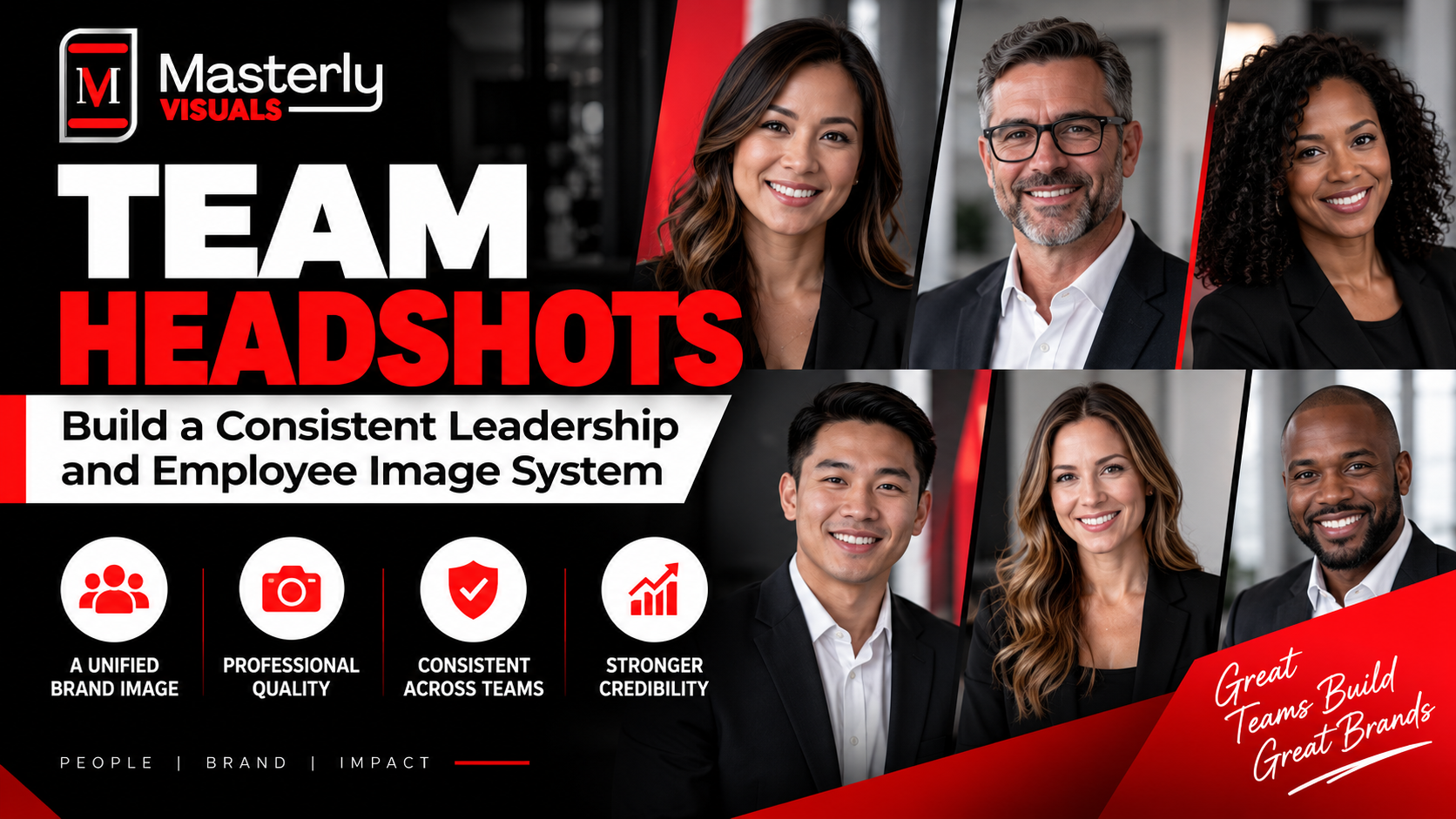
Team-Aligned Leadership Headshots
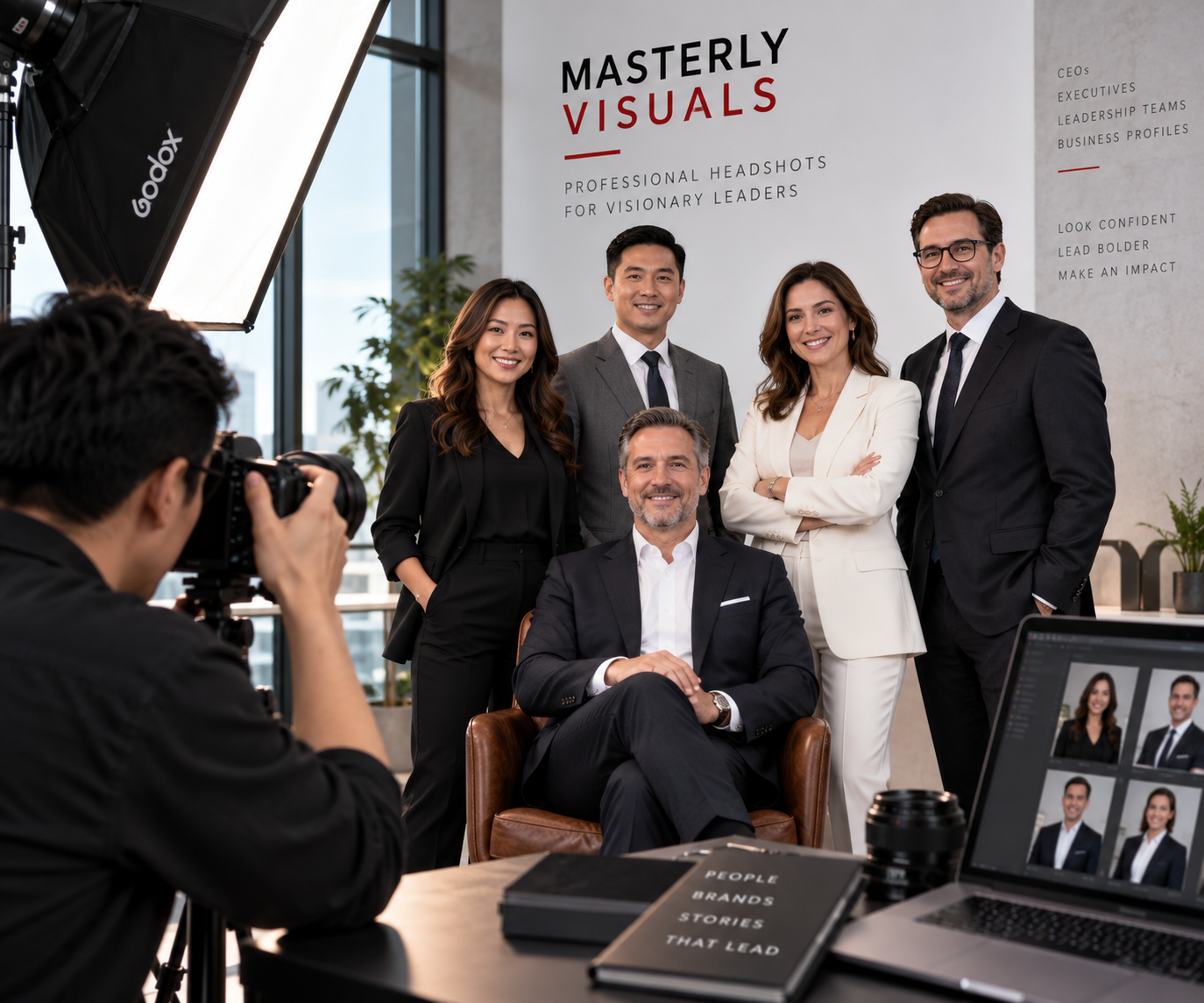
These are unified portrait sets where all executives follow shared guidelines for backgrounds, framing, lighting, and wardrobe formality so executive teams present a consistent image. This approach is critical during IPO preparation, mergers, rebrands, or when onboarding multiple new senior leaders at once.
A visual style guide also keeps leadership portraits consistent as new additions slot into the existing set without requiring a full re-shoot of the entire team. Inconsistent headshots can undermine a company's leadership image-especially when displayed side by side on corporate websites or in investor materials.
Wardrobe & Styling for Executive Headshots
Clothing, grooming, and accessories aren't just cosmetic decisions-they're storytelling tools that reflect seniority, industry, and personal brand.
Dress for Your Role, Not Just Your Industry
Wardrobe should reflect industry standards and personal brand. Executives should dress based on what their most important stakeholders expect. In finance and law, structured suits and formal shirts remain standard. In tech, a smart casual blazer with an open collar is common. In creative industries, textured jackets, elevated separates, and personal style play a larger role.
Bringing two to three outfit variations to the shoot covers both a formal look and a slightly more relaxed option-giving flexibility in final delivery without booking additional studio time.
Colors, Patterns & Fabrics That Work on Camera
Solid colors photograph best, avoiding loud patterns and bright colors. Bold prints, moiré-inducing stripes, and prominent logos create visual noise that distracts from the subject. Go-to colors include navy, charcoal, deep green, burgundy, warm neutrals, and off-white. Black can be sharp but risks absorbing light or appearing harsh unless carefully balanced.
Fabrics should be matte or low sheen. Shiny or reflective materials catch light in ways that pull attention from the face. Fine knits and subtle weaves add dimension without becoming distractions.
Accessories, Hair & Grooming
Accessories should be minimal and high-quality: a classic watch, simple jewelry, or a subtle pocket square if it fits the brand. The grooming checklist: get a haircut a few days before (not the day of), trim beard if applicable, keep nails clean, and use lightly mattifying products to manage shine under studio lights.
Professional hair and makeup can be helpful but must be aligned with the person's real-world appearance. Overly styled looks feel inauthentic and may create a jarring disconnect when clients or board members meet the executive in person.
Planning Your Executive Headshot Session
Senior leaders don't have hours to spare. Efficient planning is what separates a 25-minute session that produces excellent results from an unfocused hour that yields mediocre ones.
Clarify Purpose & Placement First
Before booking anything, list every place the headshots will appear-LinkedIn, investor relations site, speaker pages, media kit, pitch decks, annual reports-and who the primary audiences are (investors, customers, candidates, regulators). Scheduling conflicts arise when coordinating headshots for busy executives, so clarity upfront prevents wasted time and ensures every shot serves a purpose.
The intended usage drives decisions on formality, background, expression, and cropping. A headshot destined only for an online gallery needs different treatment than one appearing in an IPO prospectus.
Choosing a Photographer or Headshot Solution
Look for a headshot photographer experienced with real executives and leadership teams-not just individuals. Review their portfolio for consistency across corporate teams, not only standalone images. Check sample leadership pages they've produced to judge cohesion.
Compare traditional studio sessions with modern remote or on-location workflows. Some vendors also add licensing fees for commercial usage, so confirm total usage rights up front. Some platforms now allow distributed teams to produce consistent, professional portraits without gathering everyone in one room. Leadership teams often face logistical challenges with multi-location executives, making flexible solutions increasingly valuable.
Pre-Session Preparation Checklist
- 3–5 days before: Finalize wardrobe decisions. Select outfits in solid colors that work on camera; steam or press everything.
- 2–3 days before: Grooming appointments-haircut, beard trim, skincare basics.
- Day before and day of: Get adequate sleep and hydration. Bring multiple jackets, tops, backup accessories, a lint roller, and a steamer.
- Mental prep: Review sample headshots, practice a relaxed smile in a mirror, and align on the message you want the images to convey-authority, warmth, approachability.
Capturing Executive Headshots Without a Full Studio
Not every executive has access to a full studio, and not every company can fly their senior leadership to one location. Modern cameras, smartphones, and smart planning can still produce leadership-quality results-if you follow the fundamentals.
Lighting Fundamentals
Natural light is the best lighting for executive headshots when a studio setup isn't available. Use large windows with indirect light and position the subject facing the window or at a slight angle to it. Avoid mixing overhead fluorescents with window light-the clashing color temperatures create unflattering casts.
Best times for natural light: mid-morning and late afternoon, when the light is soft and directional. If outdoors, find shaded areas. If using artificial lighting, diffused sources like softboxes or umbrella reflectors are the simplest way to achieve professional lighting quality.
Simple, On-Brand Backgrounds
Choose clean walls, subtle textures, or simplified office corners free of clutter, bright signage, or busy graphics. Neutral solid backgrounds work best for executive portraits-even an unadorned conference room wall can serve if it's clean and evenly lit.
Use the same background style across all executives to ensure consistency in composite layouts. Backgrounds can be replaced digitally in post production, but initial shots must still be well-lit, high-resolution, and shot at consistent angles for seamless substitution.
Camera Position, Angle & Framing
Camera at eye level or slightly above provides a natural, flattering angle. Avoid low angles that distort features or high angles that diminish presence. A medium focal length lens (85–135mm equivalent) reduces distortion while allowing separation from the background.
Frame mid-chest up with headroom-eyes placed roughly one-third down from the top of the frame. This leaves room for designers to crop for different aspect ratios without cutting into the composition.
Directing Executives in Minutes
Most executives aren't models, and that's fine. Brief, clear coaching cues work best: "Straighten your spine, roll shoulders back, lean in slightly, think about a recent win." Variations in angles and expressions provide options for conveying different traits across placements.
Take bursts of 10–15 images rather than single clicks. Expressions usually relax and improve after the first few frames. Review quickly on screen for confident posture, expression, and wardrobe issues (wrinkles, lint, collar alignment) before wrapping up. For in-office shoots, the office manager often helps coordinate room access, timing, and flow so sessions stay on schedule.
Maintaining Consistency Across an Executive Team
Consistency isn't aesthetic polish-it's strategic. A unified leadership page signals alignment, operational discipline, and brand clarity. When team headshots look like they were shot on five different days in five different cities with five different photographers, it communicates exactly that kind of fragmentation.
Creating a Visual Style Guide for Headshots
Define standards for background color and tone, framing, aspect ratio, image orientation, lighting mood, and baseline wardrobe formality. Keep reference images and technical notes-camera settings, lighting diagrams, sample wardrobe photos-so future shoots can match precisely.
Consistency in attire across the leadership team is crucial for branding. A style guide prevents the "mismatched yearbook" look when new leaders join, and it allows you to ensure consistency without requiring the entire team to reshoot every time someone new comes aboard.
Scheduling Updates & Refresh Cycles
Most companies refresh executive headshots every 2–3 years as a baseline cadence. But specific triggers may accelerate the timeline: a new executive can trigger the need for an immediate headshot update, as can promotions, mergers, rebrands, or significant appearance changes. A single outdated headshot can undermine leadership image-especially when it sits alongside current portraits on a leadership page.
Updating three to five headshots annually is typical for mid-market companies managing regular turnover and growth. For larger teams, plan integrated group sessions or rolling schedules to minimize disruption to executive calendars. Avoid letting inconsistent, outdated photos linger on public-facing pages-that signals inattention to detail at a time when brand consistency directly impacts revenue.
Executive Headshots vs AI: Authenticity & Trust
AI generated headshots are tempting for their speed and cost-and the technology has improved dramatically. But for executives in high-trust roles, the risks outweigh the convenience.
Stakeholders expect the person in the photo to match the person in the room. Fully synthetic portraits risk being exposed, creating a mismatch that erodes trust at the exact moment it matters most-board meetings, investor roadshows, media interviews. High-quality photography signals competence and attention to detail in ways that a generated image simply cannot replicate.
Subtle AI enhancement of real photography-lighting correction, background refinement, stray hair removal-is increasingly accepted. But fully synthetic images or heavy generative manipulation remain a risk in regulated, investor-scrutinized, or media-facing environments. Industry data confirms that executives and clients are demanding preservation of texture, age, and real identity in their professional portraits. Professional photography can significantly improve personal branding without sacrificing the authenticity that senior leadership demands.
How to Use Your Executive Headshots Strategically
A single strong executive headshot should work across many channels for several years. Maximizing that return means planning for multiple formats and placements from the start.
Company & Investor-Facing Channels
- Company leadership pages: Need consistent backgrounds, file sizes optimized for web, and alt text for accessibility. This is often the first place investors, journalists, and candidates look.
- Investor presentations, annual reports, and board materials: Require high-resolution, clean crops, and consistent color balance. High-quality headshots are essential for investor presentations.
- Press releases and media kits: Provide downloadable versions in multiple aspect ratios-vertical, square, and landscape crops. Work directly with your communications team to ensure the right variants are available.
Personal & Thought-Leadership Platforms
- LinkedIn and professional networks: Square or circular crop; sharp eyes; neutral background that reads well at small sizes. Profiles with professional photos receive up to 21× more views and 36× more messages than those without.
- Conference and keynote bios: Portrait-orientation images, sometimes with a bit more environmental context if organizers request it.
- Author pages, podcast covers, and bylines: Consider both color and black-and-white variants for editorial flexibility. Having multiple options in your final delivery ensures you're never caught without the right format.
Frequently Asked Questions About Executive Headshots
What are executive headshots?
Executive headshots are professional portraits created specifically for senior leaders, executives, CEOs, founders, and other high-level business professionals.
Why do companies need executive headshots?
They provide consistent, professional images for company websites, leadership pages, media profiles, LinkedIn, speaking engagements, presentations, and corporate communications.
What are leadership headshots?
Leadership headshots are professional portraits created for members of a company's leadership team. They are often photographed with a consistent visual style so the team appears cohesive.
What are CEO headshots used for?
CEO headshots can be used for company websites, media profiles, press releases, speaking engagements, LinkedIn, business publications, and other professional communications.
Can you photograph an entire leadership team?
Yes. Masterly Visuals can plan coordinated portrait sessions for multiple executives and leadership team members.
Can executive portraits be photographed at our office?
Yes. Environmental executive portraits can be photographed at a company's office or another professional location when the setting supports the desired brand image.
Can executive headshots be photographed in a studio?
Yes. Studio photography provides a controlled environment and can create a clean, consistent appearance across a leadership team.
Can one session include both studio and environmental portraits?
Depending on the project, a session can be planned to include different portrait styles and locations.
What should executive headshots look like?
They should look professional, natural, polished, and appropriate for the executive's role and the company's brand.
Can the same executive headshots be used on LinkedIn and the company website?
Yes. Images can be planned for multiple professional applications. Specific image requirements should be discussed during project planning.
How often should executives update their headshots?
There is no fixed schedule. Companies commonly update leadership portraits when an executive's appearance changes, the company's brand is refreshed, or existing images no longer represent the current leadership team.
How do we hire a photographer for executive headshots?
Contact Masterly Visuals with your team size, preferred location, intended image uses, and desired timeline. The team can discuss the photography requirements and recommend an appropriate session.
Plan an executive headshot session.
Your leadership team represents your organization in every place where their photographs appear.
Professional executive headshots give your company a consistent collection of leadership portraits for websites, media, professional profiles, presentations, and corporate communications.
If your organization needs leadership headshots, CEO headshots, or executive portraits, Masterly Visuals can plan a professional session around your team and brand.
Masterly Visuals
Phone:
(404) 726-7261
Website:
https://www.masterlyvisuals.com/
Recent Posts