
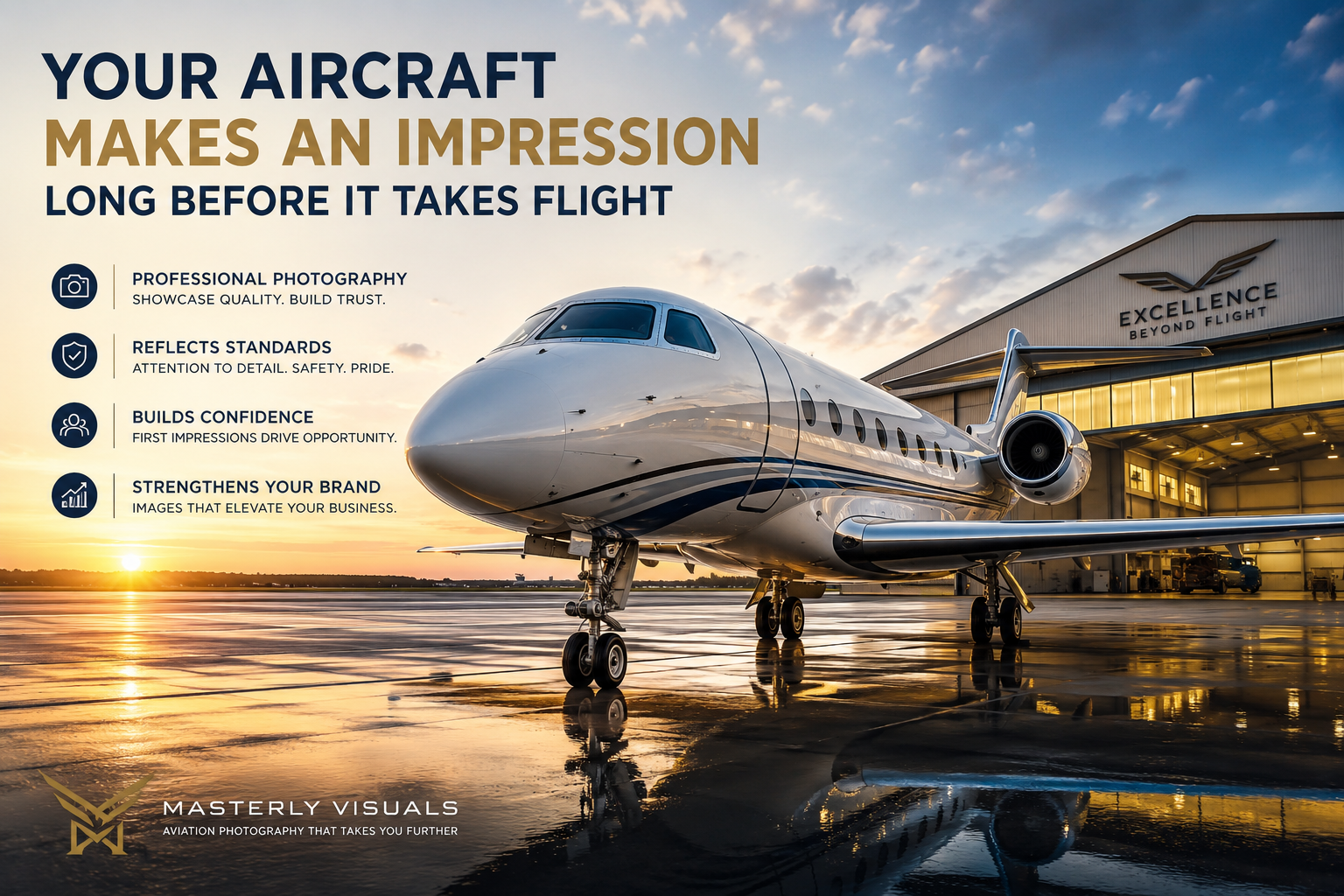
Your Aircraft Makes an Impression Long Before It Takes Flight
When people think about an aircraft, they often picture it soaring through the sky or sitting proudly on the runway moments before departure. What many people overlook is that an aircraft begins telling its story long before the engines start. Whether it belongs to a private owner, charter company, aviation manufacturer, maintenance provider, or corporate flight department, every aircraft creates a first impression. That impression can influence customers, investors, partners, and even future buyers before a single wheel leaves the ground.
Professional photography has become one of the most valuable marketing investments in the aviation industry. High-quality visuals communicate professionalism, safety, attention to detail, and pride of ownership. Today's audience expects more than simple snapshots. They want compelling images that showcase the aircraft, the people behind it, and the experience it represents. That is where an experienced aircraft photographer makes a measurable difference.
At Masterly Visuals, we understand that every aircraft has its own personality and purpose. Our team specializes in creating striking imagery that highlights craftsmanship, performance, and design while helping aviation businesses strengthen their brand. Whether the assignment involves private aircraft, business jets, helicopters, commercial fleets, or specialty aircraft, our goal is to create photographs that leave a lasting impression.
First Impressions Begin on the Ground
Long before passengers board or pilots begin their pre-flight checklist, an aircraft is already communicating something to everyone who sees it. Clean lines, polished paint, careful maintenance, and professional photography work together to build confidence. Whether someone is browsing a company website, reviewing marketing materials, or scrolling through social media, the first image often determines whether they continue learning about the aircraft or move on.
Professional photography captures more than the machine itself. It captures precision, engineering, and the commitment that owners invest in maintaining their fleet. An expertly photographed aircraft demonstrates attention to detail that extends beyond appearance. It reflects the standards of the organization operating it.
For aviation businesses competing in a crowded marketplace, every image becomes part of the company's identity. Strong visuals encourage viewers to trust the organization before they ever schedule a charter, purchase an aircraft, or request additional information.
Why Professional Aviation Photography Matters
The aviation industry is built on confidence. Customers trust operators with their time, safety, and investment. Investors trust manufacturers with innovation. Pilots trust aircraft that are maintained to the highest standards. Professional aviation photography helps reinforce that confidence by presenting aircraft in the best possible way.
Unlike general commercial photography, aviation requires specialized knowledge. Aircraft have reflective surfaces, unique proportions, and strict operational requirements. Lighting conditions change rapidly around airports, and photographers must work efficiently while remaining aware of security protocols and operational schedules.
Experienced aviation photographers understand these challenges. They know how to position an aircraft to emphasize its strongest design features while avoiding distracting backgrounds or harsh reflections. Every decision contributes to producing polished images that elevate the brand.
Every Aircraft Has a Story Worth Telling
No two aircraft serve exactly the same purpose. Some transport executives across the country. Others support emergency services, aerial surveys, flight schools, cargo operations, or luxury charter companies. Each mission deserves photography that reflects its unique role.
Instead of relying on generic stock photography, organizations benefit from custom imagery that highlights their own fleet, facilities, and people. Authentic photographs build credibility because viewers immediately recognize they are seeing real equipment rather than borrowed marketing materials.
Professional photography also helps tell the story behind the aircraft. Maintenance crews preparing for departure, experienced pilots reviewing flight plans, or technicians inspecting critical systems all demonstrate the professionalism that clients expect.
Photography Influences Buying Decisions
Aircraft buyers rarely make purchasing decisions based solely on specifications. Technical information matters, but visual presentation often creates the emotional connection that motivates someone to request additional information.
High-quality photos allow prospective buyers to appreciate aircraft exteriors, craftsmanship, paint quality, and overall condition before arranging an in-person inspection. Professional photography creates transparency while showcasing the value of the aircraft.
Whether selling a single plane or an entire fleet, exceptional imagery helps listings stand apart from competitors using basic cellphone photographs or poorly lit snapshots.
Professional visuals also support aircraft brokers by creating marketing materials that attract qualified buyers and reduce the time required to generate interest.
Aircraft Exteriors Deserve Professional Attention
One of the most important aspects of capturing aircraft is showcasing the exterior from angles that emphasize design, engineering, and scale. Every aircraft has defining characteristics that deserve careful attention.
Photographing aircraft exteriors requires thoughtful composition, patience, and an understanding of how sunlight interacts with polished surfaces. Reflections, shadows, and surrounding objects must all be considered before pressing the shutter.
An experienced photographer studies the environment before every session. Positioning the aircraft correctly can dramatically improve the final result without requiring extensive editing afterward.
Professional exterior photography often includes multiple perspectives that provide viewers with a complete understanding of the aircraft while maintaining visual consistency throughout the gallery.
Proper Lighting Makes Every Detail Stand Out
The difference between an average photograph and an exceptional one often comes down to proper lighting. Midday sunlight can create harsh shadows and distracting reflections across polished fuselages.
Many photographers prefer working during sunrise or sunset because the softer light enhances color while reducing contrast. These golden-hour conditions create elegant highlights that define the aircraft without overwhelming its details.
Cloud cover can also provide excellent opportunities. Diffused light reduces glare and creates balanced exposure across the entire aircraft, making it easier to preserve details in both bright and dark areas.
Understanding how the sun moves throughout the day allows photographers to plan sessions that maximize visual impact while minimizing unwanted reflections.
Capturing Motion Requires Technical Skill
Static photography tells only part of an aircraft's story. Action photography introduces energy, excitement, and performance that cannot be communicated while parked on the ramp.
Photographing departures, arrivals, taxi sequences, and demonstrations requires technical knowledge along with quick decision-making. Aircraft are fast moving subjects, leaving little time to react if camera settings are incorrect.
Professional photographers carefully monitor aircraft movement, anticipate the flight path, and prepare well before the aircraft reaches the desired position. Success depends on planning rather than luck.
Every successful action photograph reflects preparation, timing, and experience working in demanding aviation environments.
Understanding Shutter Speed
One of the most important technical decisions in aviation photography involves selecting the correct shutter speed. The setting dramatically influences how movement appears within the final image.
A fast shutter speed freezes action with remarkable clarity. This technique works well when photographing aircraft climbing after takeoff or military demonstrations where preserving sharp details is essential.
A slow shutter speed, on the other hand, introduces controlled motion blur. When executed correctly, the aircraft remains relatively sharp while the spinning propellers and moving background communicate speed and motion.
Knowing when to choose each approach separates experienced aviation photographers from beginners.
Air-to-Air Photography Creates Unforgettable Images
Few forms of aerial photography are as technically demanding as air to air photography. Instead of photographing aircraft from the ground, photographers capture another aircraft while flying alongside it.
Every mission requires extensive planning between photographers, pilots, and flight crews. Communication is critical because every maneuver must prioritize safety while positioning both aircraft for the best possible photographs.
The result is a collection of dramatic images that showcase aircraft from perspectives impossible to achieve from the ground. These photographs are frequently used in advertising campaigns, aviation publications, manufacturer brochures, and corporate branding.
Air-to-air photography represents one of the highest levels of professional aviation photography because every successful image combines artistry with careful operational coordination.
The Right Camera Equipment Matters
Professional results depend on more than experience alone. Choosing the right camera, lens, and settings allows photographers to adapt to changing conditions throughout the day.
Wide-angle lenses help emphasize the scale of large aircraft while telephoto lenses provide flexibility when photographing operations from approved viewing locations. Selecting the appropriate focal length helps maintain balanced proportions without introducing unwanted distortion.
Modern cameras also provide advanced autofocus systems that help maintain focus on moving aircraft. Even with sophisticated equipment, photographers must remain in full control of exposure, composition, and timing.
Technology supports creativity, but experience ultimately determines whether an image successfully captures the aircraft's character.
Planning Every Shoot From the Very Beginning
Successful aviation photography starts long before the camera leaves its case. From the very beginning, careful planning ensures the session runs smoothly while respecting airport procedures and operational schedules.
Photographers review weather forecasts, evaluate available light, determine ideal shooting locations, and coordinate with aircraft operators. Every detail contributes to the quality of the finished gallery.
A thoughtful plan also minimizes disruptions to normal operations. Professional photographers understand that aviation businesses have demanding schedules, and every photography session should complement—not interfere with—their daily activities.
At Masterly Visuals, preparation is a priority because exceptional results rarely happen by accident. Every aircraft deserves photography that reflects the professionalism, precision, and pride invested in every flight.
Experience Makes the Difference in Aviation Photography
Anyone can point a camera toward an aircraft, but creating compelling imagery requires experience that extends far beyond understanding photography basics. Aviation environments are constantly changing, and photographers must be prepared to adapt to shifting weather, moving aircraft, airport operations, and lighting conditions within minutes.
Professional aviation photographers understand how to work efficiently while remaining respectful of airport personnel, pilots, maintenance crews, and operational procedures. Every assignment involves balancing creativity with safety, ensuring the aircraft remains the center of attention without disrupting its mission.
At Masterly Visuals, we approach every project with preparation and professionalism. We understand that every aircraft represents a significant investment, and our responsibility is to produce imagery that reflects its true value.
Working Around Airports Safely
Photographing aircraft near active airports requires awareness that extends beyond photography. Security procedures, restricted areas, taxi operations, and communication with airport personnel all play an important role in a successful session, just as thoughtful planning and creative vision define fine art portrait photography in more controlled studio environments.
Professional photographers never assume access. Instead, they coordinate with operators and facility managers while remaining aware of changing airport activity throughout the day. This approach protects everyone involved while ensuring photography sessions remain productive.
Understanding airport etiquette also helps photography sessions progress smoothly. When photographers know where they can safely work and how aircraft move around the ground, they are better prepared to anticipate opportunities without creating unnecessary distractions.
Experience creates confidence, allowing photographers to remain creative while respecting every operational requirement.
Capturing Aircraft in Every Lighting Condition
Every aviation assignment presents unique lighting challenges. Bright afternoons, overcast skies, dramatic sunsets, and nighttime operations all require different techniques to achieve professional results.
Rather than relying entirely on auto settings, experienced photographers manually adjust exposure, aperture, and shutter settings to maintain consistency throughout the session. Maintaining creative control over the camera produces photographs that appear intentional rather than accidental.
Even when lighting conditions become difficult, skilled photographers know how to compensate for changing environments without sacrificing image quality. This flexibility becomes especially valuable during busy flight schedules where waiting for perfect weather simply is not an option.
Learning how natural light behaves around polished aircraft surfaces allows photographers to produce clean, balanced images regardless of the time of day.
Sunrise and Sunset Offer Incredible Opportunities
Many of the most memorable aviation photographs are created during sunrise and sunset. These brief periods provide warm colors, softer shadows, and dramatic skies that naturally enhance aircraft without excessive editing.
Golden-hour lighting creates depth that helps define curves, wings, engines, and fuselage details. Reflections become more controlled, while the surrounding landscape often adds visual interest without distracting from the primary subject.
Planning photography sessions around these times requires flexibility, but the results often justify the additional effort. Whether photographing business jets, historic aircraft, or commercial fleets, these lighting conditions consistently produce timeless imagery.
The combination of warm sunlight and thoughtful composition creates photographs that remain visually appealing for years.
Night Aviation Photography Brings a Different Perspective
While daylight photography remains popular, night aviation photography offers an entirely different atmosphere. Taxiway lights, illuminated cockpits, airport lighting, and city skylines create dramatic environments that showcase aircraft from a fresh perspective.
Night photography demands patience and technical expertise. Longer exposures require photographers to stabilize the camera, carefully monitor exposure, and account for movement that may occur during the photograph.
Selecting the appropriate aperture and shutter settings becomes essential when working in low-light conditions. Every adjustment influences sharpness, brightness, and overall mood.
The finished photographs often feel cinematic, presenting aircraft in ways many viewers rarely experience in real life.
Balancing Motion and Sharpness
Movement is one of aviation's defining characteristics. Whether an aircraft is taxiing, taking off, or landing, photographers constantly make decisions about how much motion should appear within the final image.
Sometimes freezing every detail with a fast shutter speed creates the strongest visual impact. Other situations benefit from intentional blur, allowing viewers to feel the energy and momentum of the flight.
Panning techniques require photographers to smoothly follow the aircraft while the shutter remains open. This technique keeps the aircraft relatively sharp while transforming the surroundings into streaks of motion.
Mastering these methods takes practice, but they produce some of the most recognizable images in professional aviation photography.
Every Aircraft Deserves Its Own Visual Identity
No two aircraft are exactly alike. Differences in paint schemes, aircraft type, mission, and branding all influence how they should be photographed.
A luxury business jet deserves a different visual approach than a utility aircraft, flight school trainer, or vintage warbird. Professional photographers develop a strategy that highlights each aircraft's strengths while remaining true to its purpose.
Instead of creating generic photographs, Masterly Visuals focuses on storytelling. Every image contributes to a larger narrative that helps audiences understand not only what the aircraft looks like but also what it represents.
This personalized approach produces marketing materials that feel authentic rather than manufactured.
Composition Creates Lasting Impact
Strong composition directs the viewer's attention exactly where it belongs. Every frame should guide the eye naturally toward the aircraft while minimizing unnecessary distractions.
Experienced photographers evaluate the surrounding environment before choosing an angle. Buildings, vehicles, signage, and clutter can either enhance or weaken the final composition depending on how they are incorporated.
Sometimes taking only a few steps to one side completely transforms an image. Small adjustments often produce dramatic improvements in balance, perspective, and visual interest.
Professional composition ensures every photograph remains effective whether displayed on a website, brochure, social media platform, or large-format print.
Showcasing More Than the Aircraft
While the aircraft remains the primary focus, some of the most engaging aviation imagery includes the people who make every operation possible.
Pilots preparing for departure, maintenance technicians inspecting engines, ground crews coordinating operations, and flight attendants welcoming passengers all help tell a richer story.
These supporting images create emotional connections because viewers see the dedication behind every successful mission. Instead of simply seeing a machine, they see professionalism, teamwork, and expertise.
For aviation companies, these photographs strengthen brand identity while demonstrating commitment to safety and service.
Aerial Photography Expands the Story
Ground-based photography provides outstanding perspectives, but aerial photography introduces an entirely different dimension. Photographing aircraft from above or alongside reveals elegant lines, wing shapes, and surrounding scenery that remain hidden from traditional viewpoints.
When conditions permit, aerial sessions create unforgettable marketing assets suitable for advertisements, annual reports, magazine features, and promotional campaigns.
Professional planning remains essential because every aerial assignment involves coordination between flight crews, photographers, and operators. Safety always comes before creativity.
When properly executed, aerial photography produces some of the most visually impressive imagery available in the aviation industry.
Attention to Detail Elevates Every Photograph
Exceptional aviation photography often comes down to the smallest details. The position of the landing gear, the orientation of control surfaces, reflections across polished paint, or even the placement of the sky within the composition can influence the final result.
Professional photographers examine every detail before pressing the shutter. They may pull an aircraft slightly forward, reposition equipment, or wait a few extra moments for better light rather than settling for an average photograph.
These seemingly minor decisions separate professional work from casual snapshots.
At Masterly Visuals, every image is created with purpose because every detail matters when your aircraft represents your reputation.
Professional Images Strengthen Every Marketing Campaign
Outstanding aviation photography serves a purpose far beyond creating attractive pictures. Every image becomes a marketing asset that can be used across multiple platforms to promote an aviation business, aircraft sales listing, charter service, maintenance facility, or manufacturer. Consistent visuals help build brand recognition while reinforcing professionalism at every customer touchpoint.
Whether someone discovers your company through an online search, social media, or a referral, the quality of your imagery influences their perception almost immediately. Strong photography creates confidence because it demonstrates that your organization values quality in every aspect of its operation.
Professional photographs also give marketing teams greater flexibility. A single photography session can provide content for brochures, advertisements, digital campaigns, presentations, press releases, trade shows, and website updates for months to come.
Creating a Gallery That Represents Your Brand
Every aviation company benefits from having a cohesive gallery of professional photographs instead of relying on unrelated stock imagery. Authentic visuals create consistency throughout your branding and allow customers to connect with the actual aircraft and people behind your business.
A carefully planned gallery should include a variety of perspectives. Wide views establish the aircraft within its environment, while close-up images showcase craftsmanship, technology, and design details. Lifestyle photographs featuring crews, passengers, and flight preparations further strengthen the story.
When viewers see consistent, professionally produced photography, they immediately recognize the company's commitment to excellence.
Photographing Aircraft for Commercial Use
Commercial aviation photography requires planning that goes well beyond taking attractive photographs. Images must support advertising goals, communicate brand identity, and remain versatile enough for multiple forms of media.
For commercial clients, photography often focuses on illustrating reliability, luxury, innovation, or operational excellence. Every photograph should align with the company's messaging while remaining visually engaging.
This approach requires photographers to understand both visual storytelling and business objectives. The goal is not simply to document an aircraft but to create imagery that encourages prospective clients to take the next step.
Whether the photographs appear in print advertisements, digital campaigns, or investor presentations, they should consistently communicate professionalism.
Choosing the Best Angle
Selecting the right angle is one of the most important creative decisions during an aviation photography session. Different aircraft benefit from different perspectives depending on their design and intended use.
A low angle can emphasize power and presence, making the aircraft appear larger and more commanding. Elevated perspectives reveal wing design, symmetry, and overall proportions. Side profiles often highlight elegant paint schemes and branding elements.
Professional photographers evaluate every location before deciding where to position the camera. Even changing position by a small bit can dramatically improve the balance of the composition.
Capturing the Energy of Flight
Although static photography is valuable, images that showcase an aircraft in flight often create the strongest emotional response. There is something inspiring about seeing an aircraft doing exactly what it was engineered to do.
Photographing aircraft in motion demands preparation, patience, and precise timing. Photographers study aircraft performance, anticipate movement, and remain ready to react within fractions of a second.
Experience becomes especially valuable when photographing departures, arrivals, banking turns, or demonstration flights. Every maneuver happens quickly, leaving little opportunity for correction once the moment has passed.
The most memorable flight photographs combine technical accuracy with artistic composition.
Maintaining Focus on Fast Moving Subjects
Keeping fast moving subjects sharp requires more than advanced camera equipment. It requires photographers who understand tracking techniques, autofocus systems, and timing.
Continuous autofocus helps maintain focus while aircraft move across the frame, but the photographer must still anticipate changes in direction and speed. Selecting the appropriate shooting mode and exposure settings improves the likelihood of capturing crisp, professional images.
At times, photographers intentionally allow a controlled amount of motion within the photograph to communicate speed while maintaining a sharp aircraft. Knowing when to freeze movement and when to embrace it is part of the creative process.
This balance separates ordinary aviation photographs from exceptional ones.
Photography That Reflects Real Life
One of the greatest advantages of professional aviation photography is authenticity. Instead of relying on staged or generic imagery, businesses can showcase their actual aircraft, employees, and operations.
Customers appreciate seeing real life moments because they build trust. Images of pilots conducting inspections, technicians performing maintenance, and crews preparing for departure demonstrate genuine professionalism.
Authentic storytelling also helps distinguish one aviation company from another. Every organization has its own mission, values, and operational strengths, and photography should communicate those differences.
When people see real aircraft operating in real environments, the imagery becomes far more believable and memorable.
Planning for the Future
Professional aviation photography is an investment that continues providing value long after the session ends. High-quality images remain useful for future advertising campaigns, fleet announcements, recruitment efforts, annual reports, and digital marketing initiatives.
Rather than scheduling photography only when immediate needs arise, many successful aviation companies develop an ongoing visual strategy. Updating photography as fleets grow, branding evolves, or new services are introduced keeps marketing materials current and engaging.
Planning ahead also allows photographers to schedule sessions during the most favorable weather and lighting conditions, producing stronger results.
At Masterly Visuals, we help clients create photography libraries that continue supporting their business goals well into the future.
Why Businesses Choose Masterly Visuals
Choosing the right aviation photographer is about more than hiring someone with a quality camera. It means partnering with professionals who understand aircraft, appreciate the demands of the aviation industry, and know how to create imagery that serves real business objectives.
Our team approaches every assignment with careful preparation, creative vision, and respect for aviation operations. From photographing private aircraft and corporate fleets to documenting specialized aviation services, we work to ensure every image reflects the professionalism our clients have worked hard to build.
We recognize that your aircraft is more than a machine. It is an investment, a representation of your company, and an important part of your reputation. Our mission is to create photography that captures all of those qualities while helping your business stand out in an increasingly competitive marketplace.
Small Details Create World-Class Aviation Photography
The difference between an average aircraft photograph and one that captures attention around the world often comes down to the smallest details. Professional photographers know when to use zoom to isolate important design features and when to step back to showcase the aircraft within its surroundings. One helpful tip is to remain patient and let the scene develop naturally rather than rushing to press the shutter. Photographers must also act quickly when lighting or aircraft movement creates the perfect opportunity, while ensuring important details remain clearly visible within the frame.
Smooth camera movements help produce smooth panning shots that communicate motion without sacrificing quality, and experienced professionals never worry when conditions change because they know how to adapt. For example, waiting just a few extra minutes for better lighting or repositioning the aircraft slightly can completely transform the final image. That level of preparation gives aircraft owners and aviation businesses hope that every photography session will deliver images worthy of representing their brand.
Let Masterly Visuals Showcase Your Aircraft at Its Best
Your aircraft represents far more than transportation—it reflects your professionalism, your commitment to excellence, and the reputation you've built within the aviation industry. Whether you're marketing a private aircraft, expanding a charter operation, promoting a maintenance facility, or strengthening your company's brand, professional photography can help you make a powerful first impression that lasts long after someone views the first image.
At Masterly Visuals, we specialize in aircraft photography, aviation photography, air-to-air photography, and custom visual content designed to help aviation businesses, manufacturers, brokers, flight departments, and aircraft owners stand out. We take the time to understand your goals so every photograph reflects the quality, craftsmanship, and professionalism behind your operation.
If you have questions about photographing your aircraft or would like to discuss an upcoming project, we'd love the opportunity to help. We work with aircraft owners, aviation companies, and organizations throughout the country, delivering professional imagery tailored to each client's unique needs.
Contact Masterly Visuals today at (404) 726-7261 to schedule your free consultation. We'll answer your questions, discuss your vision, and create photography that helps your aircraft make an unforgettable impression long before it ever takes flight.
Recent Posts