You can have the right outfit, a professional photographer, and a great location, yet still feel uncomfortable when the camera comes out.
That is often because you are thinking about how to stand, where to place your hands, whether your shoulders look natural, and what to do with your expression.
The right
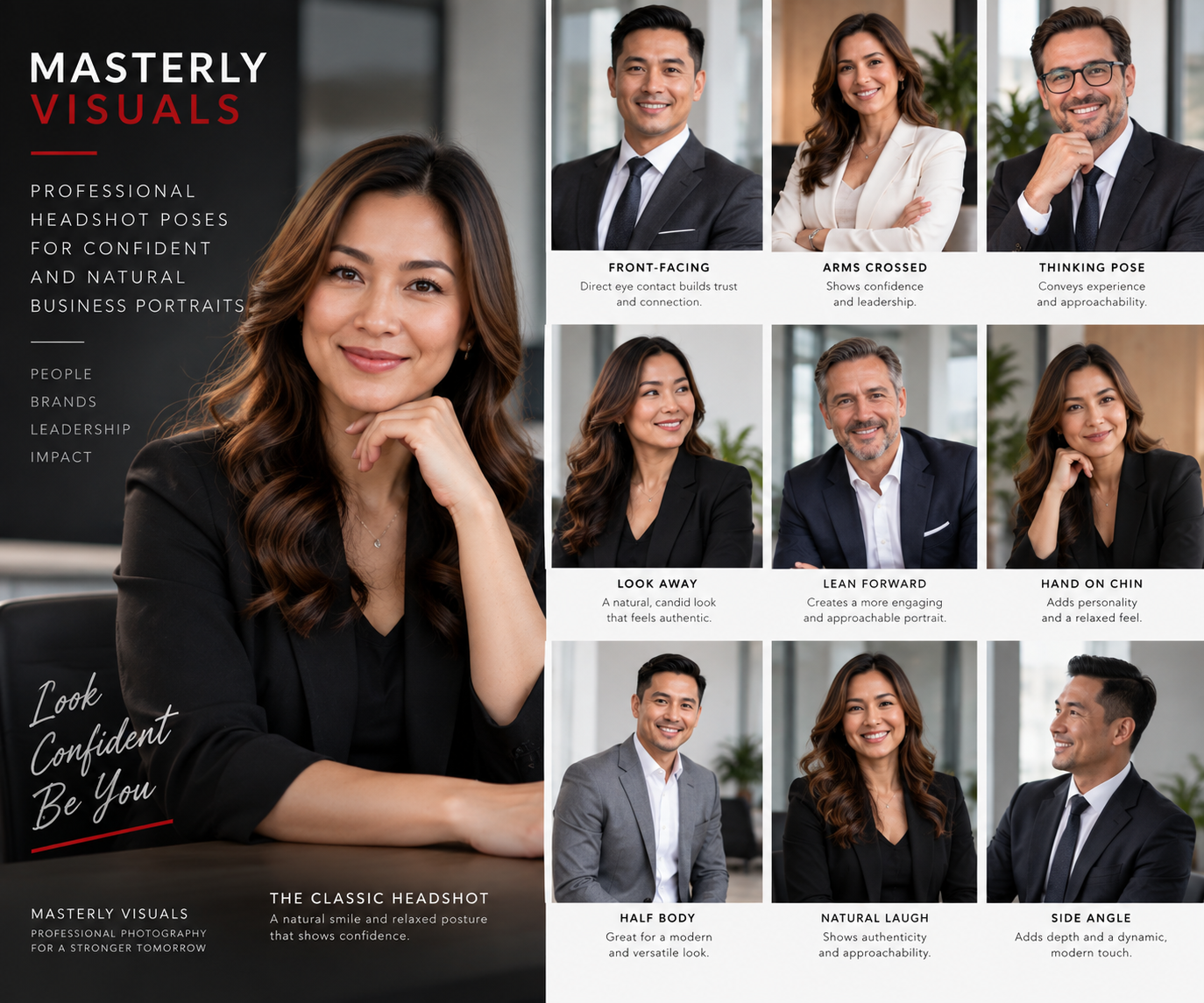
headshot poses can make a major difference. A professional portrait should feel confident and natural rather than stiff or overly arranged.
For professionals preparing for a headshot session, the good news is that you do not need to memorize dozens of poses. A skilled photographer can guide you through small changes in posture, expression, shoulders, hands, and camera angle to create photographs that feel like you.
Masterly Visuals provides professional headshot photography for executives, professionals, business owners, teams, and organizations that need polished images for their professional presence.
Why the Right Headshot Poses Matter
A headshot may be used on your company website, LinkedIn profile, speaker page, press materials, professional biography, or other business platforms.
That means the photograph needs to communicate more than what you look like.
It should support the professional image you want to present.
The difference can come down to small details.
A straight posture can create a more confident appearance. Relaxed shoulders can prevent the image from feeling tense. A natural expression can make you appear approachable. A slight change in camera angle can alter the overall feel of the portrait.
This is why professional photography is about more than simply standing in front of a camera.
Professional Headshot Poses Should Feel Natural
The best
professional headshot poses are usually simple.
You do not need a dramatic pose or an exaggerated expression. Small adjustments can create a polished result while allowing your personality to remain visible.
A photographer may guide you through several variations during the session, such as a straight-on portrait, a slight body turn, or a subtle change in your head position.
These variations give you options without making the session feel complicated.
The goal is to create photographs that look professional while still feeling like you.
Business and Corporate Headshot Poses for Different Professional Roles
A lawyer, physician, executive, consultant, entrepreneur, creative professional, and corporate employee may all need professional headshots, but their images may serve different purposes for startup founders, thought leaders, and teams in professional services.
Business headshot poses can be adjusted to fit your role and the type of impression your company or profession requires, whether you need portraits for creative professionals or C-suite leadership.
For example, a corporate leadership portrait may benefit from a more structured posture in corporate settings, while a creative professional may want a more relaxed presentation. Crossed arms can project authority but may appear defensive depending on the impression you want to make.
The setting, clothing, lighting, expression, and pose can all work together.
Masterly Visuals can help determine the appropriate visual direction based on how and where you plan to use your headshots.
Poses for Headshots That Work for Your Face and Body
There is no single pose that works perfectly for everyone. For most people, facing the camera dead-on can look stiff and less natural than a more flattering pose.
People have different face shapes, body types, hairstyles, clothing choices, and natural expressions.
That is why professional photography should not rely on one fixed position.
During a session, a photographer can make small adjustments to your shoulders, chin, head angle, body position, and expression, including a three quarter turn when that pose works for you, since it is often the most universally flattering option.
These changes can help find the angles that photograph naturally and create a more comfortable experience.
You do not need to know which position works before you arrive. That is part of what professional direction is for.
Posture Can Change the Entire Portrait
Posture is one of the simplest elements that can affect a professional portrait.
A slouched position can make the body look compressed, while overly rigid posture can make the photograph feel uncomfortable.
A balanced posture can create a cleaner and more confident appearance.
For standing poses, shifting your weight unevenly onto one foot helps the pose look more relaxed instead of stiff, as long as your posture stays upright.
During professional headshot photography, the photographer can help you find a position that feels comfortable while still looking polished, and a slight lean toward the camera can convey engagement.
Small adjustments often matter more than dramatic poses.
Shoulders, Chin, and a Slight Head Tilt Need the Right Balance
Your shoulders and chin can have a noticeable effect on a headshot.
Shoulders that are pulled too far back can make the pose feel forced. Keeping shoulders dropped helps avoid a tense look. If they drop too much, that can create a tired appearance.
The chin can also affect the shape and angle of the face. Pressing the face chin slightly forward and tilting it down can elongate the neck, while a chin forward cue can also help reduce the look of a double chin.
Rather than worrying about these details yourself, allow the photographer to make small adjustments during the session, including a chin slightly forward position if needed.
Professional direction helps you focus on being present instead of constantly checking your position.
What to Do With Your Hands
Hands can become one of the most uncomfortable parts of a professional portrait when they are included in the frame.
For a traditional headshot, your hands may not appear at all.
For a three-quarter or environmental portrait, however, they may become part of the composition.
A professional photographer can guide you toward natural positions that fit the framing, with hands clasped or your arms crossed only when they look soft and natural.
Lightly resting a hand near your jawline can read as thoughtful in a wider portrait.
Hooking your thumbs into pockets or belt loops can create a confident balance in environmental portraits.
Crossed arms can project authority when the shoulders stay relaxed.
The important point is that your hands should support the portrait rather than become the main thing you are thinking about.
Expression Matters as Much as the Pose
A technically correct pose can still produce an unconvincing portrait if the expression feels forced.
Your facial expression should fit your professional role and the purpose of the photograph.
Some applications may call for a warm, approachable expression; a genuine smile can project confidence and increase likability in professional headshots, while a closed mouth smile often feels polished and an open smile can suit more people-facing roles. Smiling increases likability scores by 1.35 points. Others may benefit from a more serious or composed presentation.
A professional photographer can provide direction during the session and capture several variations.
This gives you a choice of expressions instead of expecting you to hold one expression throughout the entire shoot.
Camera Angle and Headshot Poses Work Together
The camera angle can influence how a pose looks.
A straight-on portrait can help you face forward and create a direct and confident connection with the viewer.
A slight angle can add dimension while maintaining direct eye contact with the camera, and a slight turn can also soften the frame without losing presence.
Small changes in head position can also create different visual results. A slight head tilt or another intentional head tilt can make the image feel more approachable, and a micro-squinch helps project calm focus and confidence.
Thinking of the camera lens as a person's eyes also makes these adjustments easier to read in the moment. These adjustments are best handled during the session because the photographer can see how the lighting, pose, lens, background, expression, and camera lens work together.
You do not need to arrive knowing exactly which camera angle you want.
Your Headshot Should Match Where It Will Be Used
Before your session, consider where the final image will appear.
LinkedIn profiles may have different framing requirements from a company leadership page.
A speaker profile may need a different crop from a printed business profile.
A company may also need several versions for different platforms, including corporate directories, leadership pages, and speaker materials.
Tell your photographer about these uses before the session.
Masterly Visuals can plan the photography around your intended applications so one photo setup serves multiple business uses and the final images are useful beyond a single profile.
When You Need More Than One Headshot
Most professionals need several portrait options.
You may want a traditional headshot for LinkedIn, a wider portrait for your company website, and an environmental image for a professional biography.
Instead of trying to create completely different looks, a professional session can include subtle changes through multiple poses, expression, framing, and setting, and photographers often capture multiple frames to give you more strong options to choose from.
This gives you a practical collection of images without making the session unnecessarily complicated.
Professional Direction Makes the Session Easier
Many people are not comfortable posing in front of a camera.
That does not mean they cannot have a natural-looking professional portrait.
A good photography session includes direction.
The photographer can guide your posture, shoulders, chin, expression, eye line, and body position while watching how the lighting and composition are working.
You can then focus on relaxing and responding to the photographer instead of trying to remember every detail.
This is particularly valuable for executives, professionals, and teams who may not have much experience being photographed.
Choosing a Photographer for Headshot Poses
When comparing photographers, look beyond the portfolio.
Consider whether the photographer provides direction during the session, understands professional branding, can work with individuals or teams, and can create images that fit your intended applications. The right photographer should also advise on session preparation, including getting a haircut about a week before your session, staying hydrated, wearing solid, neutral colors instead of busy patterns, and getting a good night’s sleep.
Ask how the session is planned and whether the photographer can help you determine appropriate
poses for headshots based on your role and goals so your professional photos feel natural and aligned with how you want to present yourself.
The right photographer should make the process easier, not leave you wondering what to do in front of the camera.
For broader professional portrait needs, you can explore Masterly Visuals' [Professional Headshots] service. For clients specifically looking for [Headshot Photography], that service can provide a more focused path. When you are ready to discuss your session, use the [Masterly Visuals inquiry path].
Headshot Poses Are Part of a Larger Professional Portrait
A strong headshot is not created by posing alone.
Lighting, lens choice, background, wardrobe, expression, retouching, framing, and direction all contribute to the final photograph, especially when planning a corporate headshot.
That is why hiring a professional photographer can be valuable for people who need their images to represent them in an important business setting.
Masterly Visuals brings these elements together during professional headshot sessions. Many professionals update the most professional headshots they use every 3–5 years to keep their professional presence current.
The photographer can guide you through different headshot poses, adjust the details that need attention, and create a collection of polished portraits suited to your professional needs.