Headshot Poses Semrush U.S Demand 1: How Professionals Look Confident, Natural, and Credible on Camera
Your headshot works when you are not in the room, and if you are searching for headshot poses semrush u.s demand 1, this guide gives you a practical, step-by-step framework for creating a strong professional headshot through posture, body angle, facial expression, and hand placement. It shows up in LinkedIn searches, on firm websites, in email signatures, and across slide decks long before anyone hears your voice or reads your credentials. In that fraction of a second, the viewer decides whether you look competent, approachable, credible, and worth contacting.
Most professionals know their headshot matters. For executives, attorneys, senior leaders, founders, salespeople, and consultants, a better pose can shape first impressions online, increase profile views and connection requests, and strengthen both personal and corporate brand presence. The real problem is usually simpler: "I don't know how to pose. I always look stiff, awkward, or unlike myself in photos."
This article gives you a practical framework you can bring to any professional photographer. You will learn how to manage posture, angle, expression, and hands; how to pose standing or seated; how wardrobe affects the pose; and how to keep headshots consistent across a team. We are focused entirely on pose, posture, expression, and planning your shots strategically here-not on pricing, packages, or general corporate headshot service content. Think of this as your pre-session briefing document.
Why Headshot Poses Matter for Your Career, Brand, and Search Intent
The business impact of a well-posed headshot is not abstract. Profiles with professional photos receive roughly 21 times more profile views, 9 times more connection requests, and up to 36 times more messages on LinkedIn compared to profiles without a photo. Those numbers come from aggregated LinkedIn trend data and reflect how visual first impressions drive professional engagement.
Research from Princeton (Willis & Todorov, 2006) found that trait impressions like trustworthiness and competence form in as little as 100 milliseconds-and those snap judgments correlate with ratings made under no time pressure at all. Your pose, expression, and posture are doing heavy lifting before anyone reads your bio.
When professionals replaced informal or low-quality photos with well-posed professional headshots, perceived competence rose by approximately 75.93% and likability increased by nearly 10%, according to a study by Photofeeler and HeadShots Inc.
Headshot poses should convey confidence and approachability. That combination is what drives higher response rates, more profile views, and stronger trust on firm "About Us" pages.
What Makes a Headshot Pose Look Credible
A "credible" headshot for executives, attorneys, and senior professionals communicates three things at once: confidence, approachability, and alignment with professional role. A litigator's credibility looks different from a startup founder's, but the underlying visual signals are remarkably consistent.
Key visual signals of credibility include:
- Upright posture with shoulders down and back
- A subtle forward lean from the hips (not the neck)
- Relaxed but firm jaw
- Direct or near-direct eye contact with the lens
- Controlled warmth in the expression-regulated, not extreme
Contrast this with two common failure modes:
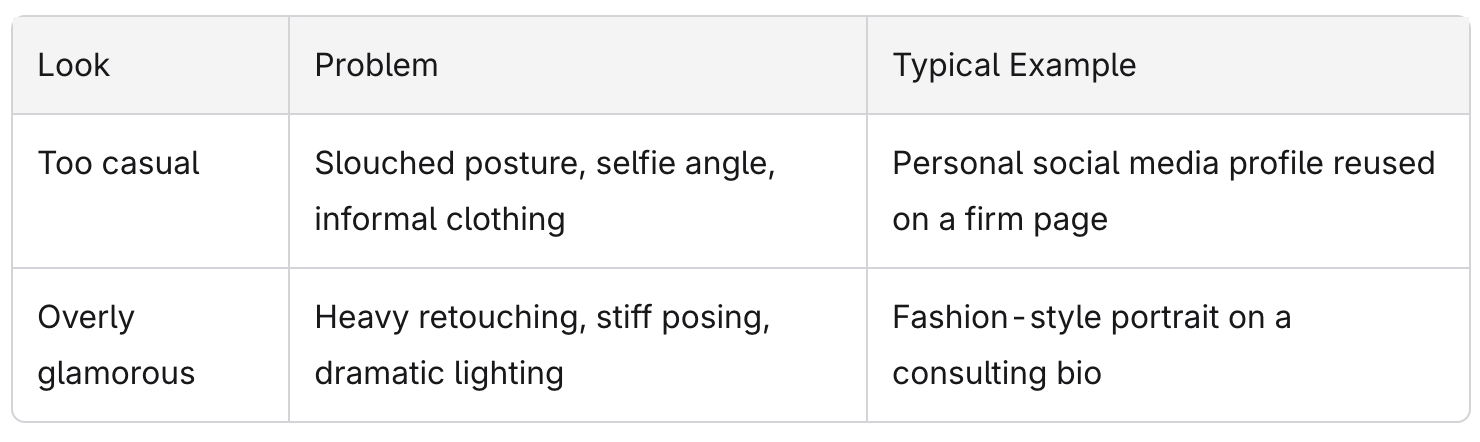
The PPA's 2025 headshot consumer research found that clients strongly prefer a look that balances formality with personality-polished outfit, clean background, professional lighting, but an expression and pose that feel natural.
The search intent behind "headshot poses" is usually informational with a commercial edge. People want clear pose guidance before they book a session. And credibility is read in fractions of a second when someone spots a thumbnail in search engine results pages, an email signature, or a Zoom profile image. Search engines surface these thumbnails constantly, which means your pose needs to read well even at small sizes.
Posture, Angle, Expression, and Hands
These four elements form the core framework for reliable headshot poses across every industry. Think of them as the building blocks. When all four are working together, almost any professional can look natural and confident on camera.
Small, repeatable adjustments to each element make the difference between a headshot that builds trust and one that gets scrolled past. Here is the framework at a glance:
- Posture: Spine upright, chest open, shoulders relaxed and down
- Angle: Body turned 10–45 degrees from camera, face toward lens
- Expression: Micro-smile or controlled neutral, engaging the eyes
- Hands: Relaxed, purposeful, visible
The sections below break each element into specific, actionable guidance executives can apply before any session.
Small Adjustments That Change the Image
Tiny movements create outsized differences in the final photo. Here are the micro-adjustments that professional photographers rely on:
- "Turtle" the head forward. Push your head gently toward the camera without lifting your chin. This lengthens the neck and strengthens the jawline. Extend your chin slightly forward and down to define your jawline.
- Drop shoulders deliberately. Before each frame, consciously pull your shoulders down and back. Keep shoulders relaxed to avoid a stiff look in photos.
- Rotate torso 10–30 degrees. Adjust your body angle to 15–30 degrees away from the camera for a natural look. A fully frontal body can feel rigid, like a passport photo.
- Shift weight to the back foot. Maintain natural posture by varying weight distribution during the shoot. This creates a subtle lean that looks dynamic rather than planted.
- Chin angle matters more than you think. A 5–10 degree change in chin angle can fix double-chin effects or harsh shadows without extreme retouching. Tilt too high and you expose nostrils; too low and shadows pool under the jaw.
- Eye-line tweaks. Looking directly into the lens projects authority. Looking just above the lens creates a slightly more open, approachable feel. Use direct eye contact to project confidence in headshots-it is the default for most executive portraits.
These adjustments are pose-based, not gear-based. They work regardless of camera brand, lens, or studio setup.
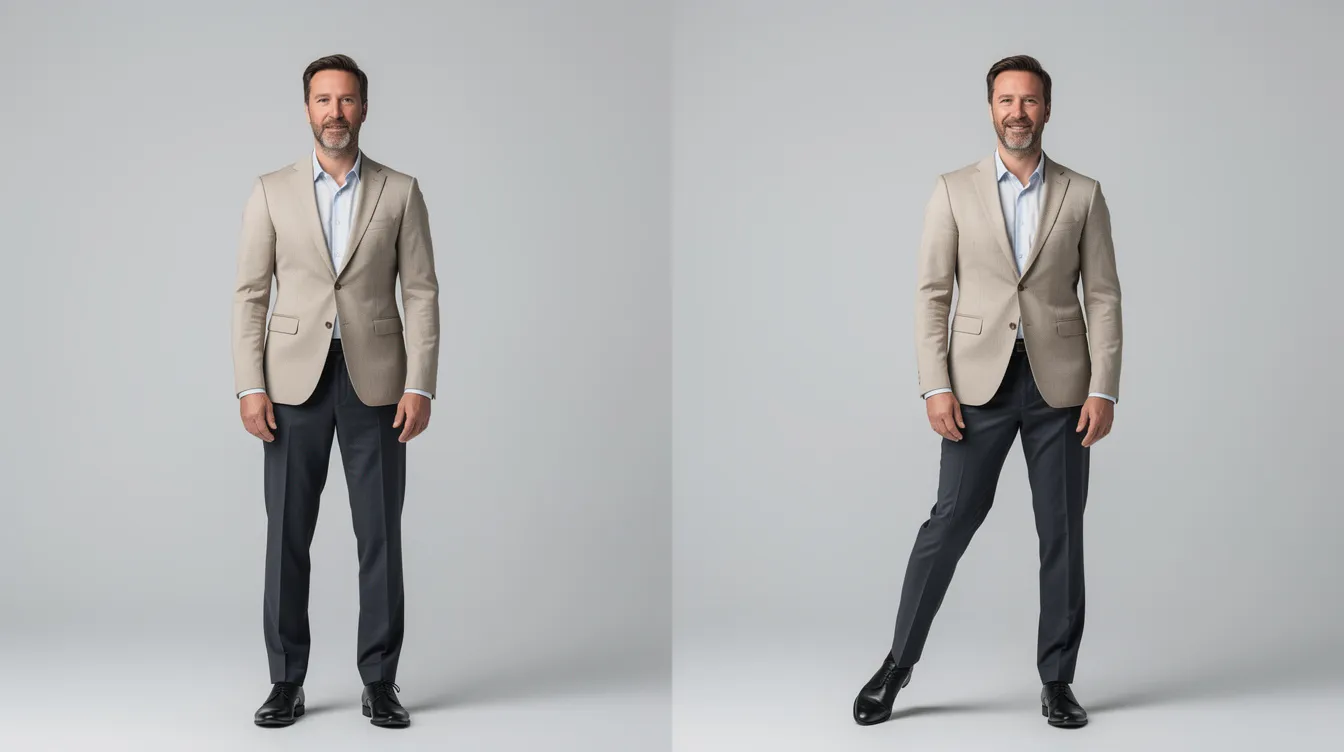
Standing Headshot Poses That Look Natural (Not Stiff)
Standing poses work best for dynamic leaders, founders, and sales professionals. Here are the most reliable options:
The 3/4 turn (most universally flattering). The three-quarter turn is the most universally flattering pose for headshots. Stand with feet at a slight angle, weight on the back foot, front shoulder angled toward camera, and a subtle lean in from the waist. This pose creates depth and avoids the "mugshot" effect of a square-on body.
Arms by side plus lean. Hands hang naturally at your sides, shoulders are low and open, and you lean slightly toward the lens. A subtle forward lean can convey approachability while maintaining authority. This works well for consultants and client-facing roles.
Arms loosely crossed. Cross your arms lightly at mid-chest, but keep your hands visible and fingers relaxed. If shoulders tighten or hands disappear, the pose reads as defensive rather than confident. This version conveys authority without closing off.
Standing poses tend to produce the most dynamic, energetic headshots. If your role involves sales, public speaking, or leadership visibility, standing is often the better choice.
Practice variations in poses before the shoot for a more relaxed appearance. Even five minutes in front of a mirror helps you identify which positions feel natural.
Seated Headshot Poses for Executives and Attorneys
Seated poses work particularly well for executive portraits and attorney bios because they create controlled posture, easy hand placement, and an inherent sense of authority.
Basic seated setup:
- Sit on the front third of the chair (never lean back into it)
- Feet flat on the floor, knees slightly angled
- Torso turned off-center to the camera by about 20 degrees
Lean-in pose. Rest forearms lightly on your thighs or a desk surface. Lean slightly forward as if in conversation with a client. Lean slightly forward to engage your core and project enthusiasm. This pose communicates attentiveness without aggression.
Conference-room version. Use a table edge, legal pad, or laptop as a natural prop. Keep hands relaxed and visible, resting lightly on the surface. This setup works especially well in real office environments-conference rooms, firm libraries, or modern corporate spaces.

Professional headshots should be taken at eye level for best results, whether seated or standing. Your photographer will adjust camera height accordingly.
What to Do With Your Hands in Headshot Poses
What should you do with your hands in a headshot session? Give them a job. Idle hands draw attention for the wrong reasons.
Options that consistently work:
- One hand in a pocket with the thumb resting out
- Both hands loosely clasped at waist level
- Fingers resting lightly on a chair back, table edge, or desk
- Holding a functional prop: laptop edge, notebook, pen, or glasses
What to avoid:
- Clenched fists (reads as tense or aggressive)
- Flat "paddle" hands facing the camera
- Hands pressing into the face or chin in unnatural positions
- Gripping props tightly
A slight tilt of the head can enhance engagement in headshots, and pairing that with relaxed, purposeful hands completes the pose.
When using props, keep them role-appropriate. An attorney holding a pen over a legal pad looks natural. The same attorney holding a coffee mug in a studio may not. Browse law firm, agency, and corporate leadership pages to see which hand positions appear most frequently-they are popular because they work.
Facial Expression: Confident, Approachable, and On-Brand
Expression often matters more than a technically perfect pose. Research on facial expression and pose effects on trustworthiness shows that both emotional expression and camera angle influence how viewers rate dominance, attractiveness, and credibility.
A genuine smile creates warmth and approachability in photos. But the key word is "genuine." Observers can often detect forced or posed emotions. Studies on over-emoting show that too much emotional display can actually reduce perceived sincerity.
The micro-smile: Softens the face without looking overly casual. Engage the muscles around your eyes slightly-what researchers call a "Duchenne" smile. This reads as warm and trustworthy, especially for attorneys and senior executives.
Home practice methods:
- Stand in front of a mirror or record short videos of yourself
- Hold a gentle, natural smile for three seconds
- Relax completely, then repeat
- Notice which version feels least forced-that is your range
Aligning expression with brand:
- Client-facing consultants and advisors: slightly open smile, warmer gaze
- Litigators and technical executives: more neutral confidence, composed mouth
- Founders and sales leaders: energetic, engaged smile
Subtle differences in expression shift how a headshot performs on platforms where thumbnails are small-like search results, email avatars, or mobile LinkedIn feeds.
Body Angle, Chin, and Eye Line: Flattering, Not Fake
The basic rule: turn your body 10–45 degrees away from the camera while keeping your face back toward the lens. This creates depth, slims the silhouette, and avoids the stiffness of a fully frontal shot.
Chin guidelines:
- Slightly down and forward to lengthen the neck and tighten the jawline
- Avoid tilting chin too high-it creates harsh under-jaw shadows and exposes nostrils
- Avoid dropping too low-it compresses the neck and creates unflattering shadows
Eye line choices:
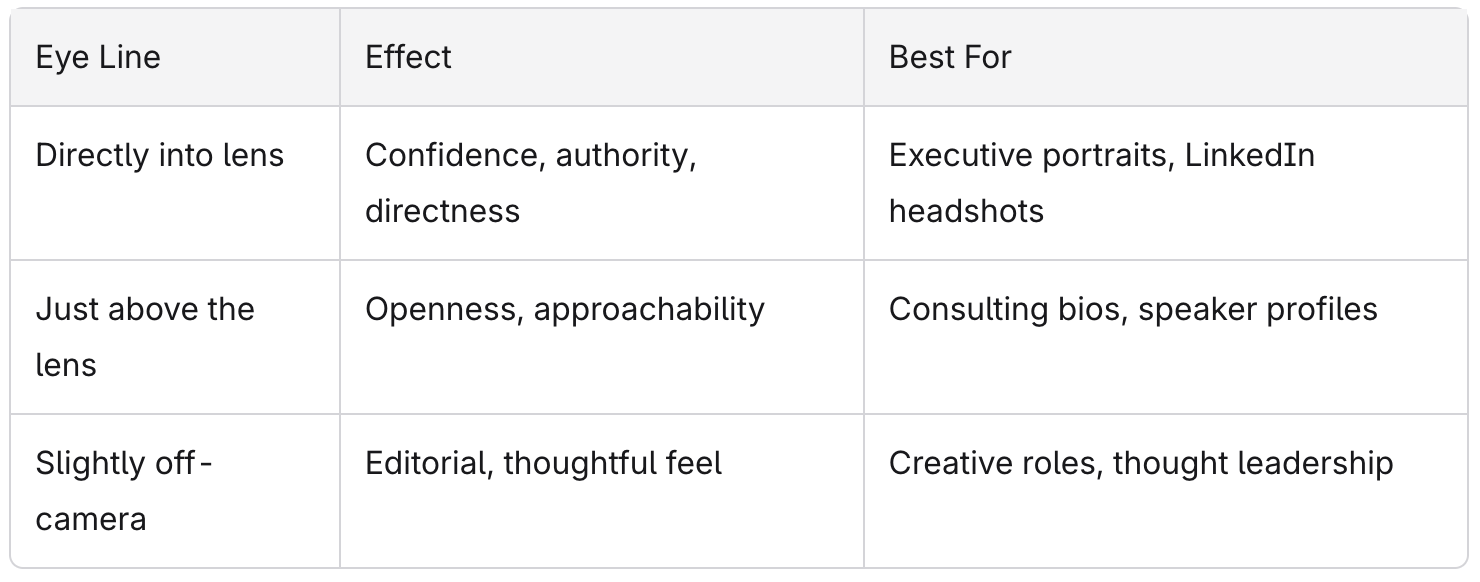
These pose adjustments matter more than camera brand or lighting for how most viewers judge the photo at a glance. Ask your photographer for real-time cues on chin and eye line until the pose feels comfortable and repeatable.
Lighting is crucial for effective headshot poses, but lighting follows pose-not the other way around. Get the angle and chin right first, and your photographer will shape light to match.
Wardrobe and Pose: How Clothing Interacts With Your Stance
Structured garments-blazers, suits, tailored dresses-react visibly to posture. Roll your shoulders forward and a jacket bunches, collars collapse, lapels misalign. Sit too far back in a chair and blouses wrinkle across the midsection.
Specific wardrobe-pose guidance:
- Suits and blazers: Button the jacket for standing shots; unbutton for seated. Ensure the collar sits flat after each pose change.
- Ties: Check that the tie stays centered when crossing arms or leaning forward. A tie pivoting off-center looks sloppy.
- Necklaces and earrings: Arrange after each major angle change. Jewelry that twists or catches harsh light distracts from the face.
- Fabric choice: Matte fabrics reduce glare. Subtle textures read better than shiny materials. Darker or mid-tone clothing adds contrast and directs the viewer's eye to the face.
Use a neutral background to keep focus on the subject's face. The background should complement the wardrobe, not compete with it.
Pre-session checklist: After each major pose change, do a quick mirror check with your photographer's guidance. Look for fabric pulling, collar misalignment, and accessory drift.
Keep Posing Consistent With the Professional Brand
A headshot is part of a larger personal and corporate branding strategy, not a standalone picture. Posture, angle, background, and expression can all reinforce or confuse the brand message.
Consider the difference:
- A litigation team choosing formal, composed poses with neutral expressions and dark backgrounds signals authority and seriousness
- A creative agency opting for slightly looser, conversational poses with warmer expressions and lighter environments signals innovation and approachability
Professionals searching for "headshot poses" are usually trying to align their photos with how they want to be perceived online. That is their search intent-and matching it means thinking about brand before you step in front of the camera.
Coordinate your poses with existing brand assets: website design, slide templates, and other marketing photography. If your firm's site uses cool tones and minimal design, your headshot should feel consistent with that visual language.
How Teams Can Keep Headshots Consistent
How can teams keep headshots consistent? By creating a simple internal style guide before the shoot.
A team headshot style guide should define:
- Preferred pose type (standing vs. seated, or both)
- Body angle range (e.g., 15–30 degrees)
- Expression direction (micro-smile vs. composed neutral)
- Background type and color
- Wardrobe palette guidelines
Appoint one decision-maker-a marketing lead or managing partner-to approve pose direction so galleries look cohesive across the entire team page.
A good photographer can pre-set a few standard poses and apply them across every team member while still leaving room for individual personality. The result is visual harmony on "Our Team" pages, which enhances trust when clients browse attorney or leadership directories online.
Consistent team headshots function like consistent branding on service pages: they tell the viewer this organization is coordinated, professional, and intentional.
Using Pose Direction With Professional Photographers
Use this article as a briefing document before your session. Highlight your favorite poses, preferred angles, and expression notes, then share them with your photographer.
Communicate openly about:
- Side preferences (many people have a "better side")
- Posture concerns or physical limitations
- What you want to avoid (e.g., "I always look too serious" or "My hands look awkward")
Typical session flow:
- Warm-up poses to loosen tension
- Small adjustments based on what the photographer sees in real time
- Reviewing images together on a tethered monitor
- Refining based on what works
Good photographers provide real-time direction. Your job is to understand the concepts and communicate your brand goals clearly.
You can use a free tool like your phone camera to test angles at home before the session. Save reference images from LinkedIn or firm websites that match the look you want, and bring them along.
Planning Headshot Poses With Simple "Keyword Research" on Yourself
Here is a useful exercise borrowed from SEO: treat your headshot planning like keyword research on yourself.
Step 1: List 3–5 words you want your headshot to convey. Examples: "approachable," "decisive," "expert," "trustworthy," "innovative." These are your personal target keywords-the terms you want viewers to associate with your image.
Step 2: Match poses to your personal search intent. Understanding search intent helps create relevant content, and the same logic applies to visual content. If your intent is "approachable," choose softer poses with open body language and a warm smile. If it is "decisive," use stronger angles with direct eye contact and a composed expression.
There are four types of search intent: informational, navigational, commercial, and transactional. Your headshot serves commercial and transactional intent-it moves a viewer from curiosity toward contacting you.
Step 3: Search for real examples. Instead of generic image searches, browse LinkedIn profiles and firm websites that match your target words. Look for poses and expressions that feel authentic, not stock. Search intent influences keyword strategy for SEO, and it should influence your visual strategy too.
Step 4: Start with "low difficulty" poses. Like keyword difficulty in SEO-where some keywords are harder to rank for than others, especially if they are not low competition-some poses are harder to pull off naturally. Start with simple angles and a neutral expression. Build toward more complex concepts once the basics feel comfortable.
Just as Google Keyword Planner shows average monthly searches and competition levels for any search term, your personal brand audit reveals which visual positions have high competition (everyone does them) and which offer less competition for standing out. Keyword search volume estimates search frequency for specific keywords, and similarly, you can estimate how frequently someone in your field will be seen in the same pose-then decide whether to match or differentiate.
Tools like Semrush Keyword Checker allow 5 free requests per day, Searchvolume.io lets you check volumes for up to 800 keywords at once, SE Ranking provides search volume and keyword difficulty for 5 keywords daily, and SpyFu offers unlimited daily keyword searches with limited data. These free tools help SEO professionals find keywords and drive traffic-and browsing them can remind you how strategy based planning applies to visual branding too.
The keyword "what is keyword search volume" has 410 global searches monthly-a low volume keyword, but still worth targeting if the content is relevant. High-volume keywords can drive more traffic to your site, while low volume keywords with low difficulty often convert better. The same principle applies to your headshot: a pose that is less common but perfectly aligned with your brand may outperform a generic one. Search volume counts all searches, not just unique users, so even a specific keyword or phrase with modest monthly searches can represent a significant amount of opportunity if the audience is right.
Keyword volume is crucial for SEO forecasting and strategy, just as understanding your brand positioning is crucial for headshot planning. Whether you are looking at Google Trends, analyzing ranking pages, or monitoring keyword rankings alongside established websites in your industry, the pattern is the same: research first, execute second.
When thinking about your headshot strategy, consider it like building a solid keyword strategy-you need relevant keywords (brand words), an understanding of high search volume topics (what viewers are scanning for), and alignment between your page and your target audience. Google searches, search results, and search engine results pages all reward content that matches what people search for. High volume, high competition terms require a strong SEO strategy and domain authority to rank, while long tail keywords often represent the more specific, high-converting opportunities. Your headshot poses are your visual ranking factors-they determine whether your page earns the click.
In Google Ads and advertising, transactional intent drives a purchase decision. Your headshot serves a similar role: it is the visual that turns a browser into a contact. Whether someone finds you through a channel like LinkedIn, a website, television appearance, or a video, the same pose principles apply. Focus on the metric that matters-does the viewer trust what they see?-and let that drive traffic to real business conversations. Best keywords, related keywords, and even the same keyword used across multiple service pages and links all work together in SEO, just as consistent pose direction works across all your professional materials. High volume keywords and low difficulty opportunities exist side by side, and a good example of smart strategy is choosing the approach-visual or keyword-that matches your specific goals. The average number of monthly searches for any given keyword tells you demand; your headshot tells people whether you are worth the click. Find keywords that matter for your site's ranking, and find poses that matter for your professional sales and advertising presence.
Image and Visual Plan for the Article Using Relevant Keywords
This article benefits from five types of visuals:
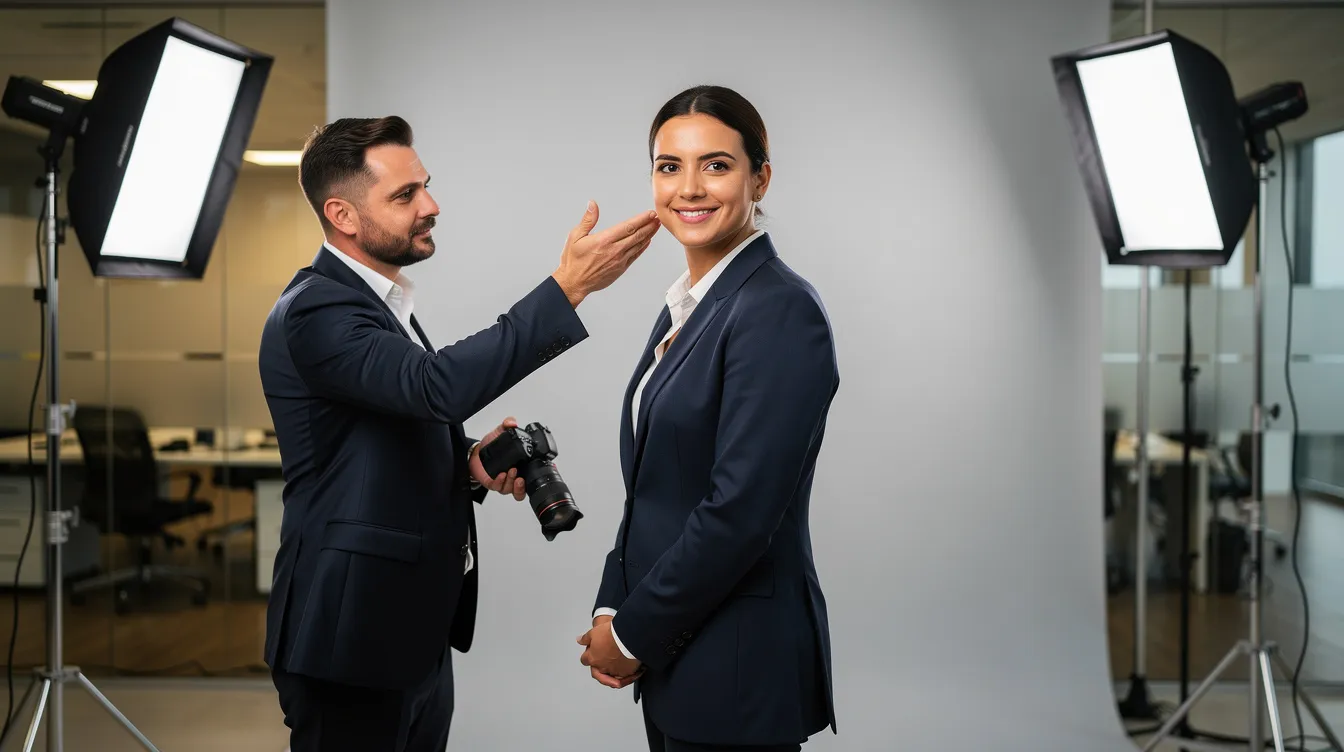
- Featured image: A behind-the-scenes photograph of a real professional being guided into a headshot pose. Alt text: "Professional headshot poses being directed in a modern studio setting."
- Framework graphic: A four-part diagram showing Posture – Angle – Expression – Hands as the core pose system.
- Working scene: An executive or attorney demonstrating a natural seated headshot pose in a real office environment.
- Comparison visual: Side-by-side images showing small adjustments (slouched vs. upright, flat vs. angled body) and their impact on perceived credibility.
- CTA image: A professional being photographed with subtle, restrained branding-no bold claims or unverified statistics.
FAQs About Professional Headshot Poses
What poses work best for professional headshots?
The three-quarter turn is the most universally reliable starting point: body angled 15–30 degrees from camera, weight on the back foot, face toward the lens, and a controlled expression. For seated portraits, sit on the front third of the chair with your torso turned slightly off-center. Pair either with direct eye contact and relaxed shoulders. These poses work across industries because they balance confidence with approachability.
What should you do with your hands in a headshot session?
Give your hands a clear job. Rest one hand in a pocket with the thumb out, clasp both hands loosely at waist level, or place fingers lightly on a desk or chair back. Avoid clenched fists, flat palms facing the camera, or pressing hands into your face. If you are using a prop-pen, notebook, glasses-hold it lightly and naturally.
How can teams keep headshots consistent?
Create a simple style guide defining preferred pose type, body angle, expression, background, and wardrobe palette. Assign one person to approve the direction, and work with a single photographer who can apply a few standard poses across the whole team while leaving room for individual personality. Consistency on team pages builds trust with clients and prospects browsing your directories.

Next Step: Request a Professional Commercial Headshot or Executive Portrait Session
Now that you understand the framework behind headshot poses-posture, angle, expression, and hands-the natural next step is working with a photographer who can apply these principles with real-time direction.
When you reach out, share your preferred pose examples and the 3–5 brand words you want your headshot to convey. That information lets a photographer tailor the session to your goals rather than defaulting to generic setups.
Request a professional commercial headshot or executive portrait session to put this framework into practice. You can also review portfolio examples and session preparation resources to see how these pose principles translate into finished images.
The difference between a headshot that sits in a folder and one that drives real professional results usually comes down to preparation. You have the preparation. Now bring it to the session.
Recent Posts